Padres Drop NLDS Opener, Aztecs Stage Improbable Comeback, and San Diego Braces for Days of Dangerous Heat
A Saturday night that swung between elation and frustration left San Diego's sports teams heading in opposite directions, while an extended Extreme Heat Warning put the entire region on alert through Thursday.

“a two-year deletion window is widely regarded as insufficient for public-records requests, litigation, audits, and investigative journalism in long-running government matters”
How this was made Verified AI
Every Intellegix briefing is generated from that day's broadcast and run through automated checks before it publishes — with a human paged on any flag. Here is the trail for this edition.
A Sunday of High Stakes and Rising Temperatures

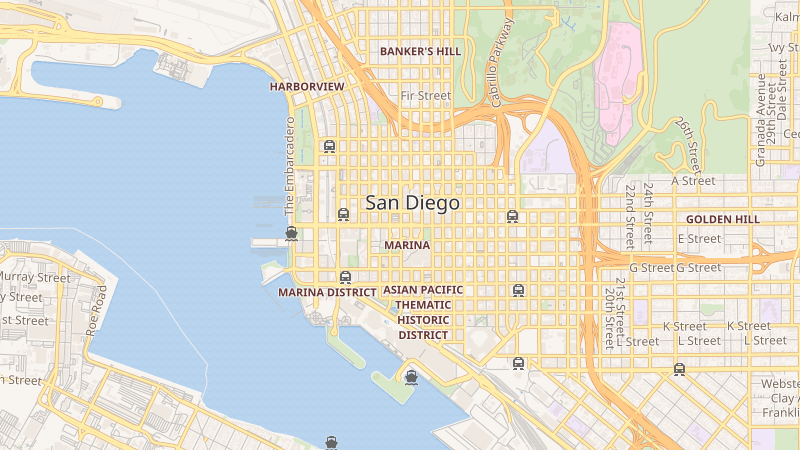
San Diego entered Sunday, October 4th, 2026, under an Extreme Heat Warning and with its most prominent sports franchises simultaneously navigating pressure-filled moments — the Padres down a game in the National League Division Series, the Aztecs fresh off an improbable football comeback, and a mumps outbreak reshaping competitive rosters at San Diego State University.
The week ahead offers no relief on the weather front: the National Weather Service forecast calls for temperatures pushing 103 degrees inland, overnight lows stubbornly remaining in the seventies, and the heat warning running through 8 p.m. Thursday, October 8th. Meanwhile, Tuesday's County Board of Supervisors meeting carries two governance proposals — on email retention and e-bike injury tracking — that will shape accountability infrastructure across the region.
Padres Strand Twelve, Aztecs Survive on Special Teams Heroics

The Padres traveled to Milwaukee for Game 1 of the National League Division Series on Saturday night and came away with a 3-2 loss that looked, by all statistical accounts, like a game they surrendered rather than one the Brewers seized. San Diego left twelve runners on base in a one-run contest — a number that encapsulates the team's failure to convert on a night when the pitching held and the margin never widened beyond a single run.
A roster complication now hangs over Game 2. Right-hander Walker Buehler was placed on the three-day paternity list Saturday, with his wife McKenzie expected to deliver their second child. Randy Vásquez filled the roster spot, and Buehler will miss at least the first two games of the series. Michael King is set to start Sunday's game — his first postseason road start, after three postseason starts at home, all resulting in Padres wins. In a best-of-five series, losing the first two games on the road would leave San Diego in an almost insurmountable position.
While the Padres were struggling to convert in Milwaukee, SDSU was engineering one of the season's more disorienting football results. The Aztecs trailed Texas State 17-3 at halftime, were outgained 565 yards to 239 for the entire game, and managed only 13 first downs compared to Texas State's 34 — yet won 31-29 in their first-ever Pac-12 Conference game. Three plays defined the turnaround: Jaylon Hawkins returned the second-half kickoff for a touchdown; Cameron Cooper blocked a Texas State 35-yard field goal attempt and later scored on a 32-yard interception return, accounting personally for a ten-point swing; and freshman running back Josiah Lucas carried 21 times for 111 yards and two touchdowns.
Texas State made it tense at the end, with Beau Sparks catching a 40-yard touchdown pass from Brad Jackson with 1:54 remaining to cut the lead to two points. SDSU held on to improve to 2-3. The announced attendance at Snapdragon Stadium was 28,474, though the turnstile count was 17,567. Complicating the achievement further, the Aztecs played the entire game without thirteen players sidelined by the ongoing campus mumps outbreak — an absence representing more than a fifth of a standard roster.
Five-Day Heat Warning and Tuesday's Accountability Proposals

The National Weather Service updated — not issued, but extended — its Extreme Heat Warning at 12:03 p.m. Saturday, pushing the advisory through 8 p.m. Thursday, October 8th. The forecast breaks down sharply by geography: coastal communities face mid-eighties to mid-nineties; mesas and elevated coastal terrain push into the mid-nineties to low hundreds; inland valleys are projected to reach upper nineties to approximately 103 degrees. The detail public-health officials regard as most dangerous is the overnight lows, which are expected to remain primarily in the seventies throughout — eliminating the natural recovery window that cooler nights provide. A wind advisory that accompanied the weather system expired at 6 p.m. Saturday, leaving prolonged heat as the primary identified hazard.
Officials recommend scheduling any heavy outdoor activity in early morning hours and ensuring access to air conditioning, particularly for elderly residents and young children. The National Weather Service noted that above-normal warmth could continue even beyond the formal warning's Thursday expiration.
On the civic calendar, Tuesday's County Board of Supervisors meeting carries two proposals worth tracking before they become decisions. Supervisor Joel Anderson has put forward a motion to direct staff to develop policy options and cost estimates for extending county email retention from two years to five — aligning the county with the City of San Diego's existing schedule. Tuesday's vote would initiate a study, not adopt a new policy, but the underlying question is significant: a two-year deletion window is widely regarded as insufficient for public-records requests, litigation, audits, and investigative journalism in long-running government matters.
The second item is a proposed regional system for tracking e-bike injuries. Previously compiled state data found 865 e-bike-related emergency department visits and 186 hospitalizations in San Diego County during 2024 alone. The Board voted in September to pursue litigation against companies marketing high-powered electric motorcycles as e-bikes; a coordinated tracking system would give future enforcement and legislative efforts an evidentiary foundation. Tuesday's agenda lists the item for consideration, meaning discussion and potentially a direction to staff rather than a final vote on the tracker itself.
California Grows at Nearly Double the National Median — but San Diego's Ground-Level Picture Is Complicated

A newly published calculation found California's economy expanding at an average annual rate of 3.3 percent through August 2026, placing the state third among all fifty states behind Nevada at 3.9 percent and Ohio at 3.4 percent. The national median across all states was 1.8 percent, meaning California is growing at nearly double the median pace.
The statewide figure carries an important caveat for San Diego residents: regional conditions have their own texture. The local unemployment rate ticked up to 4.9 percent in August — above July's level, though still below California's statewide 5.4 percent and below the year-ago figure of 5.1 percent. Recent layoffs include Stone Brewing with 220 positions affected and ServiceNow cutting 133 jobs concentrated at director and senior levels. A 3.3 percent growth rate is an average; the workers displaced in those cuts are not experiencing an average.
The affordability environment adds further complexity. San Diego's median home price reached $961,781 in August, up 5.7 percent year over year, and more than a third of homes have been selling above asking price. The county's all-time gas price record stands at $6.434 a gallon, set in 2022, with prices continuing to fluctuate significantly. The statewide growth figure signals that California's economic foundation — technology, biotech, trade, tourism, and services — is holding up relative to the rest of the country, meaningful context for regional employers. But it does not resolve the gap between macroeconomic expansion and the household financial stress that defines daily life for many San Diego residents.
East County Quiet on New Public Records

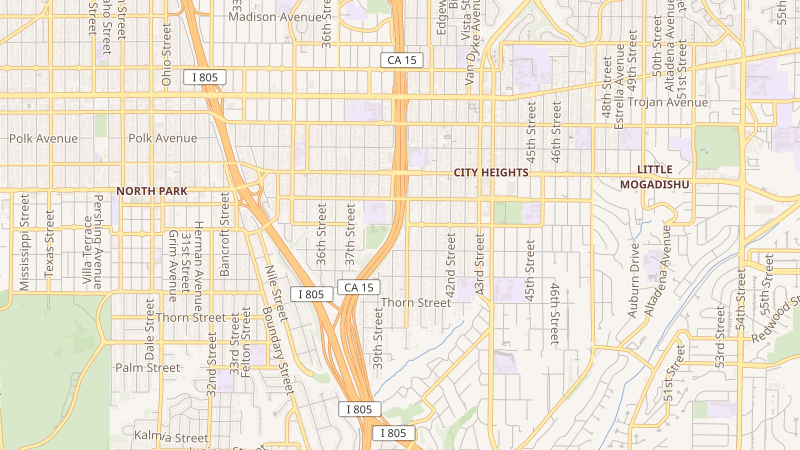
No qualifying votes, arrests, court filings, or rulings emerged from Santee and East County that post-date the October 2nd reporting cutoff. The area produced no new public-record developments in the weekend window.
Mumps Outbreak Lingers, and a Hard Look at What the Aztecs' Win Actually Proved

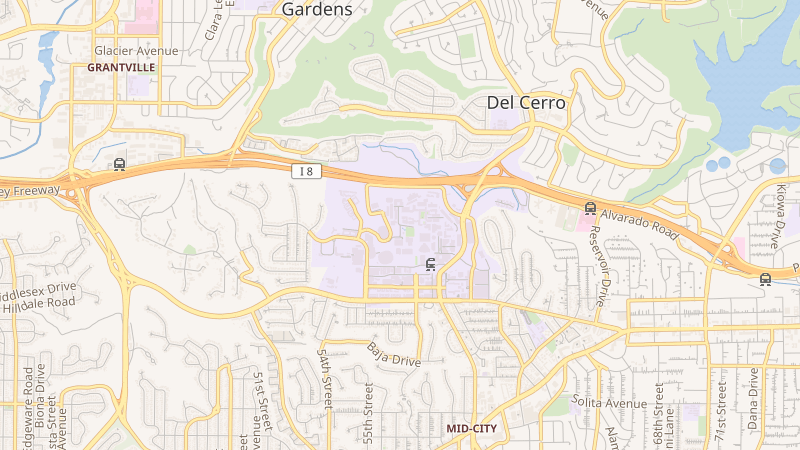
The SDSU mumps outbreak — already a public health story — crossed into competitive sports in a concrete way Saturday when thirteen players were absent from the Aztecs' game-day roster due to the ongoing outbreak. The university has been coordinating with San Diego County public health authorities throughout, and contact tracing remains active. The outbreak has not been declared resolved. Mumps spreads through close contact and respiratory droplets, and a football roster represents one of the more high-risk environments for transmission. No new countywide K-12 exposure or school closure has been reported in connection with the outbreak.
On the November ballot, school bond measures including Santee School District's Measure BB and La Mesa-Spring Valley's Measure AA remain in the campaign phase, with no new vote or filing triggering fresh coverage this weekend.
Saturday's football result invites a harder question about what the Aztecs' comeback actually demonstrated. The strongest case for genuine competitive quality rests on defensive discipline: SDSU did not fold while trailing by 14 at halftime, intercepted Brad Jackson twice, and protected the ball without a turnover. Those are repeatable qualities. The counterargument is that SDSU won a game in which they were outgained 326 yards and managed only 13 first downs, surviving on three of the least predictable play types in football — a kickoff return touchdown, a blocked field goal, and a pick-six. Kickoff returns and blocked kicks happen a handful of times a season for any program and cannot be reliably replicated.
The warning signal is straightforward: if San Diego State's offensive production remains in the 200-yard range in subsequent Pac-12 games, the win over Texas State reflects a program that is one bad special teams day from losing consistently. If Josiah Lucas continues to receive 20-plus carries per game and the Aztecs generate sustained drives against better-resourced conference opponents, Saturday's result looks like the beginning of a formula. The metric to watch in the coming four weeks of Pac-12 play is points-per-drive — that number will distinguish structural competitive quality from a compelling but small-sample-size story.
What to Watch This Week

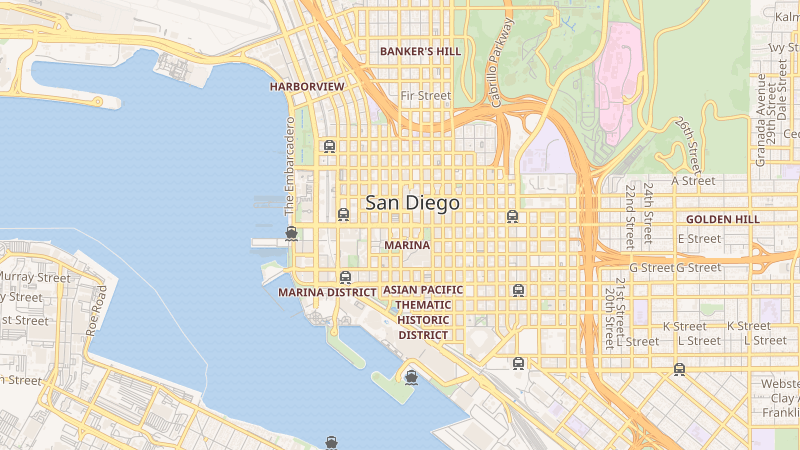
The most urgent storyline for San Diego on Sunday is Game 2 of the NLDS in Milwaukee. Michael King takes the mound for his first postseason road start, and the Padres cannot afford to return home having dropped both road games in a five-game series. How quickly the offense converts early-inning opportunities will be the clearest indicator of whether the twelve runners left on base in Game 1 represented a pattern or an aberration.
The most immediate practical concern for every San Diego resident is the heat. The Extreme Heat Warning remains in effect through 8 p.m. Thursday, with inland valleys approaching 103 degrees and overnight lows staying in the seventies throughout. Active planning — not passive awareness — is warranted for households with elderly family members, young children, or anyone without reliable access to air conditioning. Outdoor activities should be front-loaded into early morning hours for the duration of the warning.
Tuesday, October 6th brings the County Board of Supervisors meeting, where Supervisor Joel Anderson's email retention proposal and the e-bike injury tracking system are both on the agenda. Neither item is a final policy adoption, but both are directional votes with lasting implications for government accountability and public-safety data infrastructure in the region.