Tragedy, Accountability, and a Postseason Push: San Diego's Week in Review
Two public-safety tragedies, a billion-dollar infrastructure fight, and a historic young catcher defined a consequential week in San Diego as investigators, civic leaders, and baseball fans alike headed into the weekend with unanswered questions.

“A warning sign is a low-cost intervention — not a structural solution — but one with a real potential to interrupt a transaction in progress.”
How this was made Verified AI
Every Intellegix briefing is generated from that day's broadcast and run through automated checks before it publishes — with a human paged on any flag. Here is the trail for this edition.
A Week Shaped by Loss: What San Diego Is Processing

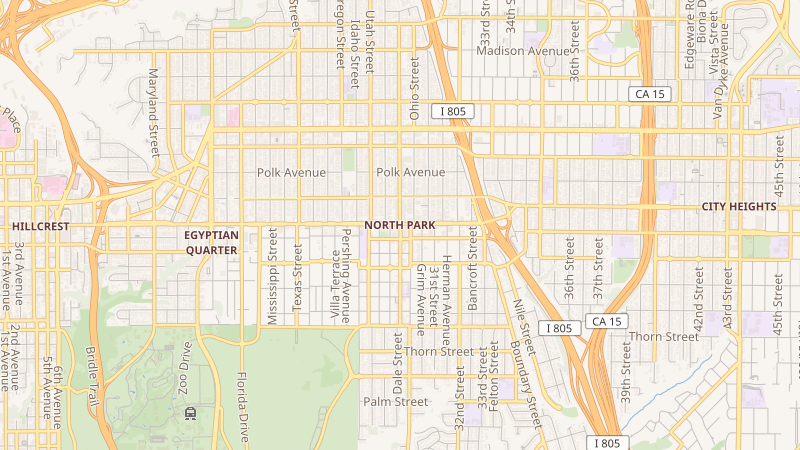
San Diego closed out the week of September 18, 2026, absorbing the aftershocks of two violent incidents — one inside a San Carlos home, another on a busy North Park commercial corridor — while tracking a packed agenda of civic decisions with lasting consequences for the region.
Investigators are still working to answer critical questions in both cases, even as city and county leaders advanced major decisions on housing, energy infrastructure, public health accountability, and consumer protection. Meanwhile, the Padres stood on the edge of clinching a postseason berth.
For listeners encountering this coverage for the first time: all reporting below is drawn from public sources across the San Diego region. The stories originate with journalists working crime scenes, county board chambers, school board sessions, and border communities — work that remains essential to keeping the public informed.
Family Found Dead in San Carlos, K-9 Set Ablaze in North Park

On Wednesday, September 16, officers responding to the 6800 block of Boulder Lake Avenue in San Carlos found three members of the same family dead inside their home. Police identified the victims as David Voight, 54, and Amy Voight, 56, along with their 13-year-old daughter. All three died of gunshot wounds, and a firearm was recovered at the scene. The San Diego Police Department stated it is not seeking a suspect and sees no ongoing threat to the public — language that signals investigators believe they understand who was responsible and that no one has fled.
The SDPD Homicide Unit is asking anyone with information to call the number provided by investigators, or Crime Stoppers. Investigators have not publicly elaborated beyond those facts, and the family has not been the subject of further official statement.
The North Park incident unfolded on a busy commercial corridor and involved a far more public, chaotic sequence of events. Authorities say the suspect had been breaking vehicle windows with a metal rod near El Cajon Boulevard and Oregon Street before moving to an adult video store near 30th Street and Polk Avenue. There, he entered with a blowtorch and flammable liquid, set the business on fire, and when officers deployed K-9 Ryder, he set the dog ablaze. Three officers suffered hand burns attempting to extinguish the flames on the animal. The suspect then set himself on fire and advanced toward officers, who shot him; he was transported and died shortly after.
The incident will proceed through the standard officer-involved shooting review by the San Diego District Attorney's office. As of Friday morning, the department had not issued a formal update on K-9 Ryder's condition — an absence of information that drew significant public attention, given that police dogs hold the status of sworn officers under California law. Investigators have not yet released information about the suspect's mental-health history, prior record, or motivation, all of which will likely shape how the department evaluates its response protocols.
Separately, cross-border commuters saw some relief Friday morning: four southbound I-5 lanes near the San Ysidro port of entry, closed Thursday after an Amazon semi-truck struck a pillar, had reportedly reopened, though residual congestion remained possible.
A $1.6 Billion Power Line Fight, a Reservoir Fix, and a Detention Facility's TB Failure

Dozens of residents from San Diego and Riverside counties packed San Marcos City Hall on Thursday night to oppose SDG&E's proposed Golden Pacific Powerlink — a 150-mile, $1.6 billion high-voltage transmission line designed to carry electricity generated in Imperial County and Arizona into Southern California. The California Public Utilities Commission was not scheduled to vote on the project; it was not even on the night's agenda. Opponents showed up anyway.
Their objections ranged broadly: wildfire risk from a high-voltage corridor cutting through remote terrain, environmental impacts along the route, health concerns from nearby residents, and the immediate, practical question of what a transmission corridor does to adjacent property values and insurability. SDG&E argues the line is essential infrastructure for absorbing new renewable generation from desert solar farms as California pursues its clean-energy mandates — a legitimate policy argument, but one that leaves unresolved who bears the disruption. The company expects to file its formal CPUC application by mid-November, with a final state decision potentially arriving in 2029 and the project operational around 2032. October open houses are planned in El Centro and Borrego Springs.
The County Board of Supervisors, meanwhile, approved two-and-a-half million dollars to extend the boat ramp at El Capitan Reservoir by roughly 200 feet. The reinforced-concrete ramp, 60 feet wide, is needed because dropping reservoir levels during drought conditions leave the existing ramp too short to reach usable water. Funding breaks down as $2.2 million transferred from the Office of Emergency Services and $300,000 from earlier reservoir funding; Supervisors Joel Anderson and Monica Montgomery Steppe advanced the measure. The City of San Diego, which owns and operates El Capitan, will handle design and construction.
Supervisors also approved a major-use permit for the Starlight Solar project in East County, covering both its solar generation and battery-storage components. The approval was contested: residents and opponents specifically sought relocation of the Phase Two battery-storage component farther from the community, but the northern siting was retained rather than moved — an outcome that residents near the project will want to monitor through implementation.
A quieter but more alarming item from county government: officials issued a formal notice of noncompliance to the Otay Mesa Detention Facility after the facility waited three weeks to report a suspected tuberculosis case. California law requires notification within 24 hours. County leaders warned that persistent violations could trigger professional-licensing consequences. The Otay Mesa facility is the same facility the county previously had to fight in federal court simply to gain inspection access, lending the TB incident additional weight as part of a documented pattern of oversight resistance.
ICE Detains Two U.S. Citizens, Ash Street Heads Toward Housing, and Crypto ATMs Face New Rules
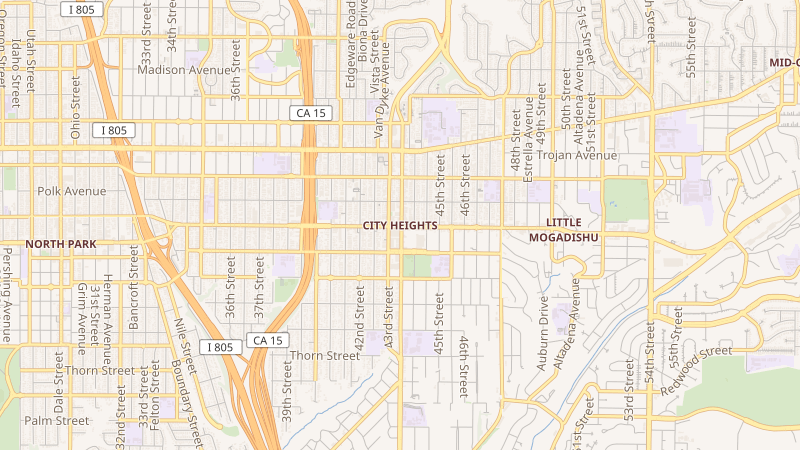
Two U.S. citizens — both women — were detained by Immigration and Customs Enforcement near a grocery store in City Heights on Tuesday. Witnesses described a confrontation with immigration agents. The Department of Homeland Security characterized the women as, in the agency's phrasing, "agitators attempting to impede operations." After officers interviewed both women, they were released without charges. The episode highlights a contested and unresolved legal question playing out in courts nationally: what rights U.S. citizens have to observe or document immigration enforcement actions, and what conduct constitutes unlawful interference. In San Diego, where immigration enforcement activity has been intensive this summer, the City Heights incident is unlikely to be the last of its kind.
After years of legal battles, empty floors, and political recrimination, the City Council has moved forward with converting the 101 Ash Street downtown office tower into 249 units of affordable housing. The structure involves a 65-year lease under which San Diego retains ownership and receives five percent compound interest on the building's value from the developer. Affordable units would serve households at 30 to 80 percent of area median income. The city is not selling the building — it is extracting long-term value from an asset that had become a source of political liability and no housing. Critics may question whether a different financing structure could have produced deeper affordability or more units; supporters counter that years of seeking alternative outcomes produced nothing, and the opportunity cost of a theoretically better deal is real only if that deal was actually on the table.
A unanimously advanced committee ordinance would, if adopted by the full City Council, require warning signs on or near cryptocurrency ATMs explaining common scams and directing users to city fraud-prevention and reporting resources. If passed, San Diego could become the first California city to mandate this type of consumer warning. Crypto ATMs have become a preferred instrument in fraud schemes targeting older adults in particular, offering near-instant, cash-based, largely irreversible transactions. A warning sign is a low-cost intervention — not a structural solution — but one with a real potential to interrupt a transaction in progress.
The Tijuana River sewage crisis, which the county estimated last week costs the region between one-hundred-and-twenty-five million and five-hundred-and-three million dollars annually, continues to affect South Bay communities in concrete, day-to-day ways. The County Health Department and the CDC are conducting a second door-to-door CASPER survey — Community Assessment for Public Health Emergency Response — in communities near the river, with teams visiting randomly selected homes Friday from 2 to 7 p.m. and Saturday from 10 a.m. to 7 p.m. This follows an initial survey conducted in 2024. The purpose is to track health effects over time in communities living with ongoing sewage contamination — a recognition that this is not a past emergency but a persistent condition.
Santee and East County: Community Events Fill the Weekend

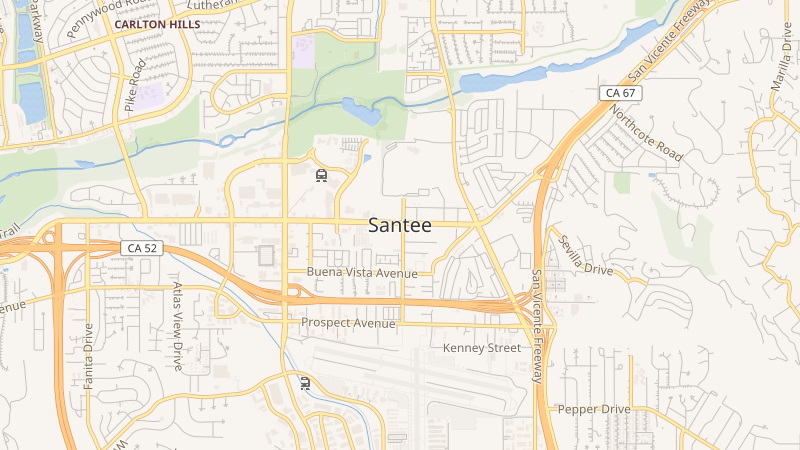
After a week defined largely by crisis and civic confrontation, Santee and the broader East County enter the weekend with a slate of community-oriented events. Tonight in Santee, a Candidate and Ballot Measure Forum is scheduled for 6 p.m. — prospective attendees should verify the venue through the city or local listings before heading out, as a specific location was not confirmed in available reporting. Candidate forums of this kind tend to draw residents committed enough to ask the questions campaigns prefer to avoid.
Saturday morning brings the Santee Fire Department and Firefighters Association's annual Pancake Breakfast at Fire Station 5, ninety-one thirty Carlton Oaks Drive, running from 7 to 10:30 a.m. Tickets are $5 at the door. In a week that included a North Park fire incident and persistent county-wide fire-risk concerns, the breakfast offers residents a direct way to show support for the people who respond to those calls. Saturday evening, Movies in the Park screens A Minecraft Movie, and residents looking further ahead can mark September twenty-sixth for the Fall Community Cleanup, Shred and Donation Event at Santee City Hall, ten-six-oh-one Magnolia Avenue, from 8 a.m. to noon — open to Santee residents only.
In La Mesa, Friday's schedule includes a free fall-prevention program and a screening of the documentary Saving Claire at Grossmont Healthcare District offices, nine-oh-oh-one Wakarusa Street, starting at 10 a.m. Friday evening at Mt. Helix Park, a Candlelight Open Air event pits a Queen tribute program against an ABBA tribute program, beginning at 8 p.m.
Salas Makes History, Padres Near Clinch, and a Marlin Breaks Records

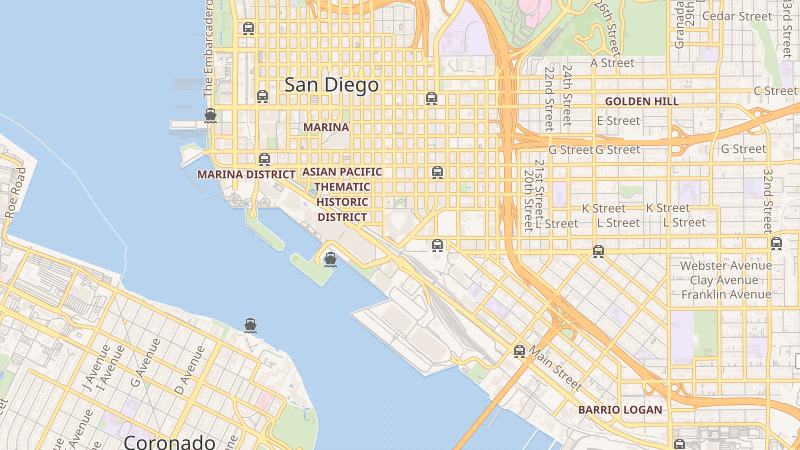
The Padres enter the weekend at 84-69, second in the NL West, after a 9-2 rout of Colorado on Thursday fueled by a seven-run second inning. The math is favorable for a postseason clinch as early as Sunday. Tonight they host Miami — sitting at 76-77, six games under .500 — at Petco Park, first pitch at 6:40 p.m., with the Padres opening as roughly two-hundred-and-two to two-hundred-and-four favorites.
The story generating the most attention heading into the series is 20-year-old catcher Ethan Salas, who on Wednesday hit two home runs against Colorado at Coors Field — a 426-foot solo shot and a two-run homer — to become the youngest catcher in Major League Baseball history to hit multiple home runs in a single game. That record will follow Salas through his career; that it arrived in a pennant-relevant September adds to its weight.
On the water, sportfishing captain Alec Stockfeldt reportedly landed a 648-pound blue marlin off San Diego, a new largest-fish-weighed record at Fisherman's Landing. In college soccer, San Diego State men's fell 2-0 to 25th-ranked UC Santa Barbara on Thursday night in Santa Barbara.
Weekend weather sets up favorably for outdoor plans across the region. Friday along the coast brings morning clouds clearing to mostly sunny by midday, highs in the 73-to-78-degree range, and afternoon westerly winds up to 10 miles per hour; marine winds shift west around 10 knots with seas running 3 to 4 feet Friday afternoon. Saturday warms further — mostly sunny after any early coastal cloudiness, inland temperatures reaching into the 80s with some hotter spots approaching 90, and overnight lows staying in the 60s. The Adams Avenue Street Fair runs Saturday and Sunday along a 10-block stretch of Adams Avenue in Normal Heights, free admission, 10 a.m. to 10 p.m. Saturday and 10 a.m. to 6 p.m. Sunday. Mission Bay Bayfair continues through Sunday, and San Diego Bunnyfest returns to Liberty Station on Sunday as a fundraiser for the San Diego House Rabbit Society. The La Jolla Art and Wine Festival is set for October 10-11, featuring more than 170 artists.