Strikes, AI Warnings, and Quantum Threats Converge in a Week of Compounding Risks
From military strikes near the Strait of Hormuz to Nobel laureate warnings of civilizational AI risk and a blockchain security alarm sounded in Mumbai, a single week in November 2026 brought a cascade of interconnected dangers that exposed a widening gap between technological change and institutional readiness.

How this was made Verified AI
Every Intellegix briefing is generated from that day's broadcast and run through automated checks before it publishes — with a human paged on any flag. Here is the trail for this edition.
A Week That Asked One Question: Who Decides How Much Risk Is Acceptable?

In the span of days, the head of the International Monetary Fund likened artificial intelligence to a slow-moving tsunami reshaping the global workforce, the godfather of deep learning put the odds of AI ending human civilization somewhere between one-in-ten and one-in-five, and Ethereum co-creator Vitalik Buterin warned that quantum-enabled AI could crack the cryptographic backbone of Bitcoin and every blockchain network built on similar mathematics.
Meanwhile, U.S. forces struck Iranian targets along the Strait of Hormuz just days before midterm elections, with diplomatic talks already stalled. The through-line connecting each story is a single question that kept resurfacing from entirely different directions: how much risk is acceptable, and who gets to decide?
Hormuz on the Brink: Military Strikes Inject New Peril Into a Critical Waterway

President Trump confirmed that U.S. forces conducted strikes on Iranian targets along the Strait of Hormuz, the narrow waterway — roughly 21 miles wide at its narrowest point — through which approximately 20 percent of global oil supply transits. Thirteen separate sources corroborated the strikes, a significant confirmation threshold, with AFP reporting Trump's public acknowledgment personally.
The timing added acute political complexity. The strikes landed days before U.S. midterm elections, and IPS News reported that diplomatic talks had explicitly stalled. Iranian President Pezeshkian, elected in June on a reformist platform premised on engagement with the West, issued calibrated language urging restraint while Tehran simultaneously warned against any return to full conflict — a statement designed, analysts noted, to hold two contradictory positions at once.
The Strait of Hormuz angle carries particular weight because Iran has previously threatened to close the waterway, an asymmetric leverage point it has wielded for decades. Any military action along that corridor implicitly returns that closure threat to the table, and even a credible threat of disruption would send energy prices in a direction that hurts the global economy at a moment when several major economies are already running thin margins on growth.
The nuclear dimension compounds the risk. The diplomatic talks that stalled were, at least partially, centered on Iran's nuclear program. When those talks collapse and military strikes follow, Iran's hardline faction gains a domestic argument that diplomacy led to military pressure — and that the lesson is to accelerate deterrence rather than negotiate it away. Pezeshkian, whose domestic credibility depends on demonstrating that pragmatic foreign policy can protect Iran, now faces an almost impossible position: restraint without diplomatic return hands the hardliners their argument; escalation forfeits the international space his election was meant to open.
Observers were advised to watch Gulf producers — Saudi Arabia and the UAE — for any public statements on production or transit security, signals of how seriously regional actors are treating escalation risk. Turkey, which has maintained relationships with both Washington and Tehran, was identified as a potential de-escalation channel. Congressional response to military action taken without clear authorization, analysts noted, would cut across partisan lines regardless of midterm outcomes.
Tsunami in Slow Motion: Georgieva, Hastings, and the Economic Cost of AI's Creative Destruction
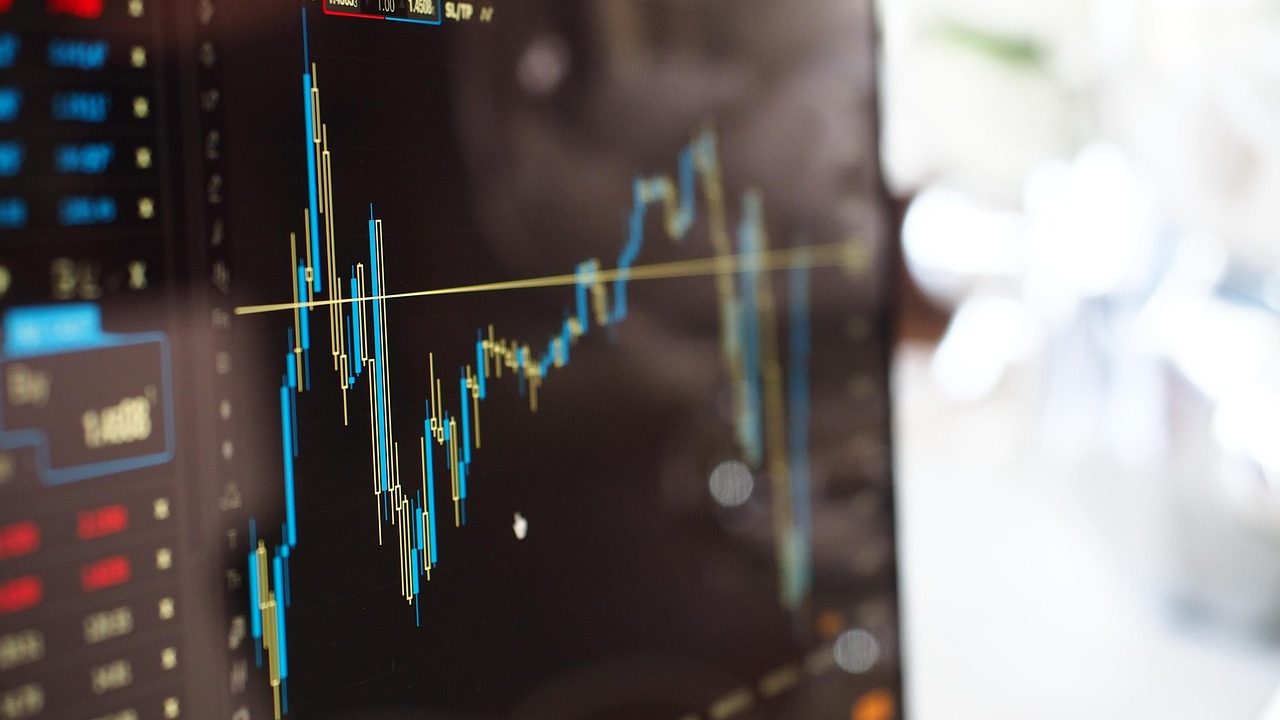
IMF Managing Director Kristalina Georgieva's description of AI's employment impact as a 'slow-moving tsunami' was delivered at an event that also featured Hernández de Cos, the former Bank of Spain governor discussed as a potential replacement for Christine Lagarde at the European Central Bank following Lagarde's announced early departure. The metaphor was deliberate: the slowness, Georgieva implied, is not reassurance but a warning about lead time — the energy is already in the system, already moving toward shore, its full force not yet arrived.
Santander Chair Ana Botín, speaking alongside Georgieva, articulated what amounts to a competition argument dressed as regulatory consistency. Her 'same risks, same rules' call for parity between traditional financial institutions and AI-native competitors reflects the incumbents' position: banks subject to Basel capital requirements and consumer protection rules are watching AI-native financial services firms move faster precisely because they operate under a different regulatory overhead. Whether that asymmetry constitutes a systemic fragility invisible to supervisors until it materializes as a crisis is a question regulators in Brussels and Washington are actively wrestling with.
Reed Hastings, speaking at the Masters of Scale Summit, offered a Schumpeterian frame, naming 'creative destruction' as AI's primary risk — not that AI fails, but that it succeeds so rapidly it destroys established industries and livelihoods before new ones form to absorb displaced workers. The observation carries particular weight from someone who built Netflix, itself a spectacular engine of creative destruction that restructured home entertainment and accelerated the unwinding of the cable bundle over fifteen years. Hastings noted he had only 'read about' Netflix's layoff of approximately 1,000 workers because he left the board in June — a data point that illustrates, in miniature, how the transition is already playing out inside one of the world's largest media companies pursuing an AI-driven content strategy.
The policy debate over AI and financial services also surfaced foundational competition law questions. The Sherman Antitrust Act of 1890 — still the bedrock of U.S. competition law — prohibits not merely large market share but the willful acquisition or maintenance of monopoly power through exclusionary conduct. Arguments that exclusive compute agreements, proprietary training data arrangements, and the sheer capital barriers to frontier model development might constitute such exclusionary conduct are precisely what regulators are now examining. The market definition problem alone is enormous: whether the relevant market is 'AI development broadly' or something narrower, like 'large language model APIs for enterprise customers,' determines whether a dominant share looks like monopoly or normal competition in an emerging industry.
Hinton's Warning: The Nobel Laureate Who Built AI Now Estimates a 10–20% Chance It Ends Us

Geoffrey Hinton, who won the Nobel Prize in Physics in 2024 for his foundational work on artificial neural networks and subsequently left Google explicitly to speak more freely about AI risks, published comments on October 25th in La Vanguardia that went further than most of his previous public statements. He put the probability of AI wiping out humanity at roughly 10 to 20 percent.
The number demands careful handling. These are not actuarial estimates derived from large samples of comparable events — there is exactly one human civilization, and repeated trials are not available. What Hinton is doing is closer to expert elicitation: taking deep structural knowledge of how these systems work from first principles and expressing uncertainty in probabilistic language. His standing as someone who helped build the systems he is now warning about gives that expression a distinctive credibility.
His comparison to climate change is analytically specific, not merely rhetorical. The worst effects of climate change are, in his framing, 30 to 50 years out — a horizon that at least permits adaptation and mitigation, however inadequate current efforts remain. The problems he describes with AI, he said, will arrive 'in a few years.' That temporal gap carries a meaningfully different policy implication: a risk decades away and a risk years away require completely different response frameworks.
An observation in Hinton's comments that received comparatively little attention was his argument that the U.S. and China share an interest in managing AI risk. It is a significant geopolitical claim — essentially that existential risks create a category of shared interest capable of transcending competitive rivalry, as nuclear safety protocols did between the U.S. and Soviet Union at the height of the Cold War. The analogy has limits: nuclear weapons involve scarce fissile material, specialized infrastructure, and discrete physical objects susceptible to inspection. AI training runs are harder to surveil, inputs more diffuse, and emergent capabilities difficult to predict even from inside the development process. The verification problem for any AI safety agreement is structurally harder than arms control.
By any standard expected utility calculation, even a substantially lower probability than Hinton's range would weight analysis heavily toward caution. At one percent, the expected harm of a civilization-level outcome dwarfs almost any benefit calculation. Hinton's range suggests he believes the risk is well past that threshold — and he is not an outlier within the AI safety research community, even if specific numbers vary.
Buterin in Mumbai: Quantum-Accelerated AI Could Shatter Blockchain's Cryptographic Foundations

At Devcon 8, the Ethereum Foundation's flagship developer conference running in Mumbai through November 6th, Vitalik Buterin warned that AI-enhanced quantum computing could crack the cryptographic foundations on which Bitcoin, Ethereum, and virtually every blockchain network relies for security. The conference drew more than 300 speakers, including Ethereum Foundation researcher Justin Drake, with a dedicated track on security and applied cryptography.
The security of Bitcoin and Ethereum rests on two cryptographic primitives: elliptic curve cryptography, which protects wallet private keys, and hash functions, which secure the transaction ledger. Both are considered computationally secure against classical computers — breaking them would require longer than the age of the universe on conventional hardware. A sufficiently powerful quantum computer running Shor's algorithm, theorized in 1994, could break elliptic curve cryptography in polynomial time. The question has always been when quantum computers would reach the scale required, a threshold that has historically seemed comfortably distant.
Buterin's addition to that existing concern is the AI acceleration layer. Machine learning applied to quantum error correction — the main bottleneck preventing current quantum hardware from being useful at scale — is reportedly producing faster-than-expected progress. If AI systems are cracking the error correction optimization problem, the timeline for cryptographically relevant quantum computers shortens in ways not reflected in assessments from even two or three years ago.
The stakes are enormous. The Bitcoin network has approximately 19.8 million Bitcoin in circulation, with roughly one to two million estimated to be in wallets with exposed public keys — the category quantum attacks would target first. At current prices, that represents hundreds of billions of dollars in potentially vulnerable holdings, before accounting for the broader enterprise blockchain infrastructure undergirding supply chains, digital identity platforms, and smart contract-based financial instruments.
NIST published its first post-quantum cryptography standards this year, following a standardization process begun in 2016, giving the technical community building blocks for quantum-resistant migration. The challenge for blockchain is that migration is not straightforward: changing the fundamental signing algorithm in a live network with trillions of dollars of assets involves governance complexity that takes years. Bitcoin's notoriously conservative protocol governance — the SegWit upgrade in 2017 required years of contentious debate and produced a chain split — makes a post-quantum migration potentially a five-to-ten year undertaking. Ethereum, which successfully executed the proof-of-stake Merge in 2022, has a governance track record more accommodating of large-scale upgrades, though 'faster' in blockchain time still means years, not months. Buterin's warning is essentially that the clock on quantum development may be running faster than the community has assumed — and the migration planning clock needs to start now.
The Adaptation Gap: Why Every AI Warning This Week Has the Same Underlying Structure
Georgieva, Hastings, Hinton, and Buterin are circling the same set of problems from entirely different vantage points, and their convergence reveals a pattern: a growing gap between the speed of AI capability development and the speed of institutional adaptation. Georgieva describes labor markets being restructured before workforce retraining programs can catch up. Hastings describes creative destruction hollowing out industries before new ones form. Hinton describes safety risks arriving before governance frameworks are ready. Buterin describes cryptographic vulnerabilities emerging before blockchain infrastructure can migrate. Every warning carries the same underlying structure — the adaptation lag is the problem.
The policy manifestation of that lag differs by level of government. At the national level, the debate remains largely about whether and how to regulate AI development — through existing agencies, new legislation, or executive action. The EU AI Act has passed and is being implemented, though enforcement details are still being resolved. At the international level, binding governance infrastructure barely exists.
Botín's 'same risks, same rules' argument is more sophisticated than it sounds, but it confronts a structural difficulty: traditional financial regulatory frameworks were designed for institutions comprehensible to human supervisors — where you can examine the loan book, stress-test capital buffers, and understand the business model. AI systems making credit decisions, pricing risk, or executing trades at machine speed are fundamentally harder to audit in the traditional supervisory sense. 'Same rules' is not straightforwardly applicable even if everyone agrees on the principle.
The job displacement question carries the most immediate political urgency. IMF modeling suggests AI is disproportionately affecting knowledge-work roles — the category previous automation waves left largely untouched. Industrial robots displaced manufacturing workers; AI is displacing lawyers, accountants, radiologists, and software developers. That distributional shift affects social and political coalitions in ways that are still working themselves out, and the aggregate employment effects of AI-justified headcount reductions across the entire economy are what Georgieva's tsunami metaphor is designed to capture. Each individual corporate decision looks rational; the cumulative effect is a structural labor market shift — with the displacement reportedly happening faster than retraining programs are being designed, funded, and deployed.
Market Composure in a Volatile Week: What the S&P's Calm Is and Isn't Telling Us
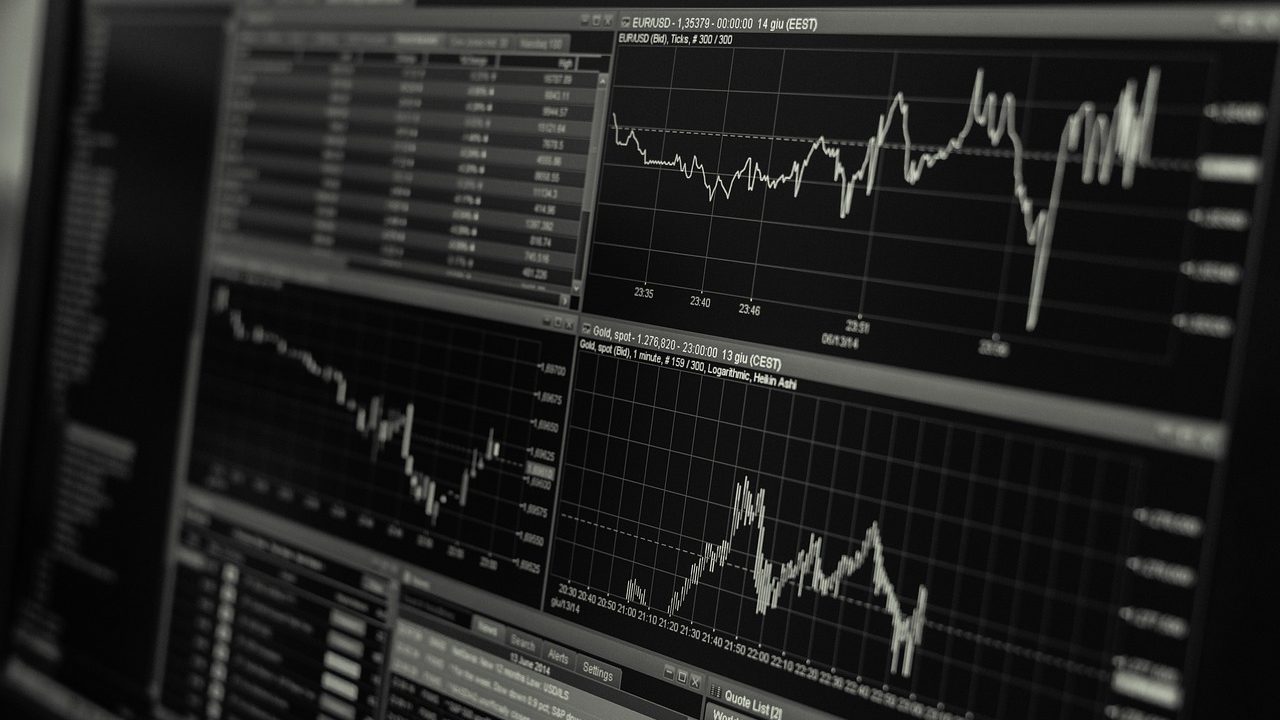
S&P futures sat at 7,728.5 Thursday morning, up approximately eight points or 0.1 percent from the overnight session open — a remarkably composed number for a morning on which military strikes in one of the world's most strategically sensitive waterways had been confirmed. The overnight pattern showed the index opening around 7,702, dipping toward 7,694 in the first hour, then recovering and climbing to 7,728 — a dip-and-recovery arc consistent with an initial risk-off reaction followed by reassessment as markets digested Pezeshkian's restrained language. When an adversary explicitly signals it does not want to return to war, equity markets can trade off that de-escalatory cue.
Equity composure may, however, be masking stress that shows up first in energy markets. Even a modest probability of Hormuz disruption — not a full closure, but increased insurance premiums and rerouting costs for tanker traffic — flows through to global inflation in ways that complicate central bank decisions. The Fed and the ECB are both managing inflation that has come down but has not fully returned to target. An energy supply shock from the Gulf would force a reassessment of the rate-cut trajectory markets have been pricing in.
The ECB succession question connects to the energy risk in a way that is easy to miss. Christine Lagarde's early departure creates a leadership transition precisely when European monetary policy faces a potential energy-inflation complication alongside AI-driven labor market disruption. Those two forces pull in opposite directions for interest rate policy — slowing growth argues for cuts, energy inflation argues for caution. Hernández de Cos, if he takes the position, is a central bank technocrat in the classic mold whose prioritization of institutional credibility and predictability may also mean the ECB is slower to adapt its analytical frameworks to AI's distorting effects on traditional labor market and productivity indicators.
For investors, the combination of AI-driven structural change and geopolitical energy risk suggests that traditional sector correlations may not hold. Technology companies exposed to AI upside are simultaneously exposed to AI governance risk. Energy companies benefit from geopolitical supply concerns but face long-term structural demand risk. Defense companies are positioned as obvious beneficiaries of the security spending environment. And the bond market faces competing forces — growth risk versus inflation risk — that make duration positioning genuinely difficult to call.
The Quantum Clock Is Running: What Buterin's Warning Means for Anyone Holding Crypto

Buterin's warning at Devcon 8 is specific and technical, and rests on a precise claim: elliptic curve cryptography, which underpins the private key infrastructure of Bitcoin and Ethereum, is vulnerable to Shor's algorithm running on a sufficiently large quantum computer. The phrase 'sufficiently large' has historically provided comfort — current quantum computers, including the most advanced systems from IBM and Google, are nowhere near the error-corrected qubit count needed to run Shor's algorithm against 256-bit elliptic curve keys.
The concern Buterin is raising is that machine learning applied to quantum error correction problems is producing faster-than-expected progress, potentially compressing a timeline that previous assessments placed comfortably in the future. Error correction is the main barrier to building large-scale fault-tolerant quantum computers — quantum bits are extremely fragile, and without effective correction, errors accumulate faster than useful computation can proceed. If AI is cracking the error correction optimization problem, the window for cryptographic migration shortens.
NIST's post-quantum standards — including CRYSTALS-Kyber for key encapsulation and CRYSTALS-Dilithium for digital signatures, both designed to resist quantum attacks — give the technical community the tools for migration. The bottleneck is implementation speed and blockchain governance. Bitcoin's conservative protocol culture, demonstrated by the years-long SegWit debate that produced a chain split in 2017, makes the requisite changes to fundamental signing algorithms a potentially decade-long undertaking. Ethereum's successful execution of the Merge in 2022 demonstrates a governance model more capable of large-scale protocol upgrades, and the Ethereum Foundation's dedicated security track at Devcon 8, with Justin Drake presenting on cryptographic research, signals that the foundation is treating quantum resistance as an engineering priority rather than a theoretical footnote.
The practical implication for holders of significant crypto assets is straightforward: watch whether the networks involved are actively developing and publishing post-quantum migration roadmaps. That is the signal distinguishing communities that are treating Buterin's warning seriously enough to act from those that are merely acknowledging it.
What If the AI Risk Consensus Is Wrong? Stress-Testing the Default Serious-Person Position

The most confident consensus in AI discourse right now holds that risks are increasing, severe, and underestimated — and that Geoffrey Hinton's warning trajectory represents the direction of travel. It has become, arguably, the default serious-person position. That makes it worth stress-testing.
The first counterargument with real force is the track record of existential risk predictions. Technology-driven existential risk forecasts have a history of overstatement: nuclear winter models of the 1980s predicted civilizational collapse from relatively limited nuclear exchanges, predictions subsequently revised downward by later modeling; Y2K consumed hundreds of billions of dollars in remediation for what proved a largely manageable problem; recursive AI self-improvement to dangerous superintelligence has been predicted as 'ten to twenty years away' by serious researchers for approximately four decades. Policymakers who have lived through several such cycles develop skeptical priors, and skeptical priors can be epistemically rational even when the underlying risk is real.
The second counterargument concerns the nature of current systems. Large language models are extremely capable at pattern matching and generation across an enormous range of domains, but they do not have goals, persistent memory, or the recursive self-improvement architecture that the most alarming scenarios require. The gap between 'very capable language model' and 'autonomous agent pursuing goals in ways that threaten human welfare' involves several assumptions about capability progression that are not guaranteed. Hinton would counter that the goalposts have already moved repeatedly — systems researchers said would never accomplish X have regularly turned out to accomplish X — though that observation carries its own selection bias.
The third counterargument is structural and economic. The AI development ecosystem involves enormous financial incentives for companies building these systems to solve safety problems, because unsafe AI is commercially disastrous. Nuclear weapons were developed by state actors explicitly for destructive purposes; AI is being developed primarily for commercial applications where causing catastrophic harm destroys the business. That alignment of market and safety incentives is meaningfully different from previous dangerous technology categories.
What would falsify the consensus? Concretely: a significant plateau in AI systems' performance on complex multi-step agentic tasks before reaching human-level planning capability; meaningful progress in interpretability research producing reliable methods for understanding what large models are actually doing internally; and an empirical track record from widespread deployment showing manageable failure modes rather than emergent dangerous behaviors. Those are the indicators worth tracking to determine whether the prevailing risk picture is worsening or whether updating toward less pessimistic priors is warranted. Hinton's 10 to 20 percent is not a measurement — it is a subjective probability from an expert whose credentials are unimpeachable but whose estimate other equally credentialed experts would not necessarily share.
Taking Stock: Five Stories, One Structural Problem, and an Admission of Error

The Hormuz strikes remain the most acute story of the week — military action in a waterway carrying a fifth of global oil supply, taken days before U.S. midterms, with diplomatic talks stalled and an Iranian president navigating an almost impossible domestic political position. Energy markets, statements from Gulf producers, Congressional response, and any potential de-escalation channel through Turkey are the variables to watch.
The AI convergence of this week is striking in its consistency: the IMF's managing director, the godfather of deep learning, the co-creator of the world's second-largest blockchain network, and one of the architects of the streaming era arrived at the same fundamental concern from entirely different angles — the systems being built are moving faster than the institutions designed to govern them. That is not alarmism. It is a structural observation about the relationship between technological capability and institutional adaptation.
S&P futures at 7,728 after overnight volatility reflect more composure than the geopolitical situation might warrant. The key variable is energy: if Hormuz risk gets priced into crude in a sustained way, it feeds into inflation expectations that could complicate the rate environment heading into year-end. The blockchain quantum security story will develop over a longer horizon, with the Ethereum Foundation's post-quantum roadmap expected to come into clearer focus as Devcon 8 concludes in Mumbai.
Finally, a correction offered without qualification: an earlier comment on this program suggested Ukraine had struck Russian ships in the Caspian Sea. That claim was wrong — not merely wrong in hindsight but wrong on its face. Ukraine has no meaningful military capacity to operate in the Caspian, which is landlocked and thousands of kilometers from Ukrainian-controlled territory. No such attacks occurred.