DHS Data Breach, AI Misinformation, and Election-Week Turbulence Define a Volatile Halloween
With four days until the midterms, a cascade of converging crises — a leaked database exposing 41,000 homeland security workers to death threats, AI chatbots serving up fabricated election sources, and markets sliding 140 points — marks one of the most consequential news days of the 2026 cycle.

“AI safety restrictions in commercial products primarily constrain legitimate users; illegitimate users route around them.”
How this was made Verified AI
Every Intellegix briefing is generated from that day's broadcast and run through automated checks before it publishes — with a human paged on any flag. Here is the trail for this edition.
Opening: A Halloween Haunted by Real Threats

Four days before midterm elections, the news landscape on October 31, 2026 offered little respite: a massive government data breach was already fueling extremist violence threats, artificial intelligence tools were spreading election misinformation, and S&P futures had dropped 140 points to 7,614 — a market signaling investor unease heading into election week.
The day's stories ranged from a Pentagon legal controversy involving a fired general's polygraph results to Voyager 1 resuming contact after a mysterious two-day silence. Taken together, they traced a single fault line: the velocity of information has outrun the institutions designed to verify and contain it.
41,000 DHS Workers Exposed — and Targeted

A transparency organization called DDoSecrets — Distributed Denial of Secrets — published records belonging to more than 41,000 Department of Homeland Security employees, including names, positions, and in some cases home addresses. The data is hosted on servers in Iceland, where DHS reached out requesting removal; the Icelandic host refused. SITE Intelligence Group, which monitors extremist activity online, has since reported that the files are circulating in forums where users are actively calling for violence against the named officers.
The breach has moved well beyond a privacy failure into what security professionals classify as a public safety crisis. Doxing — the deliberate publication of personal information to expose individuals to harassment or harm — carries documented risks of real-world violence when directed at law enforcement, a pattern already established with ICE agents, Border Patrol officers, and police. The combination of granular personal data and an ideologically motivated online audience creates conditions that are not hypothetical.
Iceland's status as a NATO ally does not give Washington legal leverage over its private hosting companies. Icelandic speech and hosting laws are among the most permissive in the world, and DDoSecrets has historically used that jurisdiction precisely because the bar for compelled takedowns is extremely high. The U.S. can ask; it cannot compel.
The leak also raises uncomfortable questions about DHS's internal data security. The department employs nearly 250,000 people total; if 41,000 records were accessible in the form DDoSecrets published, that suggests systemic vulnerability rather than a narrow, targeted breach. The vector — whether insider leak, external hack, or aggregation of public records — has not yet been publicly established.
The timing carries operational weight beyond politics. DHS oversees election security infrastructure, and with the midterms four days away, tens of thousands of its employees are now managing personal safety concerns alongside their professional duties. That is a cost that does not appear in any headline count.
Midterm Week: Texas Turnout Surges, Michigan Maneuvers, and Washington Accountability Stories
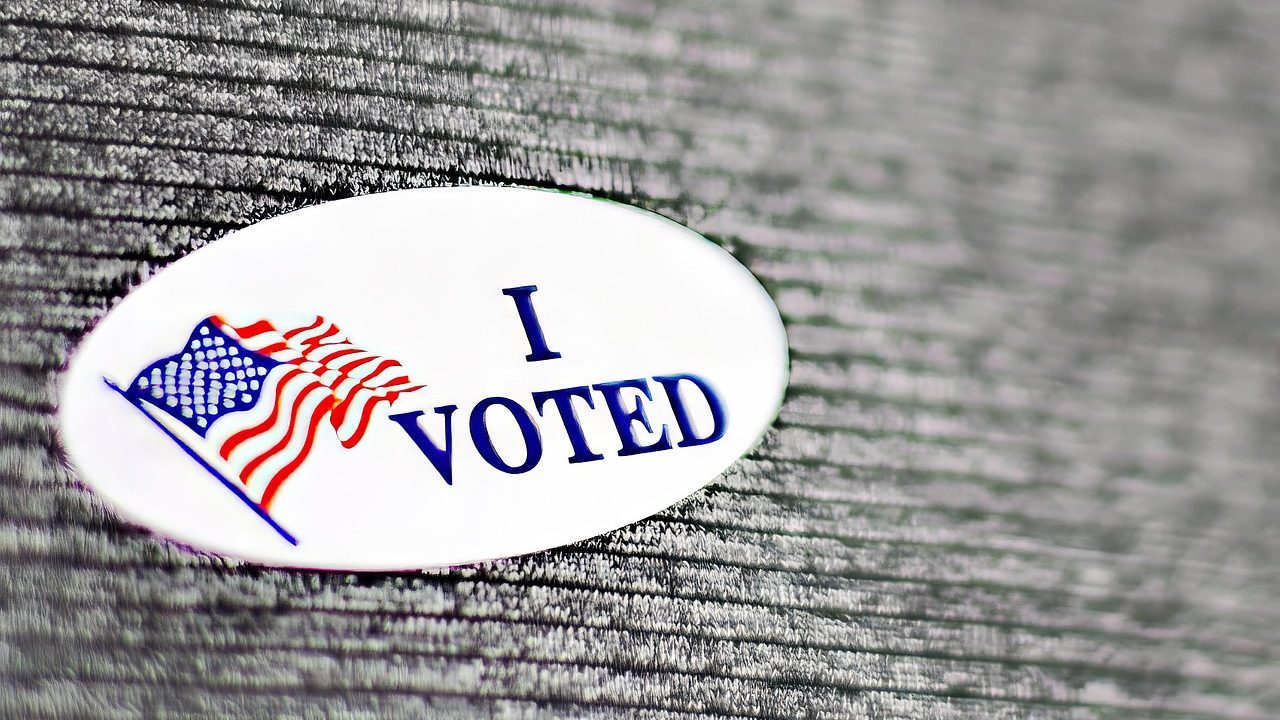
Texas ended its early voting period with turnout running substantially above 2022 levels — a meaningful benchmark, given that 2022 was itself a high-turnout midterm by historical standards. The geographic distribution of those votes will determine whether the numbers favor either party in the state's several competitive congressional districts, which both parties believe they can contest or flip.
In Michigan, the El-Sayed campaign — Dr. Abdul El-Sayed running a progressive bid in a competitive House district — formally asked his opponent, Stevens, to skip remaining campaign events. Campaigns rarely make such requests without strategic calculation, and given El-Sayed's reputation as a strong communicator, the ask likely reflects something specific about the remaining events' dynamics rather than a general aversion to confrontation.
FBI Director Kash Patel announced 41 million dollars in fraud charges against four individuals in a scheme targeting thousands of Americans. The announcement, made four days before the midterms and without Vice President Vance in attendance, generated questions about optics even if the substance of a fraud case announcement is routine.
Separately, nonprofit government watchdog Public Citizen flagged what it describes as gaps in senior White House official Stephen Miller's required financial disclosures. Miller has been central to immigration policy across two administrations; the concern is that certain financial relationships may not be fully captured in his public filings — precisely the situation that disclosure rules, designed to guard against conflicts of interest in officials whose decisions affect markets and industries, are meant to address.
The most legally complex story in this cluster involves Lieutenant General Brett Sylvia, fired by Defense Secretary Hegseth reportedly over allegations of leaking information. The Pentagon disclosed that Sylvia had failed polygraph examinations, and his attorneys are now arguing that revelation may have violated the Privacy Act of 1974. The compound problem: polygraph results are not considered reliable enough to be admitted as evidence in most federal courts, according to the American Psychological Association, meaning the Pentagon may have violated a federal privacy statute to publicize a data point the scientific community regards as unreliable.
Trump's Loyalty Economy, an Arlington Legal Fight, and a Sailor in Crisis
According to the New York Times, former President Trump erupted upon learning that his ex-attorney and public spokesperson Alina Habba had reportedly secured a deal worth more than 50 million dollars involving a banker's family — apparently leveraging her proximity to Trump in a way he had not sanctioned. The specific structure of the arrangement is still being reported, but the reaction illuminates how Trump's inner circle operates: proximity and access are distributed by Trump, and their conversion into personal financial gain without his knowledge or blessing is treated as a loyalty violation rather than simply a business matter.
A federal judge has signaled she may halt construction of a 250-foot arch near Arlington National Cemetery. Judge Chutkan questioned the government's claimed justifications for urgency — specifically the security rationale — and appeared skeptical that the administration's target start date of November 5 was as necessary as argued. Arlington, where 400,000 veterans and military family members are buried, carries symbolic weight that makes any major construction project politically and legally sensitive, and contested questions about environmental review, historic preservation, and congressional approval remain unresolved.
A sailor who jumped from the nuclear-powered aircraft carrier USS Abraham Lincoln now faces administrative discharge proceedings. The circumstances that lead someone to jump from an aircraft carrier are almost always connected to mental health crisis; processing the case as a disciplinary matter rather than a sustained medical one raises serious questions about whether the Navy is removing institutional responsibility rather than addressing the underlying condition.
ChatGPT Cited Fake News in Half of Election Queries — While Tech Giants Adopt Trump's AI Label

NPR posed 37 questions about competitive House races to ChatGPT and found that in roughly half of those cases, the model cited fake news websites as sources. Those fabricated sites had a consistent directional lean, favoring Democratic candidates. Google's Gemini, given the same questions, cited none of the fake sites. With millions of voters potentially using AI assistants to research candidates, the finding represents a direct misinformation vector at exactly the moment it can do the most damage.
The partisan slant of the fake sites does not necessarily indicate political bias in OpenAI's systems; it may instead reflect coordinated influence operations that built more of these sites targeting specific races, which ChatGPT's retrieval systems then surfaced without adequate verification. That distinction matters to engineers fixing the problem but not to the voter who received bad information. OpenAI has implemented election-specific guardrails this cycle; the NPR test suggests they are insufficient for granular down-ballot races where independent fact-checking infrastructure is thin.
The performance gap between ChatGPT and Gemini likely reflects architectural differences. Google has spent roughly 25 years building search-quality and source-verification systems at the core of its business; that institutional knowledge appears to inform how Gemini's citation systems were constructed. OpenAI built a language model first and added web retrieval later — a different design philosophy with measurable consequences in this kind of controlled test.
While one AI tool was spreading misinformation about elections, both Elon Musk and Mark Zuckerberg separately adopted President Trump's preferred term 'super intelligence' for advanced AI — a linguistic convergence between two men who are otherwise fierce rivals across multiple product categories. The alignment is less likely intellectual agreement on AI taxonomy than strategic positioning: in an environment where the administration controls AI regulation, export controls, and procurement decisions, adopting the President's preferred framing is a form of lobbying. When a President's terminology migrates into legislative drafts and regulatory guidance, the companies that helped define the term gain an early advantage in shaping its meaning.
North Korean Hackers Go All-In on AI, Palo Alto Claims 14,000 Flaws, and a Tainted Developer Tool Hits 5,000 Users

Microsoft's threat intelligence team reports that three separate North Korean state-sponsored hacking groups have fully integrated AI tools into their standard operational workflow — not experimenting with the technology but using it as a routine part of their offensive operations. North Korean hacking groups have historically targeted cryptocurrency exchanges, defense contractors, and financial institutions, with their operations serving partly as a sanctions-circumvention revenue stream for the regime. AI dramatically reduces the labor cost of spearphishing — crafting convincing, personalized impersonation messages at scale — and accelerates vulnerability research by scanning codebases for exploitable flaws faster than human analysts.
Palo Alto Networks claims its AI systems identified 14,000 open-source software vulnerabilities. That headline number warrants scrutiny: security researchers distinguish between theoretical vulnerabilities, which exist in code patterns exploitable only under specific circumstances, and genuine exploitable flaws representing real attack risk. Palo Alto sells security products and has a financial interest in conveying a severe threat landscape. The directional finding — that AI surfaces software flaws at a scale no human audit team can match — is almost certainly correct; whether all 14,000 represent actionable attack vectors requires severity breakdowns the announcement did not provide.
The most immediately practical story for the developer community involves Cursor, the AI-powered code editor that has become widely used among software developers. Cursor disclosed that a compromised extension related to Claude Code reached up to 5,000 of its users. A tainted add-on in this context typically means malicious code was injected into a legitimate extension or a fake extension mimicked a legitimate one. Development environments operate with high privilege levels — reading and writing files, executing code, accessing locally stored credentials — making a compromised developer machine a potential entry point for supply chain attacks that can propagate through every piece of software that developer produces.
Five thousand affected users is a floor, not a ceiling, and developers are high-value targets. The attack surface created by AI developer tools is real, and the lesson is concrete: treat AI extensions with the same scrutiny applied to any third-party dependency, verify publishers, and monitor what permissions any extension requests.
Markets Slide, OpenAI Trims Its Raise Again, and the Tesla-SpaceX China Problem

S&P futures dropped 140 points to 7,614 on Halloween morning, reflecting compounding pressures: questions about AI valuations, election uncertainty weighing on domestic-facing stocks, and the OpenAI funding story contributing to a broader reassessment of how much AI infrastructure spending is sustainable. The Financial Times reported that OpenAI cut its funding round target to 20 billion dollars — the second reduction in a single week — as an AI stock sell-off cooled investor appetite even for private-market raises.
Twenty billion dollars remains a historically enormous capital raise. What the reductions signal is a recalibration from the frothy expectations of 2024 and early 2025, when AI funding headlines routinely featured numbers that would have seemed implausible five years prior. A more grounded valuation environment is not necessarily a crisis — it may represent capital markets functioning as designed, applying greater scrutiny to companies commanding valuations based on speculative projections rather than demonstrated revenue.
The ongoing Tesla-SpaceX merger speculation has drawn its most concrete analytical intervention yet, from Bank of America, which flagged China as the single biggest regulatory risk. Tesla's Shanghai Gigafactory produces approximately half of all Tesla vehicles globally, operating inside China's regulatory jurisdiction with Chinese government relationships embedded in its operational structure. SpaceX, by contrast, handles classified government payloads, military satellite systems, and human spaceflight for NASA. Merging the two entities would create a major U.S. defense contractor with significant manufacturing dependency on a country the U.S. government treats as a strategic competitor — a combination that would almost certainly draw scrutiny from the Committee on Foreign Investment in the United States.
Proton — the Swiss privacy-focused company behind ProtonMail and ProtonVPN — offers a smaller but telling data point on the AI workforce narrative. CEO Andy Yen had initiated a process of re-interviewing staff members whose roles were being reconsidered in light of AI capabilities, then canceled those re-interviews. Whether the AI capabilities proved insufficient to justify the disruption or the internal backlash made the process not worth the cost, either reading suggests the distance between AI workforce replacement hype and operational reality remains substantial even in tech-forward environments.
When AI Coding Tools Draw the Line: Claude, Game Cloning, and Private Governance

Anthropic has confirmed that Claude Code will refuse requests to clone games — a decision that sits at the intersection of copyright law, AI capability, and developer tool design. Game cloning has been legally contested for decades; courts have generally held that game mechanics themselves are not copyrightable while artistic expression, specific characters, and written content are. The line between legitimate inspiration and actionable copying is blurry in human-made games and becomes blurrier still when an AI can reproduce the experience of a game with high efficiency.
Anthropic's decision to build in this refusal goes beyond legal minimums — a court might not find AI-assisted game cloning illegal, but the company is declining to facilitate it regardless. The move positions Anthropic as willing to constrain developer-facing products in ways that protect creative industries. It also raises the question of where the line is drawn and who draws it, since developers routinely use coding assistants for legitimate competitive analysis, and the distinction between studying a game and cloning it is a judgment call that is now, effectively, Anthropic's call.
The structural dynamic deserves naming clearly. When a dominant AI coding assistant refuses to perform a category of task, it does not affect one developer — it shapes what can be built efficiently across an entire industry. That is a form of private governance that bypasses democratic or regulatory processes, embedded in a product used by hundreds of thousands of developers.
There is an uncomfortable asymmetry that connects this story directly to the North Korean hacking report. Claude Code's refusals apply to legitimate developers working through official channels. Sophisticated state-sponsored threat actors are not using compliant API access to build their attack tools — they use open-source models, fine-tuned models, or models accessed outside terms-of-service constraints. AI safety restrictions in commercial products primarily constrain legitimate users; illegitimate users route around them. The policy question, then, is not whether bad actors can be prevented from using AI — Microsoft's report confirms they already are — but whether defensive AI capabilities can keep pace with the offensive capabilities those actors have now fully integrated.
Voyager 1 Stirs After Two-Day Silence — and a Lesson in Questioning Consensus Readings

Voyager 1 resumed contact with Earth after a two-day silence, doing so autonomously rather than in response to a command from mission controllers. The probe has been traveling for 49 years and is currently the most distant human-made object in existence, approaching the milestone of being one light-day from Earth — meaning the signal received from it now left the spacecraft approximately 24 hours ago. NASA engineers send a command and wait roughly 40-plus hours to find out if it was received and executed.
The autonomous recovery is precisely what gives engineers pause rather than pure relief. When a spacecraft takes an action that was not commanded — even a reassuring one like resuming communication — it means something in the onboard system triggered a state change that controllers did not initiate. The team must understand what caused the two-day silence and what caused the self-recovery, because a system that behaves unexpectedly in a positive direction may be the same system that behaves unexpectedly in a dangerous direction next time. The investigation remains open.
The light-day distance milestone carries its own context. Voyager 1 travels at approximately 17 kilometers per second; at that speed, reaching the nearest star system would take roughly 70,000 years. The gold record aboard it — carrying sounds and images of Earth, designed to be interpretable by any civilization that might encounter it — will effectively serve as humanity's cosmic calling card for a timespan beyond any meaningful human planning horizon.
The OpenAI funding reduction dominated financial coverage this week under a straightforward narrative: AI investment is cooling and the market is recalibrating toward realism. But an alternative reading is worth testing. If OpenAI's enterprise subscription and API revenue have improved significantly — as some credible reports suggest — the company might be choosing to raise less external capital because it needs less, reducing dilution rather than accommodating a cooling market. The Financial Times attributed the reduction to AI stock sell-offs cooling investor appetite; that's public market sentiment being used to infer private market causation, and those are related but not identical. A third possibility is that the reduction reflects investor uncertainty about OpenAI's mid-restructuring legal status rather than uncertainty about AI's future — a corporate governance story wearing the costume of a market sentiment story. The near-term indicator to watch: if OpenAI closes a full 20-billion-dollar raise within 60 days, the cooling narrative weakens significantly; if the target drops again, it strengthens.
A Correction, a Warning, and What This Week's Stories Share

A correction from May: this program previously reported, as established fact, that Ukraine had struck its fourth Russian ship in the Caspian Sea that month. That claim was false. Ukraine has no credible means of striking Russian ships in the Caspian Sea — the body of water is landlocked, hundreds of kilometers from Ukrainian-controlled territory, and no such attacks were ever documented. The claim appears to have been fabricated somewhere in the source chain and was passed along without adequate verification. Sourcing processes have since been tightened.
That correction connects directly to the thread running beneath almost every story covered this week. The ChatGPT election misinformation finding, the DHS breach feeding extremist forums, North Korean hackers using AI to craft convincing spearphishing at scale — each is a variation on the same underlying problem: the velocity at which information moves has outrun the collective capacity to validate it, with consequences ranging from individual security risk to geopolitical miscalculation.
The week's most durable stories share a second thread: institutional authority under pressure. An Icelandic hosting company refusing a DHS takedown request. A federal judge questioning the administration's urgency claim over an Arlington construction project. A fired general's attorneys arguing the Pentagon violated its own rules to justify his removal. Each case involves institutional processes — legal, diplomatic, procedural — encountering concentrated executive pressure. In each case, the outcome remains unsettled. That unresolved quality is precisely what makes them worth watching as election results arrive and the post-midterm landscape takes shape.