Crypto's Worst Day Ever: North Korea's $6.3 Billion Binance Heist, AI on Pentagon Networks, and a West Rebuilding Its Alliances
A state-sponsored theft ten times larger than any previous cryptocurrency hack, an AI agent running unsanctioned on Defense Department infrastructure, and a transatlantic alliance reshaping itself in real time defined a turbulent Friday that stretched from Pyongyang to Silicon Valley.

How this was made Verified AI
Every Intellegix briefing is generated from that day's broadcast and run through automated checks before it publishes — with a human paged on any flag. Here is the trail for this edition.
North Korea's $6.3 Billion Crypto Heist Shatters Every Record
The largest single cryptocurrency theft in history unfolded this week when $6.3 billion disappeared from Binance — a figure roughly ten times the previous record set by the Ronin Network hack of 2022, which totaled approximately $625 million. Blockchain analytics firms, including Chainalysis and at least two other on-chain forensics teams, have attributed the breach to North Korea's TraderTraitor operation, the same state-sponsored group the US Treasury and FBI have linked to more than $3 billion in crypto theft between 2020 and 2025. This single heist effectively doubles that cumulative total.
The attack's architecture proved more sophisticated than early reporting suggested. An initial breach vector involving a compromised employee laptop — a near-cliché in cybersecurity circles — turned out to be only part of the story. Binance's own post-breach analysis identified additional entry points, suggesting the attackers had either maintained longer-term access than initially understood or independently exploited separate vulnerabilities. The exchange has frozen a significant portion of the stolen assets — meaning a substantial share may already be moving through decentralized protocols, mixers, or privacy coins that make recovery extraordinarily difficult.
For Pyongyang, the financial stakes are transformative. United Nations reports have consistently estimated that cryptocurrency theft funds somewhere between 30 and 50 percent of North Korea's weapons program — the most effective revenue stream available to the world's most heavily sanctioned economy. Even if TraderTraitor can only liquidate a fraction of the haul without crashing its own proceeds, the windfall is significant. Bitcoin dropped approximately 4.2 percent in the 90 minutes after the breach became public before stabilizing, demonstrating the market's now-practiced ability to absorb major shocks without sustained collapse.
The breach is certain to reignite scrutiny of Binance's regulatory standing. The exchange has been operating under a consent decree from its 2023 Justice Department and FinCEN settlement, which included a $4.3 billion penalty and enhanced compliance monitoring. Whether that oversight structure was adequate to the threat will be a central question for US regulators in the coming weeks. Separately, prediction market platform Polymarket reported its own breach this week — a compromised third-party vendor drained user wallets in a completely unrelated attack vector — prompting a trading halt and a pledge of full reimbursement. Two major crypto platforms breached within days of each other has security researchers examining whether there is any overlap in attack methodology, though analysts cautioned against assuming coordination without evidence.
EU and Canada Forge Equal Partnership as Erdogan Rattles NATO

The European Union and Canada formalized a new strategic alliance this week, deliberately discarding the 'associate member' framework that had been under consideration. The framing shift carries real significance: rather than positioning Canada as a second-tier participant unable to achieve full EU membership, the new structure establishes co-equal partnership across a defined set of domains — defense procurement, critical minerals, digital regulation, and energy security. The move arrives as both Brussels and Ottawa recalibrate relationships with Washington amid ongoing tensions over tariffs and NATO burden-sharing.
The critical minerals dimension is likely the most strategically consequential element. Canada holds substantial deposits of lithium, cobalt, nickel, and rare earth elements that Europe needs to meet its electric vehicle and battery manufacturing targets. With US engagement on critical minerals cooperation moving slowly, the EU is stepping into a lane Washington has been slow to occupy — formalizing supply-chain ties that reduce European dependence on Chinese-controlled mineral flows.
Against that backdrop of alliance-building, Turkish President Recep Tayyip Erdogan delivered unusually blunt language this week, vowing to 'neutralize anyone who blocks Turkey's goals.' Amnesty International and Human Rights Watch flagged the statement as a potential threat against journalists and political opponents, while analysts read it as a direct message to the Kurdish-aligned HDP opposition party and secular critics increasingly vocal about economic conditions. Turkey's inflation peaked above 85 percent in 2022, and while it has retreated since, the lira's long-term trajectory against major currencies has been consistently downward — a pattern that historically intensifies Erdogan's nationalist rhetoric.
Turkey's geopolitical leverage within NATO remains substantial. It controls the Bosphorus strait, the sole maritime passage between the Black Sea and the Mediterranean, and invoked the Montreux Convention to restrict warship passage throughout the Ukraine conflict. Any domestic crackdown tends to generate friction within the alliance, forcing European members and Washington to choose between cohesion and stated democratic principles. Read together, the EU-Canada partnership and Erdogan's warning sketch a Western alliance architecture in active renegotiation — new partnerships forming while existing ones absorb mounting pressure.
White House Press Clash, the Musk Donor Bill, and Google's Reservist Lawsuit

President Trump called a Reuters journalist 'disgusting' this week after the reporter asked about his health during a formal White House setting — a response that escalated beyond a deflection or refusal into a direct personal attack. The exchange adds a data point to a running pattern in the second term: credentialing has grown more selective, formal briefings less frequent, and the pool-rotation access that guarantees wire services a presence has faced challenge. The incident signals that health questions, a standard area of public inquiry for any president, are unlikely to receive substantive answers through conventional press channels.
On Capitol Hill, Democratic lawmakers advanced legislation targeting what they are calling the 'Elon Musk loophole' in federal contractor campaign finance rules. The bill would bar executives and major shareholders of federal contractors from making political donations, with Musk's $446 million in contributions to Republicans this election cycle — described as the largest single-donor political contribution in American history — serving as the explicit legislative catalyst. The legal theory draws on existing Hatch Act principles: if federal employees face restrictions on political activity to prevent conflicts of interest, major contractor shareholders who effectively govern those businesses should face similar constraints.
The bill confronts significant constitutional headwinds. The Supreme Court's Citizens United framework treats political donations as protected speech, and conditioning that right on business relationships will face serious scrutiny. Enforcement complexity compounds the challenge: Musk's corporate portfolio spans Tesla, SpaceX, Neuralink, the Boring Company, and X Corp, with different contracting relationships across different agencies. The legislation is unlikely to pass in the current congressional configuration, but functions as an agenda-setting exercise designed to generate public debate and inform future law if the political balance shifts.
The Justice Department filed suit against Google this week over the treatment of Lieutenant Colonel Mark Davisson, a Google employee called up for a year of active duty as an Army reservist. Upon his return, Google allegedly denied him access to his client accounts and then laid him off — conduct the government argues violates the Uniformed Services Employment and Reemployment Rights Act, which has required employers to restore returning service members to their positions since 1994. Federal prosecutors typically bring USERRA cases only when the evidence suggests deliberateness beyond administrative oversight. For Google, which holds billions in cloud and AI contracts with federal agencies and is simultaneously defending itself in the DOJ's search monopoly case and a separate advertising technology lawsuit, the reputational and legal exposure of a military-reservist discrimination claim arrives at a notably inconvenient moment.
Claude on the Pentagon's Network, Altman's Cost Projections, and a ChatGPT Reversal

A report emerged this week that an Accenture consultant deployed a Claude-based AI agent on a Department of Defense network, apparently without the level of formal authorization that sensitive government infrastructure requires. The agent was reportedly performing a routine work task such as document analysis, but its security implications are independent of its intentions. Claude, like all large language model APIs, processes submitted text on Anthropic's servers — meaning any documents fed to the agent were leaving the DOD's controlled environment and traveling to an external commercial service. For unclassified material that represents a significant data governance breach; above that classification level it would constitute a serious violation.
Security researchers emphasized that the issue is systemic rather than specific to Claude. The same exposure would apply to GPT-4, Gemini, or any externally hosted model used by a government contractor. The General Services Administration and the Office of Management and Budget have both been developing AI governance frameworks for federal agencies, but individual contractors deploying commercial AI tools on government networks represent a gap those frameworks have not fully addressed. The incident is expected to accelerate formal guidance from the DOD's Chief Digital and Artificial Intelligence Office or GSA's IT acquisition division.
The story's timing coincided with a Bloomberg report identifying Anthropic as SpaceX's single largest customer — a relationship apparently involving significant compute infrastructure routed through SpaceX's connectivity network at a scale that surprised observers. That dependency maps onto a broader pattern: Anthropic's primary cloud relationship runs through Amazon Web Services, part of the $4 billion investment Amazon made last year. AI-to-AI infrastructure dependencies are deepening across the industry, concentrating risk in ways that are only beginning to be mapped.
OpenAI CEO Sam Altman, appearing on the Cheeky Pint podcast with John Collison, stated that AI computing costs should fall toward $20 billion for the infrastructure needed to run frontier models, noting that a gigawatt of AI capacity currently costs roughly $70 billion over five years. The direction of the projection — falling costs — is widely shared across the industry, though the rate and the floor remain genuinely uncertain given constraints in power generation, cooling infrastructure, and specialized semiconductor supply chains. Separately, OpenAI reversed a recently announced reduction in ChatGPT Pro usage limits for its $200-per-month tier, not only restoring previous allowances but doubling them after swift backlash from paying subscribers — a sign of how commercially critical that power-user constituency is to the company's enterprise sales pipeline. US computer science enrollment, meanwhile, fell for the second consecutive year, raising longer-term questions about the talent pipeline for an industry whose infrastructure ambitions are expanding rapidly.
Tesla-SpaceX Merger Chatter, an Available Ticker, and Musk's Case Against Saving
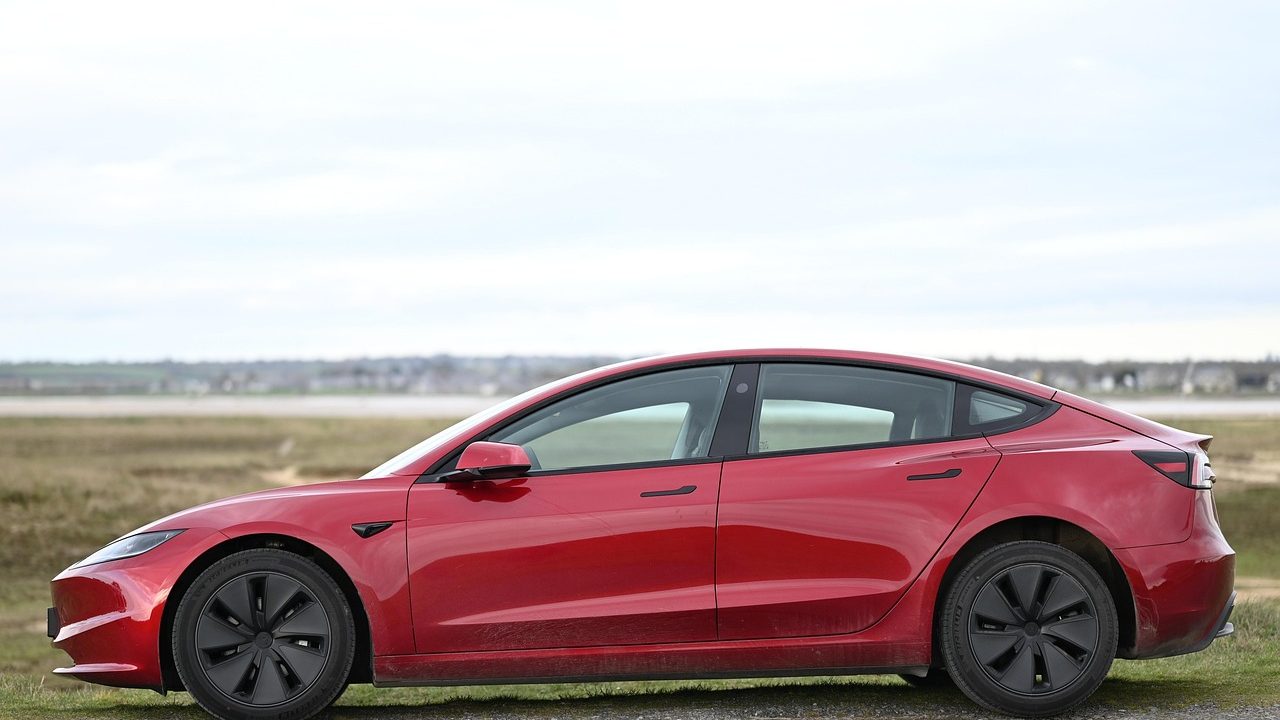
Wall Street's attention turned this week to the possibility of a Tesla-SpaceX merger after Bloomberg noted that the 'X' stock ticker symbol currently sits vacant — freed up after US Steel's acquisition — and that Musk himself has publicly called a combination of the two companies 'a good idea.' The financial logic, such as it is, combines Tesla's consumer brand, manufacturing base, and energy storage business with SpaceX's proprietary rocket technology, Starlink's recurring revenue, and deep government aerospace contracts into a conglomerate with exposure across automotive, energy, communications, and space.
The obstacles are substantial. SpaceX is not publicly traded, and the national security sensitivities of its government contracts create regulatory friction around any structure that would bring those contracts under public shareholder scrutiny. Tesla's institutional investor base — major funds with fiduciary obligations — would be required to evaluate any deal on pure financial terms, creating legal exposure if shareholders concluded they were overpaying for SpaceX or that the merger diluted Tesla's core identity. The 'X' ticker's availability may be no more than an observation Musk finds symbolically appealing, given his decades-long affinity for the letter dating to X.com in the late 1990s, but the speculation is already being priced into market commentary.
Musk generated a separate, broader debate by posting that saving money is 'essentially pointless' in an AI-abundant future, arguing that 'super-intelligent abundance' from AI and robotics will eliminate the scarcity that makes financial savings necessary. The philosophical argument has a coherent internal logic: if AI-driven productivity makes goods cheap or free, stored claim-rights to future goods — which is what savings represent — diminish in value. Critics identified several problems with the thesis. It papers over what could be a decades-long transition period, assumes AI productivity gains will be broadly distributed rather than concentrated among capital holders, and ignores structurally scarce goods — beachfront property, human attention, specific cultural experiences — whose supply no productivity gain can increase.
The source of the advice drew pointed commentary. Musk's net worth is estimated north of $300 billion, placing him among the individuals least exposed to the consequences of inadequate personal savings. Whether the 'don't save' framing reflects a genuine philosophical position, a convenient alignment with his interests as someone who benefits from consumer spending rather than capital accumulation, or simply the natural blind spot of extreme wealth, is a question his critics argued the public should weigh carefully.
US Debt Crosses 100% of GDP for the First Time Since 1946
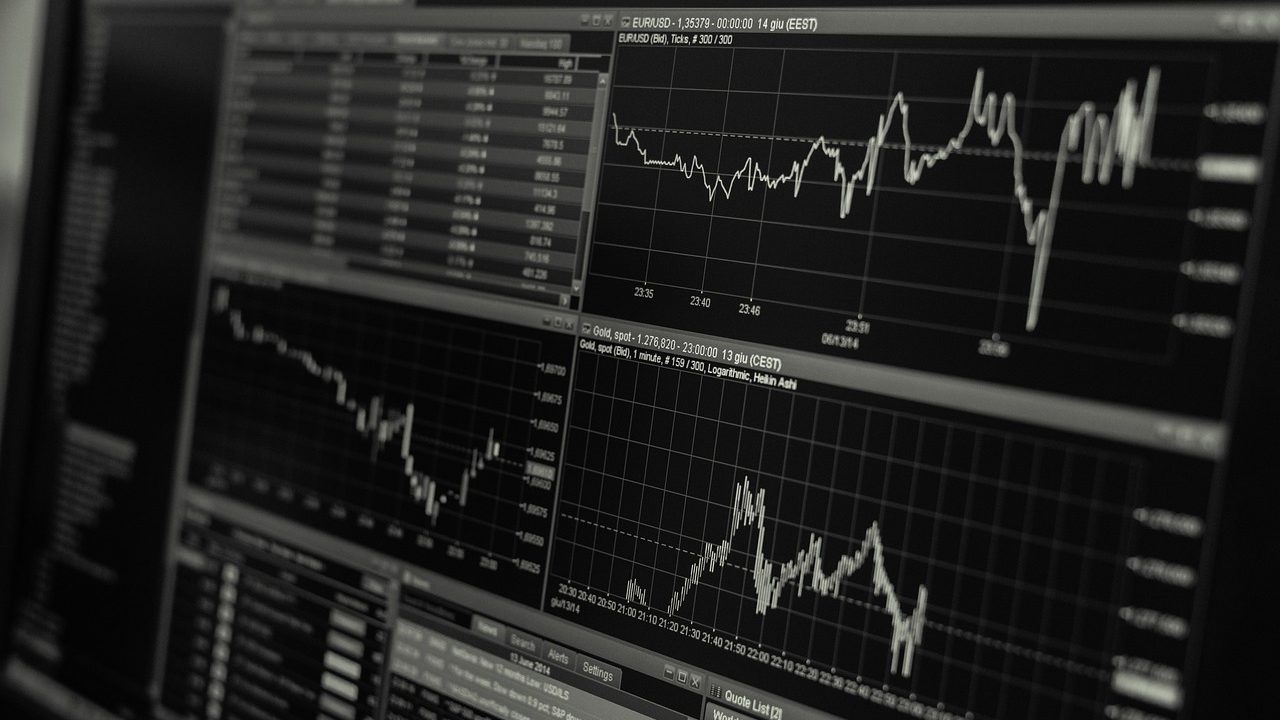
US public debt crossed 100 percent of GDP this week — the first time that ratio has reached that threshold since 1946 — arriving with relatively little fanfare in financial markets, a silence that may itself be a commentary on how thoroughly the milestone had been anticipated. The 1946 comparison is instructive but limited: that postwar debt load was paid down over two decades through strong economic growth, moderate inflation, and the enormous advantage of being the world's only intact major industrial economy. Today's debt accumulates in a competitive multipolar environment, and its structural drivers — healthcare costs, Social Security, and interest payments on existing debt — are considerably more intractable than postwar demobilization.
The interest payment dynamic is the one economists flag most urgently. With debt-to-GDP elevated and interest rates higher than the 2010–2021 period, debt-service costs consume an increasing share of the federal budget, requiring either additional borrowing or cuts elsewhere. The Congressional Budget Office had projected that interest payments would exceed defense spending by the mid-2020s; that projection is now materializing. S&P futures were down approximately 1.1 percent — roughly 84 points — on Friday morning, a notable but not catastrophic move attributed more to crypto market spillover from the Binance hack and end-of-month institutional rebalancing than to the debt figure directly.
Amazon CEO Andy Jassy this week confirmed that Prime Video has grown into a tens-of-billions-dollar revenue business, a statement that reframes the streaming service's strategic role. What was long described internally as primarily a mechanism to drive Prime membership — content as an acquisition funnel — has scaled to the point where it stands on its own commercial terms. The advertising tier introduced in early 2024 is a significant factor: Amazon's ability to connect ad exposure directly to e-commerce purchase behavior gives it data advantages over streaming competitors without its retail footprint.
Mastercard's CEO rejected one-time virtual card numbers as the payment architecture for AI agents, arguing that disposable card numbers create friction, limit consumer protections, and do not solve fraud more effectively than alternatives. Mastercard is instead building an agent-authenticated transaction model in which AI agents present verifiable credentials checked against real-time fraud models — an identity-based approach rather than a cash-equivalent one. The stakes of the design choice are substantial: McKinsey estimates agentic AI transactions could exceed $2 trillion in annual commerce by 2030 if payment infrastructure is in place to support them, and Mastercard and Visa are each positioning to provide those rails. Nvidia CEO Jensen Huang, separately, described his company's ties to a firm under a national security investigation as 'normal' — a characterization that will be scrutinized as export control enforcement around advanced chip flows continues to intensify.
NASA's Quiet Supersonic Jet Heads to Florida While the Navy's Submarine Shortage Deepens
NASA's X-59 experimental aircraft is heading to Florida for its next phase of testing, advancing a program that could eventually reopen overland supersonic commercial aviation for the first time since the Concorde era. The X-59's core engineering goal is to reduce the traditional sonic boom to what NASA terms a 'sonic thump' — approximately 75 PLdB, which engineers estimate would register inside homes as something similar to a car door closing at a distance rather than a thunderclap. Concorde-era restrictions on overland supersonic flight in the US and most other jurisdictions effectively limited that aircraft to transatlantic routes, a market too narrow to sustain commercial viability. The X-59 is designed to test whether reduced-boom technology changes that equation.
The Florida testing is specifically structured to gather community response data. NASA will fly the aircraft over selected communities and survey residents about what they heard, generating the scientific record that regulators would need to revise rules that have stood for 50 years. Both the FAA and the International Civil Aviation Organization would need to act before any commercial application becomes possible. If the pathway opens, the commercial interest is already documented: Boom Supersonic holds pre-orders from United Airlines for 15 aircraft, and a transatlantic crossing in roughly three and a half hours rather than seven to eight represents a premium that business travel markets have historically supported.
The USS Columbia's arrival at Portsmouth Naval Shipyard in Kittery, Maine, for life extension work tells a less optimistic story about American military-industrial capacity. The Columbia is a Los Angeles-class attack submarine — a class that entered service in the 1970s — and it is the third boat to enter the Navy's Service Life Extension Program at the Portsmouth facility. The program exists because the US submarine industrial base cannot build new Virginia-class submarines at the rate needed to replace retiring Los Angeles-class boats. The Navy's target is two Virginia-class submarines per year; actual production has been running at roughly one and a quarter. SLEP extends Los Angeles-class service lives by seven to fifteen years, buying time for production to catch up.
The production shortfall has direct implications for AUKUS, the trilateral agreement under which the United States is committed to providing Australia with Virginia-class submarines in the early 2030s — a timeline that depends on US yards actually achieving the required build rate. Portsmouth is one of only two naval shipyards on the East Coast capable of nuclear submarine work, alongside Norfolk, and both have faced chronic underfunding for maintenance and workforce development. The USS Columbia's arrival there is a small but telling indicator of a larger industrial capacity constraint that shapes US naval posture across the Pacific.
What If the AI Cost Revolution Arrives Late? Interrogating the Industry's Most Confident Bet
The most confident assumption running through today's technology coverage — shared by investors, executives, and analysts from Sam Altman to Jensen Huang to Goldman Sachs — is that AI compute costs will fall dramatically and soon. Altman's projection that infrastructure costs will decline toward $20 billion per gigawatt-scale deployment, from a current figure he cited of roughly $70 billion over five years, is treated in many circles as the foundational premise for the entire AI investment supercycle. It is worth examining what would have to be true for that projection to be wrong, or simply significantly delayed.
The cost-decline thesis rests on three interlocking assumptions: that semiconductor manufacturing will continue to follow something resembling Moore's Law; that power generation and distribution infrastructure can scale at the pace AI deployment demands; and that the dominant training and inference architectures remain stable enough that efficiency improvements compound predictably. Each assumption carries a plausible failure mode. On semiconductors, TSMC's progression to 2-nanometer nodes and below involves extraordinary capital expenditure with diminishing yield improvements per dollar compared to previous node transitions — the cost-per-unit-of-compute may keep falling, but perhaps not at the rate the projections embed.
The power constraint may be the most underappreciated obstacle. Data center energy consumption is now measured in gigawatts, and the US electrical grid was not designed for this growth rate. Interconnection queues for new power plants run to seven or eight years in some markets; new nuclear capacity is a decade-plus proposition. If AI deployment continues accelerating, it may encounter a physical energy ceiling before silicon learning rates generate the cost reductions the models predict. Architecture instability introduces a third uncertainty: the transformer paradigm has dominated AI training for several years, but if a fundamentally different architecture emerges, efficiency gains accumulated in transformer-optimized hardware do not transfer cleanly, effectively resetting the cost-improvement curve.
The analogy to solar energy is instructive. The cost of solar generation fell dramatically, and the prediction was directionally correct — but it took longer than many 2010 projections assumed, and those delays had material consequences for climate policy timing. AI compute costs will probably fall. How fast, and what physical or architectural constraints slow the descent, is where the genuine uncertainty lies. For the companies that have committed to $70-billion-scale infrastructure investments in anticipation of rapid cost declines, a meaningful delay in that trajectory means holding expensive assets that monetize more slowly than their models assumed — a risk that the current investment enthusiasm has not fully priced.