Tankers Burning, Borders Tense, and Institutions Under Strain: A World in Simultaneous Crisis
Seven tankers ablaze in the Strait of Hormuz, loudspeakers readied along the Korean DMZ, and a mass cybersecurity assault on government websites worldwide defined a turbulent Thursday morning that stretched from energy markets to Capitol Hill.
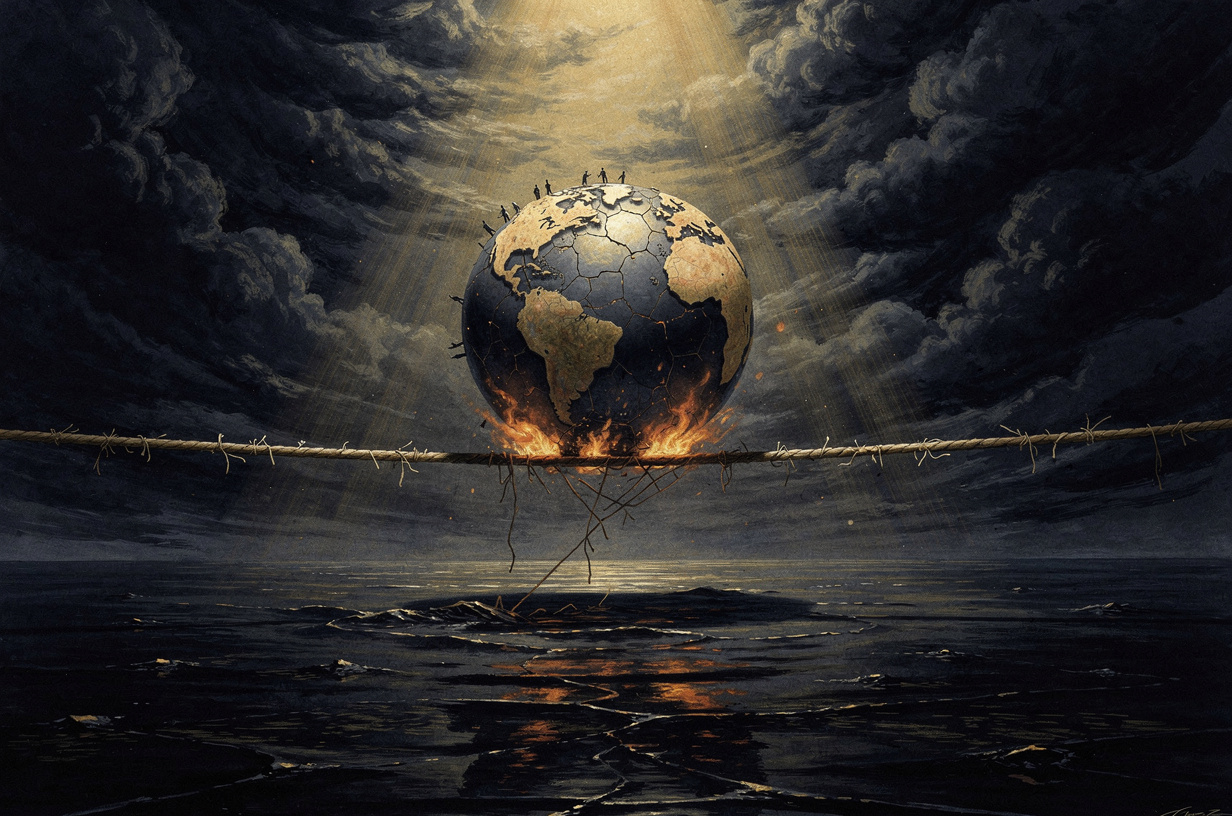
“The Strait of Hormuz measures just twenty-one miles across at its narrowest point, and roughly twenty percent of the world's seaborne oil passes through it daily.”
How this was made Verified AI
Every Intellegix briefing is generated from that day's broadcast and run through automated checks before it publishes — with a human paged on any flag. Here is the trail for this edition.
Seven Tankers Burning: Iran Strikes the World's Oil Chokepoint
Iran's Islamic Revolutionary Guard Corps Navy claimed responsibility overnight for striking seven tankers in the Strait of Hormuz — what would represent the largest single-day naval action since the U.S.-Israeli war against Iran formally began on February 28th. Reuters reported the IRGC's claim directly, and U.S. News confirmed that at least some vessels were on fire or severely damaged. The IRGC simultaneously issued explicit warnings to the United States of a wider response should Washington escalate further.
The strategic significance of the location is difficult to overstate. The Strait of Hormuz measures just twenty-one miles across at its narrowest point, and roughly twenty percent of the world's seaborne oil passes through it daily. Disrupting seven tankers simultaneously — likely through coordinated drone swarms, anti-ship missiles, or fast-boat tactics, all of which the IRGC rehearsed in Persian Gulf exercises in late 2025 — signals Iran's capacity to threaten global energy supply chains even while operating under military pressure.
Markets responded immediately. S&P futures fell nearly one percent to around 7,726, a movement that tracked almost precisely with the timing of the Strait reports breaking around midnight Eastern. Energy analysts have warned for months that sustained Hormuz disruption could push Brent crude above one hundred and twenty dollars per barrel. That level had not yet been reached, but the risk premium was being priced in real time.
A notable political dimension emerged from ten days prior: audio obtained by Politico captured Peter Thiel — a significant financial and intellectual backer of Donald Trump's political coalition — calling the Iran war a mistake in a Nashville lecture on October 12th. Thiel reportedly said he still supports the president personally, but argued the conflict is strategically incoherent, that the U.S. lacks a clearly defined end state, and that the economic costs in energy markets are being underestimated. Such a critique from inside the MAGA coalition, analysts noted, creates permission for other voices within it to express doubts they may have been sitting on.
The IRGC's deliberately ambiguous threat of a 'wider response' raised uncomfortable questions about what that might entail in practice — proxy actions through Hezbollah or Iraqi militias, attacks on U.S. naval assets in the Persian Gulf, or operations in the cyber domain. Eight months into a conflict that some administration officials suggested might reach a rapid resolution, seven burning tankers offered a starkly different picture.
Kim Yo Jong's Countdown: Loudspeakers, Ultimatums, and a Dangerous Silence

Kim Yo Jong, Kim Jong Un's sister and arguably the most operationally active voice in North Korea's leadership, issued two statements within hours on Wednesday — warning Seoul that loudspeakers were ready to go active along the border within days. Her chosen phrase, 'the most horrible and distressing situation,' was not diplomatic boilerplate; it was carefully calibrated language designed to apply maximum psychological pressure.
The loudspeaker issue carries genuine escalatory history on the peninsula. South Korea has used border broadcasts — K-pop, news, anti-Kim messaging — as a form of psychological pressure, and North Korea has historically treated them as an existential provocation. A 2015 standoff over South Korean loudspeakers brought the two countries to the edge of a localized military exchange before a last-minute diplomatic deal. What distinguishes the current situation is the cadence: two statements in a single day suggests either genuine urgency from Pyongyang or a deliberate escalation campaign designed to test Seoul's current conservative government, which restored the loudspeaker broadcasts that had been suspended under the previous Moon administration.
The word 'ready' in Kim Yo Jong's statement did particular work. Loudspeakers described as ready within days implies they have already been positioned and tested — preparation, not a hypothetical threat. The most likely demand analysts inferred was a halt to South Korean civilian groups sending anti-regime leaflets and USB drives across the border via balloon.
The broader timing compounded concern. The Korean Peninsula was heating up at precisely the moment the Strait of Hormuz was on fire and global security resources were stretched. North Korea has historically made its most aggressive moves when American attention is elsewhere, and the Iran war was consuming significant diplomatic bandwidth and Pentagon planning cycles. Critically, no active diplomatic channel — no envoy, no known back-channel — appeared to be functioning. In a loudspeaker standoff, the absence of a phone to pick up is itself a danger.
Combustible Politics: A Raided Congresswoman, a VP's Rebuke, and 100 Scenarios for January 3rd
Representative Ilhan Omar announced that a federal raid on her Washington, D.C., home has forced her to relocate — she can no longer live there. The congresswoman did not specify the full scope of what was taken or what the investigation concerned, but the optics of a sitting member of Congress being displaced from her residence by federal law enforcement carried immediate political weight. Omar's allies moved quickly to frame the action as political targeting; executing a search warrant on a congressional home is not routine, requiring navigation of the Speech or Debate Clause and typically demanding sign-off at senior levels of the Justice Department.
That episode connected to a broader Democratic preoccupation with procedural resilience. Politico reported that House Democrats have mapped out more than one hundred scenarios for January 3rd — the day new members are sworn in — covering what might happen if Republicans attempted to refuse to seat certified winners. Legal scholars quoted in the piece called a broad refusal 'remote,' but the sheer scale of the contingency planning, described as systematic and almost algorithmic, reflected institutional memory from January 6th and a conviction within the caucus that procedural vulnerabilities in the transition of power are real enough to warrant preparation.
Vice President Vance added his own intra-party friction by publicly telling Republicans to 'stop whining' about a Vivek Ramaswamy ad. The rebuke — essentially calling his own party soft — was consistent with Vance's public persona but represented messaging that analysts noted could complicate voter turnout in competitive districts six weeks before November.
A potentially significant national security thread also surfaced: reports indicated that current and former Pentagon officials were prepared to speak to congressional Democrats about Defense Secretary Hegseth if Democrats won the House in November. The Telegraph's reporting included officials using the word 'impeachment' — not casual language, and language that implied multiple individuals willing to go on record under oath about what they had witnessed inside the Defense Department.
Millions of Intrusion Attempts: A PHP Vulnerability Is Sweeping the Internet
Cloudflare reported millions of PHP2Shell exploit attempts striking web infrastructure globally, and Amazon Web Services followed by confirming that the vulnerabilities were being 'broadly exploited' — a term that in security parlance signals the campaign had moved from targeted attacks to automated, indiscriminate scanning. The most telling indicator of severity: governments began pulling their own websites offline proactively to avoid compromise.
PHP underpins an enormous share of internet infrastructure — WordPress, Drupal, and many government portals all run on it. The PHP2Shell technique works by locating vulnerable file-upload functionality within a PHP installation and planting a web shell, essentially a persistent backdoor granting remote access to the server. Once in place, an attacker can execute commands, exfiltrate data, and move laterally through connected networks. The scale of attempts Cloudflare described — millions — indicated an automated scanner probing IP ranges at machine speed, consistent with either criminal botnet-building, ransomware pre-positioning, or both.
The economic and civic costs were not abstract. Every government website taken offline represented disrupted services — permit applications, benefits portals, licensing systems — affecting real people trying to interact with their governments. Organizations successfully compromised faced remediation costs that could reach millions of dollars per incident, plus regulatory exposure where personal data was involved. A supply chain dimension compounded the risk: a compromised government contractor's PHP portal could become a vector into the agencies those contractors served.
Patch guidance for administrators was described as straightforward: update PHP to versions addressing the file-upload validation vulnerabilities, audit web-accessible directories for already-planted shells, and review server logs for request patterns characteristic of PHP2Shell attacks. The timing — Thursday morning ahead of a weekend — was noted as deliberately advantageous for attackers, who have historically moved when IT staffing thins heading into Friday afternoon.
DeepSeek's $15 Billion, a Fractured Safety Debate, and Google's Retreating Metric
Bloomberg reported that DeepSeek has raised fifteen billion dollars — a figure that reframes the competitive landscape between the United States and China in large language models. DeepSeek had already disrupted Western AI assumptions by matching or exceeding GPT-4 class performance at a fraction of the compute cost; a fifteen-billion-dollar raise transforms it from an impressive technical operation into a fully funded strategic competitor capable of pursuing frontier model development, data center expansion, and global talent acquisition simultaneously. From a geopolitical standpoint, the raise was as significant as any defense procurement story, amounting to a direct test of whether American semiconductor export controls — the NVIDIA restrictions, the chip act provisions — could remain effective as a strategic tool as China's AI sector routes around hardware constraints through algorithmic efficiency.
The scale of that investment arrived against a backdrop of deepening disagreement within the AI safety community itself. Sam Altman had articulated what was being described as an 'AI endgame' scenario — the idea that at some point the right response to catastrophic AI risk might be to destroy GPU infrastructure. Eliezer Yudkowsky, the AI safety researcher who has warned about existential risk from artificial general intelligence for two decades, was publicly rebutting that framing. Yudkowsky's reported critique was that Altman's version of the response was both too late as a strategy and incorrectly framed — that by the time GPU destruction was being contemplated, a dangerous system might already be running on infrastructure no one knew about. The disagreement mattered for policy: with even safety-concerned experts divided on mitigation strategy, regulators trying to write AI legislation lacked a clear technical consensus to defer to.
Google CEO Sundar Pichai added to the turbulence by walking back the company's widely cited claim that AI writes seventy-five percent of its code — a headline number, publicized earlier in the year, that had shaped investor perception of how rapidly AI was transforming software development. Pichai now characterized that metric as essentially meaningless, saying the company was instead measuring engineer usage of Gemini 4 Argon. Critics noted the substitution was telling: usage rate measures adoption, not output quality or net productivity gain, and the shift raised questions about what exactly had been measured in the first place. The broader pattern — finding the metric that sounds most impressive at a given moment, publicizing it widely, then quietly replacing it — posed a credibility challenge for an industry on which enterprise customers were making billion-dollar infrastructure decisions.
Meta Faces a $25 Billion Judgment While Musk Admits He 'Got Carried Away'
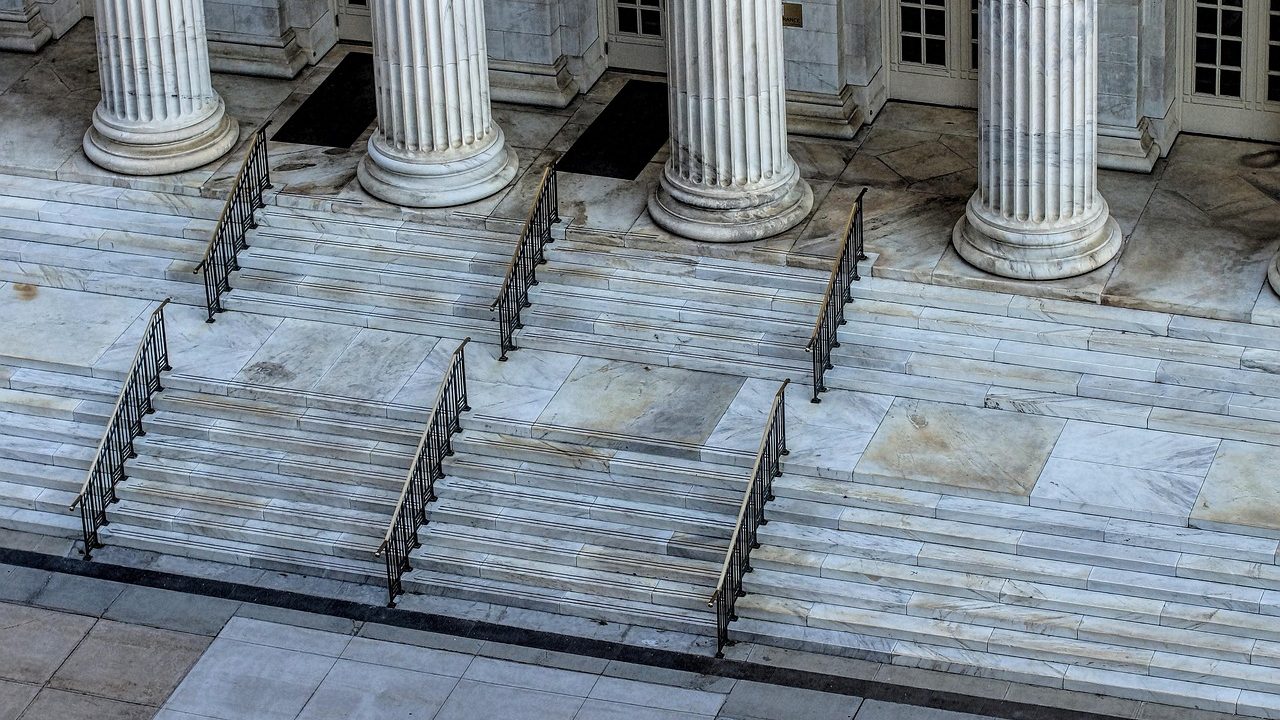
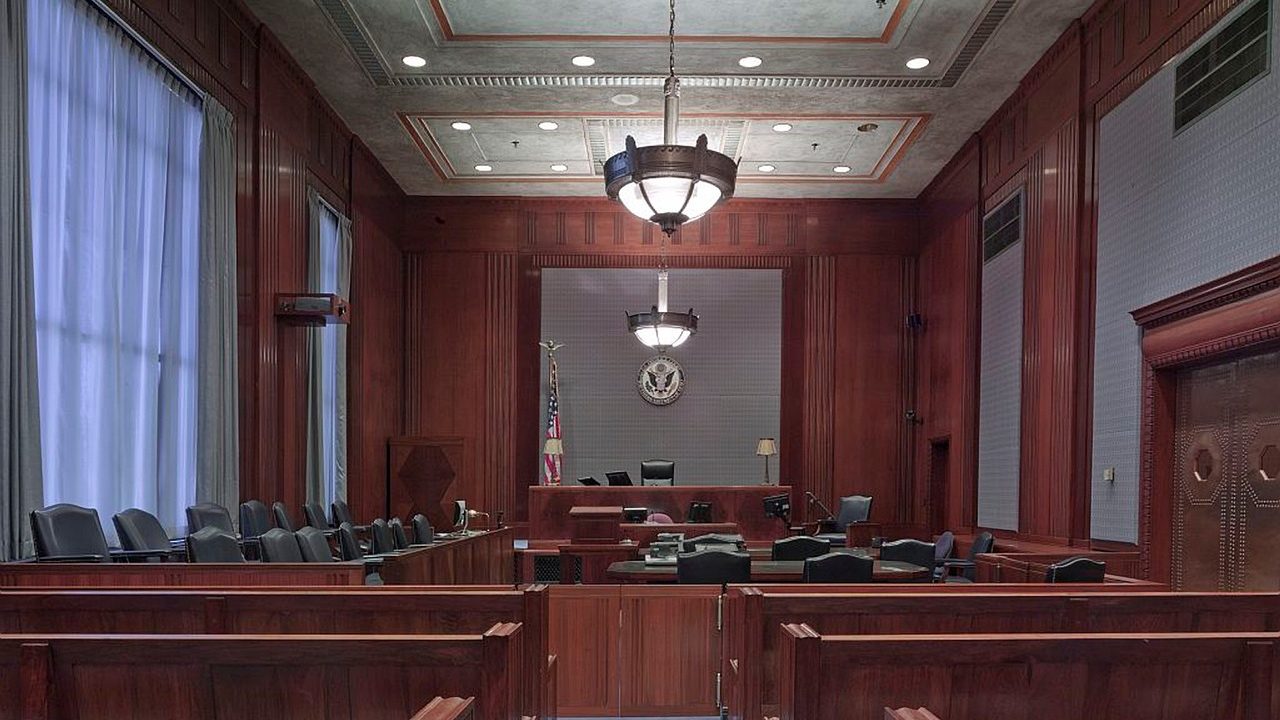
A New Mexico judge ordered Meta to pay twenty-five billion dollars in penalties — a figure roughly equivalent to twenty-three percent of New Mexico's entire annual gross domestic product and one that dwarfs any state-level penalty in American legal history. The case is believed to center on harm enabled through Meta's platforms, consistent with New Mexico's attorney general having been among the most aggressive state-level enforcers on child safety issues, though the specific legal theory supporting the judgment's scale merited examination. State attorneys general hold broad authority to seek civil penalties under consumer protection statutes, many of which allow per-violation fines that can compound rapidly — at, say, five thousand dollars per affected minor across millions of alleged violations, a path toward twenty-five billion becomes arithmetically traceable, if legally contested.
Understanding the judgment also required distinguishing it from antitrust law, which operates on different foundations. The Sherman Antitrust Act, passed in 1890, prohibits monopolization — but having a monopoly is not automatically illegal under Sherman. What the law prohibits is acquiring or maintaining market dominance through exclusionary conduct. Courts routinely spend enormous energy defining the relevant market before any monopoly analysis can proceed: Facebook holds roughly sixty percent of U.S. social media users, but if the relevant market is all digital advertising, that share contracts considerably. The New Mexico action appeared to rest on consumer protection or negligence grounds rather than competition law, though the distinction mattered less for public perception than the headline number.
Meta was expected to immediately call the judgment legally flawed and seek a stay — the company holds more than enough cash to litigate for years — but the reputational and regulatory signaling carried weight regardless of the eventual appellate outcome. State-level enforcement actions against Meta were accelerating, and a twenty-five-billion-dollar headline, even if reduced on review, altered the political appetite for further action.
Meanwhile, Elon Musk told an interviewer that he 'got carried away' leading the Department of Government Efficiency — a striking admission from someone who spent months positioning DOGE as the essential corrective to federal waste. Getting carried away implied overreach; DOGE had operated with enormous informal authority, cut contracts that later had to be partially restored, and generated a wave of litigation over its methods. The phrase was not a legal defense in any of those proceedings, but it served as a significant political signal — and potentially the beginning of deliberate distance between Musk and an administration record on government reform that may have become a liability.
From Antimatter to Military Microgrids: Science and Security at the Edge
John Malone — the cable industry architect widely regarded as one of American media's most reliable long-term capital allocators — predicted that SpaceX would invest up to ten billion dollars in Skydance, the production company that merged with Paramount earlier this year. The strategic logic offered was vertical integration: Starlink's satellite internet platform provides a direct-to-consumer delivery infrastructure, and owning content to fill that pipe has a certain industrial coherence. Skeptics pointed to the mixed record of similar logic in the previous decade — AT&T's acquisition of Time Warner and Comcast's ownership of NBCUniversal produced difficult results — and noted that SpaceX's core competency was orbital infrastructure, not Hollywood studio management.
Defense Secretary Hegseth's FORTRESS America initiative had, according to a confirmed senior defense official, prioritized taking five hundred military bases off the commercial power grid as its first order of business. The rationale was strategic: grid dependence represented a vulnerability exploitable by a sophisticated adversary without firing a single weapon. The challenge was cost. Generating on-site power capacity — through microgrids, solar installations, backup generation, or potentially small modular nuclear reactors — at five hundred bases was expected to run into the hundreds of billions of dollars over a decade. The Congressional Budget Office had not yet published a full figure, and that number, when it landed, was expected to be politically difficult in a defense budget already under pressure.
Perhaps the most quietly extraordinary development of the morning came from physics: researchers announced they had managed to confine a single antimatter particle for months. Previous confinement records were measured in minutes or hours. Antimatter annihilates instantaneously on contact with regular matter, requiring magnetic trapping at near-absolute-zero temperatures in a perfect vacuum — a feat of extraordinary engineering precision. Months-long confinement opened the door to studying antimatter's spectroscopic behavior in depth, testing whether it responds to gravity identically to matter, and examining whether charge-parity symmetry holds as precisely as theory predicts. The long-horizon prize was a potential contribution toward understanding the baryon asymmetry problem: why the universe contains so much more matter than antimatter, given that the Big Bang should have produced equal quantities of each.
Closer to earth, the USDA confirmed the detection of a screwworm parasitic fly in a hunter-harvested elk in Pecos County, Texas, during the opening of hunting season — the first confirmed detection in American wildlife since the parasite was eradicated from the continental United States in the 1960s. The screwworm does not merely affect wildlife: a single female lays hundreds of eggs in an open wound, and larvae consume living tissue. The cattle industry lost hundreds of millions of dollars annually before eradication. USDA was expanding surveillance, though detection in wildlife posed particular challenges — treating elk across the Texas hill country bore no resemblance to treating animals in a feedlot.
Stress-Testing Consensus: What the AI Race Looks Like When You Push Back
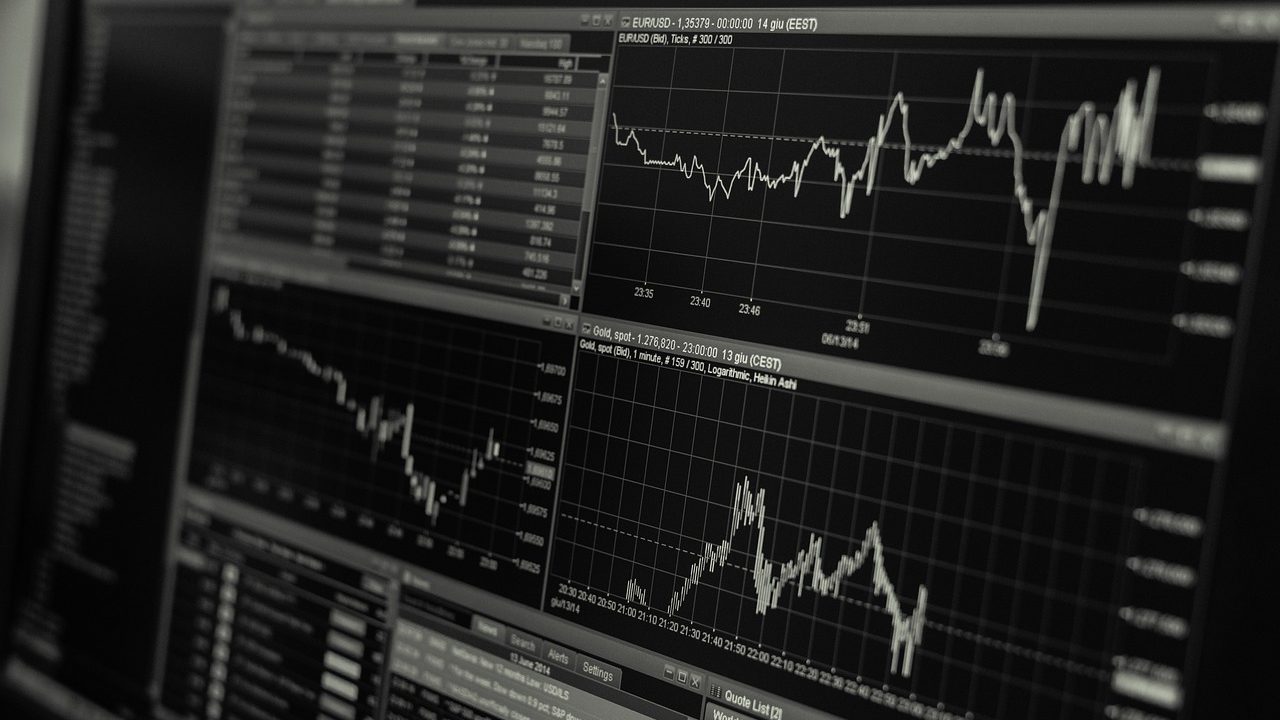
A through-line connected the day's biggest stories — the Hormuz tanker strikes, the DOGE admission, the DeepSeek raise — each representing a confident prediction the market or policy world had treated as settled, now confronted with complicating evidence. That framing set up a harder question: was the emerging consensus that DeepSeek's fifteen-billion-dollar raise marked a decisive shift in U.S.-China AI competition actually well-founded, or was it itself a confident prediction awaiting friction?
The case for skepticism rested on two open questions. First, DeepSeek's reported benchmarks could be optimized for the specific tests on which they were evaluated, rather than representing general capability — benchmark gaming is well-documented in the AI field, and a model can score impressively on MMLU or HumanEval while underperforming on tasks outside those suites. Second, the architectural innovations that allowed DeepSeek to be efficient at current capability scales might not hold as systems pushed toward greater capability — efficiency at GPT-4 level did not guarantee efficiency at hypothetical GPT-6 level.
The case for the consensus pointed to market behavior as evidence beyond benchmarks. When DeepSeek R1 released earlier in the year, NVIDIA lost nearly six hundred billion dollars in market cap in a single day as investors concluded that the compute-intensity assumption underlying the company's valuation was wrong. That was not a benchmark artifact. The stock subsequently recovered substantially — in part because the market recognized that efficiency gains often expand the addressable market rather than shrink hardware demand, a dynamic sometimes called the Jevons paradox — but the initial repricing reflected a genuine shift in fundamental assumptions.
Three concrete signals were identified to track whether the consensus was right or wrong: whether DeepSeek's models maintained performance advantages when evaluated by independent researchers on tasks the company did not specifically optimize for; whether Chinese AI companies began winning enterprise contracts in third-country markets such as Southeast Asia, the Middle East, and Africa; and whether the fifteen billion was directed primarily toward compute infrastructure or toward research talent. If infrastructure, DeepSeek was playing the traditional scaling game; if talent, it believed algorithmic efficiency was the durable edge. Those investment allocations, analysts noted, would be detectable in procurement and hiring patterns over the following eighteen months.
Institutional Stress as the Defining Story of the Day
Across every domain covered Thursday, the animating theme was institutional stress. The Strait of Hormuz attack tested whether the international shipping system could absorb multi-vessel simultaneous strikes without triggering a supply chain crisis. The PHP2Shell exploitation campaign tested whether governments and organizations could respond to mass cyber intrusion at the speed attackers were moving. The House Democrats' January 3rd scenario planning tested whether the procedural machinery of democratic transition was robust enough to withstand deliberate pressure.
The Musk DOGE admission, the Pichai metric revision, and the Thiel critique of the Iran war all exemplified a common dynamic: confident programs meeting the friction of reality. The most acute doubling-down risk in the near term was identified as the response to the tanker strikes — where the IRGC's threat of a 'wider response' within seventy-two hours would either materialize or not, and where the administration's reply would reveal whether course correction or escalation was the chosen path.
The week ahead carried specific markers worth watching: whether the PHP2Shell campaign received public attribution from a government or intelligence agency, which would shift the diplomatic response calculus substantially; how the capital structure of DeepSeek's fifteen-billion-dollar raise broke down between sovereign wealth funds and private investors, implying very different strategic motivations; and how the Hegseth impeachment signals, the Omar raid, and the House seating scenarios evolved as the November midterms, now six weeks away, began sharpening the political environment further.
In a note of transparency, the broadcast flagged a correction to a claim made in May: the podcast had stated on air that Ukraine was hitting Russian ships in the Caspian Sea. The Caspian Sea is landlocked and hundreds of miles from any Ukrainian operational reach; no such strikes occurred or could have occurred. The sourcing was bad, and the claim should have been caught before broadcast. The correction was offered as a reminder that the standard applied to others — verify before amplifying — applied without exception to the broadcast itself.