Missiles Over Riyadh, a $140 Billion Merger, and AI's Most Anticipated IPO: The Morning of October 20, 2026
A ballistic missile intercepted over Saudi Arabia, a formal Wall Street bid range on a SpaceX-Tesla merger, and a pre-Thanksgiving IPO clock ticking at Anthropic combined Tuesday to produce one of the most consequential single-day news landscapes in recent memory — with one man's name threaded through nearly every story.

“No single private citizen has occupied this many simultaneous storylines at this level of financial consequence in the recorded history of American business.”
How this was made Verified AI
Every Intellegix briefing is generated from that day's broadcast and run through automated checks before it publishes — with a human paged on any flag. Here is the trail for this edition.
A Morning Built for Whiplash
Tuesday, October 20th, 2026 arrived with a Houthi ballistic missile screaming toward Riyadh, Barclays analysts floating a formal bid range for a SpaceX acquisition of Tesla, and a Bloomberg report that Anthropic could begin marketing its IPO in fewer than three weeks. Each story alone would anchor a news cycle; together they constitute an unusually compressed snapshot of geopolitical, financial, and technological risk.
Threading through every major storyline is a single figure: Elon Musk, simultaneously the 38-percent owner of a freshly public SpaceX whose shares have already softened, the board member seeking re-election at Tesla's December 3rd shareholder meeting, and the unsolicited outside commentator on Anthropic's IPO structure. The concentration of consequential narrative around one private citizen is, by most historical measures, without precedent in American business.
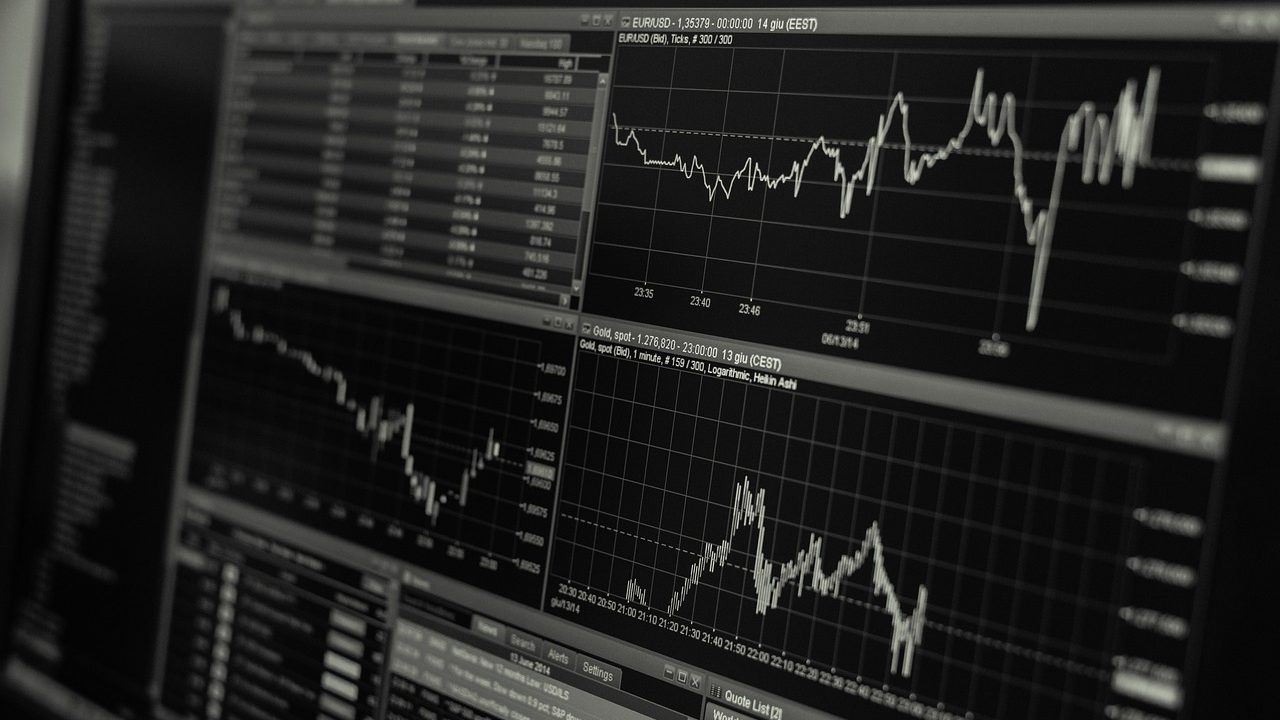
Markets appeared to be processing rather than panicking. S&P futures sat at 7,727.5, down roughly seven points — a decline of about 0.09 percent from the prior close of approximately 7,742 — suggesting investors are pricing these converging risks incrementally rather than in a single shock.
Riyadh Under Fire: What a Missile Intercept and 53 Deaths Reveal About Yemen's Grinding War
On October 19th, Houthi forces — the Iran-aligned Ansar Allah movement that controls most of northern Yemen, including the capital Sanaa — fired a ballistic missile toward Riyadh, a city of 7.5 million people. The Saudi-led coalition intercepted and destroyed it. The same day, Houthi ground forces killed a significant number of Yemeni government troops in coordinated strikes. That simultaneity, analysts note, is not coincidence: it suggests a deliberate operational tempo designed to stretch the coalition across multiple domains at once.
The economic logic behind Houthi missile salvos is deliberately asymmetric. A Patriot interceptor missile costs somewhere in the neighborhood of $3 to $4 million; the ballistic missiles being fired — many of them reportedly Iranian-supplied Qiam variants or locally modified Scuds — cost a fraction of that. By forcing the coalition to expend expensive interceptors against cheap projectiles, the Houthis degrade their adversary's inventory and impose mounting financial costs. Iran has reportedly exported this strategy across the region, including to Hezbollah and Hamas.
The broader geopolitical frame is the Saudi-Iran cold war, which has never fully thawed despite a Chinese-brokered normalization agreement in 2023. This week's strikes read, at least in part, as a signal from Tehran that the normalization framework has limits — possibly timed to coincide with other regional pressures. The soldiers killed were Yemeni government forces, not coalition personnel, a distinction that matters when accounting for who actually bears the human cost of this conflict.
Yemen itself remains, by almost every metric, one of the world's worst humanitarian crises — a reality the UN has repeatedly characterized as a 'forgotten war.' The diplomatic indicators to watch in the days ahead include whether the UN Security Council convenes an emergency session and whether Oman, which has historically served as a back-channel intermediary between the Houthis and Riyadh, makes any public or private move.
SpaceX Bids for Tesla: The Anatomy of a $140 Billion Corporate Question

Barclays analysts have placed a formal bid range on a potential SpaceX acquisition of Tesla: $420 to $480 per share. At the midpoint of $450, the deal value would exceed $140 billion based on Tesla's current share count. The fact that Barclays analyst Narayan has published this range signals that the investment banking community is now modeling the combination as a live possibility, not a thought experiment.
The structural complexity is extraordinary. SpaceX only went public in June — raising $75 billion at $135 per share in what became the largest IPO in history, surpassing Saudi Aramco's 2019 record. Its market capitalization at IPO exceeded $300 billion. Now, just four months after that offering, analysts are debating whether SpaceX should deploy its newly public shares as acquisition currency to absorb a car company.
Barclays specifically identified two primary obstacles: shareholder approval from two very different investor populations, and antitrust review. A third concern the analyst raised is almost philosophical — the price must work for SpaceX shareholders, some of whom believe SpaceX alone accounts for the majority of any combined entity's value. SpaceX investors who bought in at $135 in June seeking exposure to satellite internet and launch services may reasonably balk at diluting that upside to absorb a business fighting for electric vehicle market share against BYD, Volkswagen, and a growing roster of competitors.
Tesla's December 3rd shareholder meeting adds another layer of complexity. Tesla built a Voluntary Retail Voting Program in coordination with the SEC — the agency issued a formal no-action letter backing the mechanism — that allows retail investors on ProxyVote and Robinhood to set standing voting instructions. Participants can elect to vote with the board on all matters, or with the board on everything except contested director elections. Musk is seeking re-election to Tesla's board at the same meeting where merger speculation is cresting, making board composition directly material to any deal's fate.
Sherman Act at 136: Why Antitrust Law Will Define the SpaceX-Tesla Deal
If a SpaceX-Tesla merger moves forward, the Sherman Antitrust Act — passed in 1890 — will become essential vocabulary for every serious observer of the deal. Its core prohibition is straightforward: no company may monopolize or attempt to monopolize any part of interstate or foreign commerce. Section 1 bars contracts or combinations in restraint of trade; Section 2 targets monopolization directly. Courts have spent 136 years narrowing the law, and the central counterintuitive insight is this: market share alone does not establish a monopoly violation. A company can hold 80 percent of a market without antitrust liability if that share was earned through superior products, innovation, or efficiency rather than anticompetitive conduct.
For a merger of this kind, the operative question shifts from Section 2 monopolization to whether the combination would substantially lessen competition in a defined market — and market definition is where merger antitrust becomes an art form. SpaceX and Tesla do not manufacture the same product, but regulators at the FTC and DOJ would be entitled to examine synergistic competitive advantages: Starlink's connectivity infrastructure could give Tesla vehicles structural network advantages no rival could easily replicate, and a combined entity's energy storage and launch capabilities could create moats in satellite-to-vehicle integration markets.
The Barclays note was right to flag antitrust as a genuine obstacle. Given the FTC's aggressive recent posture on tech and infrastructure combinations, a SpaceX-Tesla deal would almost certainly face a serious review lasting 12 to 18 months — a period during which both companies' share prices would be frozen in deal uncertainty.
That uncertainty is already visible in the Musk net worth story. Forbes has assigned him ownership of approximately 38 percent of SpaceX and around 11 percent of Tesla. SpaceX shares have declined since the June IPO peak — the magnitude is not specified in available reporting, but Musk has reportedly slipped below the $1.1 trillion valuation Forbes assigned him shortly after SpaceX began trading, implying a drop of at least 10 percent from the post-IPO high. That the world's largest-ever IPO has still produced a founder wealth decline within four months illustrates just how novel the frameworks for pricing companies that blend government contracts, consumer products, and long-duration space infrastructure bets remain.
Anthropic's IPO Clock Is Running — and Musk Is Already Interfering
Anthropic — the company behind the Claude family of AI models, founded by former OpenAI researchers including Dario and Daniela Amodei — is reportedly preparing to formally market its IPO as soon as the week of November 9th, according to Bloomberg. That timeline would put the stock trading before Thanksgiving, making it one of the fastest-moving IPO processes in recent tech history.
Into that process stepped Elon Musk, who has publicly urged Anthropic to distribute shares directly to the public rather than routing them through traditional institutional channels. The argument for direct public offerings is legitimate on its face — Spotify used a direct listing in 2018, and Palantir and Asana followed in 2020, with each giving retail investors earlier access at the same price as institutions. But Musk's xAI competes directly with Anthropic in the enterprise AI market, and he has had documented public disputes with the Amodei team's approach to AI safety. The question of whether his intervention represents genuine retail-investor advocacy or a strategic attempt to complicate a rival's IPO road show is, at minimum, open.
The practical effect of Musk inserting himself into Anthropic's IPO narrative one month before the expected marketing launch is to generate uncertainty. Institutional investors being pitched a traditional IPO structure must now factor in public pressure to change it. If Anthropic's board ignores the suggestion, it becomes a story; if the board accommodates it, the timeline grows complicated.
Separately from Musk's commentary, the reporting surfaces unresolved structural questions about the offering itself. Anthropic has not clarified whether shares allocated to its Public Benefit Fund — the hybrid structure that gives a portion of economic interest to a long-term benefit trust — will be newly issued shares or secondary sales. If newly issued, existing shareholders face dilution; if secondary, the trust receives cash but no new capital flows to the company. The Public Benefit Corporation structure, which explicitly subordinates short-term profit to a stated mission of developing AI safely, represents a governance model that institutional investors have rarely encountered in public equity at this scale.
Anthropic's road show will also need to address a market-wide question: whether Claude's enterprise contracts in sectors like healthcare and legal services represent durable recurring revenue or early-adopter curiosity. The competitive environment is ferocious — OpenAI, Google's Gemini, and Meta's open-source Llama models are all contesting the same enterprise wallet — and the multiple Anthropic commands on day one will set a reference point for every AI company that follows it to market.
Tesla's December Vote: Governance Innovation or Manufactured Consent?

Tesla's December 3rd shareholder meeting has attracted coverage almost exclusively framed around whether Elon Musk retains his board seat. The more structurally consequential element may be the Voluntary Retail Voting Program Tesla built in coordination with the SEC — a mechanism the agency endorsed via a formal no-action letter, signaling that staff would not recommend enforcement action against it.
The program offers retail investors on ProxyVote and Robinhood two standing instruction options: vote with the board on all matters, or vote with the board on everything except contested director elections. The opt-in extends to future meetings, creating what amounts to a persistent governance relationship between the company and its retail shareholders — a concept institutional investors have employed for years but that has not previously been formalized at this scale for retail participants.
The design raises a pointed behavioral economics question. Research dating to Thaler and Sunstein's work on defaults has consistently shown that whichever option is presented as the default captures an overwhelming share of participants. If the default standing instruction at Tesla is 'vote with the board on everything,' the practical effect may be to aggregate retail voting power into a reliably management-aligned bloc — with the contested director election carve-out as the sole escape valve.
That carve-out is not trivial: proxy advisory firms ISS and Glass Lewis have historically exerted their greatest influence precisely on director election votes. If retail shareholders are actively choosing on those votes while passively aligned with management on everything else, the net governance effect depends entirely on which decisions fall into which category. Musk's own re-election is, by definition, a director election — meaning shareholders retain discretion on the vote that matters most, even under the more board-friendly standing instruction. Tesla clearly designed the carve-out with that dynamic in mind.
If SpaceX makes a formal merger bid before December 3rd, the board re-election vote transforms into a direct referendum on whether shareholders trust Musk to negotiate that deal in their interest. That context would give the December meeting stakes far beyond a routine governance exercise.
Markets in the Age of the Founder Premium
S&P futures at 7,727.5 — down roughly seven points, a 0.09 percent decline from the prior close of approximately 7,742 — tell a quiet story: the market is processing a morning of compounding uncertainty without panic. The posture is consistent with incremental risk pricing rather than a single shock repricing.
The SpaceX post-IPO softness is the most instructive data point. A company that raised $75 billion in June at $135 per share — roughly three times the approximately $25.6 billion Aramco raised in its 2019 initial offering, the prior record — has seen its founder slip below trillionaire status in four months. That implies a share price decline of at least 10 percent from the post-IPO high. Such post-IPO cooling is not unusual for blockbuster offerings, but the speed matters, and SpaceX's unusual blend of government contract revenue, consumer satellite subscriptions, and a terminal value partly derived from Mars colonization timelines of 20 to 30 years makes standard discounting frameworks genuinely difficult to apply.
The Anthropic IPO, if it prices before Thanksgiving, will add another calibration point. Valuation estimates for the company have ranged from $30 billion to $60 billion — a spread wide enough to confirm the absence of a firm anchor — and the multiple that Anthropic's shares command on day one will become the reference price for every subsequent AI company seeking public capital.
A systemic risk factor cuts across all three companies. Tesla, SpaceX, and Anthropic are each subject, this week, to either Musk's direct decisions or his public commentary. When a single individual's statements can simultaneously move the valuations of multiple large-capitalization companies, the volatility premium on each rises. That the market is registering this as a 0.09 percent decline rather than a rout suggests investors have already built the Musk-concentration risk into their models — but it remains a material factor that every institutional holder must explicitly price.
One Person, Four Storylines: The Structural Risk No Framework Fully Captures

Four of the day's major stories involve Elon Musk in meaningfully different roles: CEO of Tesla facing a shareholder vote; founder and approximately 38-percent owner of SpaceX watching its shares cool; potential architect of the largest corporate merger in tech history; and outside commentator on a competitor's IPO. This is not normal. No single private citizen has occupied this many simultaneous storylines at this level of financial consequence in the recorded history of American business.
The closest historical analogues — John D. Rockefeller at Standard Oil's peak, or J.P. Morgan acting as de facto lender of last resort to the American banking system in the early twentieth century — break down under scrutiny, because Rockefeller controlled one industry and Morgan controlled finance. Musk holds meaningful positions in electric vehicles, space infrastructure, satellite internet, social media via X, tunnel boring, and neural interfaces via Neuralink, while simultaneously inserting himself into AI governance debates.
The net worth fluctuation story is, in this light, more than tabloid arithmetic. When Forbes reports that Musk has lost trillionaire status because SpaceX shares fell, what it is actually describing is a feedback loop: SpaceX's public market valuation depends partly on investor confidence in Musk's vision; Musk's behavior affects that confidence; and Musk's personal financial decisions — including whether to engineer a Tesla merger — are influenced by his own need to sustain equity value. The personal and the corporate are not separable.
Both Tesla and SpaceX trade at multiples that explicitly price in Musk's continued involvement and vision execution — a founder premium that is not a modest modifier but a structural input. Any uncertainty about his role, whether from health, legal exposure, regulatory action, or the cognitive demands of running too many large enterprises simultaneously, is therefore a material risk that institutional holders model explicitly. The December 3rd shareholder vote, with proxy advisory firms expected to publish recommendations in mid-November, is the nearest-term moment when that risk will be formally stress-tested.
What Would Have to Be True for the SpaceX-Tesla Deal to Collapse
The consensus view embedded in current coverage is that both SpaceX and Tesla shareholder bases broadly want the merger to happen — and that it is primarily a question of agreeing on price. Barclays analyst Narayan stated this directly. But that consensus deserves rigorous interrogation, because market narratives have a self-reinforcing quality: if analysts say shareholders want the deal, shareholders absorb that framing, and revealed preferences begin to conform to the narrative regardless of underlying economics.
The strongest counterargument rests on SpaceX's shareholder composition. Investors who bought in at $135 per share in June did so seeking exposure to launch services, Starlink, and the long-duration optionality of space infrastructure. They did not sign up for diluted exposure to a car company competing for margin in a market where BYD has reportedly overtaken Tesla in global deliveries for several consecutive quarters. Absorbing that competitive pressure is a genuine cost that must be weighed against Tesla's autonomous driving stack, energy division, and robotics program.
The Optimus variable — Tesla's humanoid robot program — is arguably under-discussed in merger analysis. If it delivers at scale, it could be the most valuable asset Tesla owns, dwarfing the EV business. But SpaceX shareholders calibrate risk tolerance against launch success rates and satellite deployment milestones; evaluating humanoid robotics timelines is a fundamentally different analytical exercise, and there is no guarantee those investors share the appetite for that uncertainty.
Concrete leading indicators that the deal could fail: a SpaceX institutional shareholder filing any public statement expressing concern about diversification of exposure would signal that the $420 to $480 bid range Barclays identified may be insufficient to bring SpaceX holders along. A secondary indicator would be meaningful dissent on Musk's re-election at Tesla's December 3rd meeting — if more than roughly 25 percent of shares vote against him, the board composition required to approve a deal is shakier than deal proponents currently assume. On the Yemen front, the next 72 hours of coalition and UN Security Council response will clarify whether this week's escalation marks the beginning of a new conflict phase or a spike within a chronic one. Oman's posture, given its historical back-channel role, is the single most informative diplomatic signal to watch.
A Correction, a Summary, and an Honest Word on How This Show Is Made

Before closing, the program named an error from its May 18th broadcast: a report that Ukraine had struck a fourth Russian ship in the Caspian Sea that month. That claim was wrong in a foundational way — the Caspian Sea is landlocked and far from any territory Ukraine controls, and no such strikes occurred. The broader argument attached to that report, about companies facing unexpected competition from unexpected directions, held up as a general principle, but the specific operational detail that gave it texture was false. The lesson acknowledged: vivid operational details — ship strikes, specific locations, attack counts — demand an additional layer of verification precisely because their specificity makes them persuasive.
Tuesday's news resolved into several durable takeaways. The Houthi missile attack on Riyadh and the deaths of a significant number of Yemeni government troops are reminders that the world's longest-running active conflicts do not resolve because coverage cycles move on. The SpaceX-Tesla merger has moved from speculation to formal financial modeling, with a $420 to $480 per share bid range now on the record — but antitrust scrutiny and potential SpaceX shareholder resistance are genuine, not hypothetical, obstacles. Anthropic's IPO, expected to begin formal marketing as soon as November 9th, is one of the most consequential events in AI market history, and the unresolved questions about its capital structure and Public Benefit Fund share allocation are material, not technical footnotes.
The program also disclosed that its script generation and production automation run on Claude Code, built by Anthropic, while real-time topic discovery and research run on Perplexity — a combination that, as the hosts noted, would have required a full editorial and production team even five years ago.