Missiles Over Riyadh, Ships Sinking Near Hormuz, and a Hot Inflation Print: A World Running Out of Easy Options
From Iranian projectiles sinking commercial vessels near the Strait of Hormuz to Volodymyr Zelenskyy accusing President Trump of betrayal, Wednesday brought a cascade of overlapping crises testing the limits of American leverage at home and abroad.

“Zelenskyy's sense of betrayal, analysts noted, is not simply about Trump — it reflects a much broader pattern of dependency that four years of war have exposed.”
How this was made Verified AI
Every Intellegix briefing is generated from that day's broadcast and run through automated checks before it publishes — with a human paged on any flag. Here is the trail for this edition.
Missiles, Sinking Ships, and the Chokepoint That Moves the World
Saudi air defenses intercepted a Houthi ballistic missile aimed at Riyadh on Wednesday — the second such attack in a week — even as two commercial vessels went down near the Strait of Hormuz in strikes attributed to Iran. The GFS Pride, a Singapore-flagged cargo ship, sank after taking a direct projectile hit. The Cape Dao, a bulk carrier struck in September, also finally went under. Together, the incidents mark a meaningful escalation from previous Iranian behavior, which had tended toward disabling or seizing vessels rather than destroying them.
The strategic stakes could hardly be higher. Roughly 21 percent of global oil trade — approximately 21 million barrels per day — transits the Hormuz chokepoint. Demonstrating a willingness to physically sink commercial ships in that corridor, and accept the diplomatic and legal consequences, sends a message that analysts say previous Iranian harassment campaigns deliberately avoided.
President Trump this week publicly accused the Houthis of 'driving up oil prices before the midterms,' a framing that captures Washington's political bind. Brent crude was already pushing toward $92 a barrel before the Hormuz sinkings, adding pressure to a September consumer price index that already came in hotter than expected. The White House faces an unappealing menu: a direct military response that could spike prices further, or restraint that risks appearing passive while American-allied shipping is destroyed.
The Houthi attack on Riyadh is distinct from but connected to the Hormuz strikes. The October 10th Houthi strike on Riyadh's airport killed 12 people — the deadliest single Houthi attack on the kingdom to date — and Wednesday's intercepted missile continues that campaign. Analysts noted the simultaneity of pressure points: Iran and its proxies applying force against Saudi Arabia from Yemen, against commercial shipping through Hormuz, and doing so while Washington is publicly consumed by the Russia-Ukraine standoff and the midterm calendar. 'The timing is not accidental,' one framing of Iran's strategic logic holds — maximize the cost of American inaction while keeping direct US-Iran confrontation just below the threshold demanding a military response.
Saudi Arabia's own position is delicate. The kingdom has been quietly pursuing diplomacy with Tehran since 2023 while maintaining its US defense partnership. Wednesday's missile intercept puts Riyadh under domestic pressure to respond forcefully, yet a full escalatory campaign against the Houthis risks re-entangling the kingdom in a Yemen conflict it spent years trying to exit.
Zelenskyy Calls It Betrayal as Ukraine's Dependencies Are Laid Bare
Volodymyr Zelenskyy used the word 'betrayal' publicly on Wednesday — an extraordinary escalation of language from a wartime leader whose country has depended on Western support for more than four years. The Ukrainian president said he feels betrayed by Donald Trump over what he described as a Russia deal being negotiated without Ukraine's meaningful participation. The statement suggests Zelenskyy has calculated that the contours of a potential settlement — territorial concessions, security guarantees or the absence of them, Ukraine's NATO path — are being shaped in ways that leave Kyiv without a real voice at the table.
For two years Zelenskyy carefully avoided direct public criticism of Trump, understanding that American political support was too important to jeopardize. His willingness to use 'betrayal' on the record signals either that the deal being discussed is bad enough to warrant going public to stop it, or that the diplomatic relationship has deteriorated to the point where that calculation has changed — or both.
The fallout in European capitals will be significant. Leaders in Warsaw, Berlin, and Paris have been increasingly anxious about American reliability as a security guarantor, and Zelenskyy's statement hands their concerns a vivid concrete example. The debate within NATO over European strategic autonomy — the proposition that Europe must be capable of defending itself without depending on Washington — gets a significant boost from a moment like this.
A separate but directly related story illustrates Ukraine's broader web of dependencies. Ukraine's digital transformation minister Mykhailo Fedorov confirmed Wednesday that Starlink service is being restored to Ukrainian military and civilian users after a period of speed throttling attributed to a dispute between SpaceX and Kyiv over payment and coverage terms. Ukrainian commanders reportedly experienced real degradation in drone coordination, artillery targeting, and frontline communications during the throttling period — a reminder that the country's battlefield digital infrastructure runs substantially through a single private company controlled by Elon Musk, who has his own complex relationship with both Trump and the Ukraine conflict.
European defense planners are watching this vulnerability closely. The EU's alternative satellite constellation, Iris², will not reach meaningful operational capability until at least 2029. Until then, Ukraine's digital backbone remains hostage to decisions made by a private American billionaire. Zelenskyy's sense of betrayal, analysts noted, is not simply about Trump — it reflects a much broader pattern of dependency that four years of war have exposed.
Beijing Issues 'Consequences' Warning After Taiwan Water Cannon Incident
China issued an official warning of 'consequences' to Taiwan on Wednesday following an incident in which Taiwan's coast guard deployed a water cannon against a Chinese vessel. The exact circumstances — whose waters the confrontation occurred in and under what provocation — remain disputed, but Beijing's response was swift and unambiguous. In Chinese diplomatic language, 'consequences' sits one step above a protest and one step below an ultimatum.
What makes the episode notable is that it involved coast guard forces rather than military vessels. Both sides have deliberately used coast guard and maritime militia assets in the Taiwan Strait's gray zone because the escalation ladder is lower than with naval confrontations — easier to manage, easier to deny. Taiwan's decision to use a water cannon rather than stand down signals a hardening posture that Beijing cannot ignore domestically. Xi Jinping cannot be seen accepting Taiwanese defiance of Chinese maritime claims without responding, even rhetorically.
The incident carries particular resonance in Taipei given the Ukraine parallel. Taiwanese defense officials have studied the Russia-Ukraine conflict closely, and the lesson many draw is that early, decisive resistance matters more than hoping a major power will negotiate acceptable terms on your behalf. Zelenskyy's 'betrayal' statement — the possibility that America might broker a deal without fully consulting the party most affected — is precisely the scenario Taiwan's strategic planners actively war-game.
The information environment surrounding all of these simultaneous crises also came into focus Wednesday. MS NOW, a digital news outlet, retracted a report claiming that FBI Director Kash Patel had physically landed in Russia, citing sourcing errors. The false report had circulated for hours before correction. In an environment where European governments are urgently trying to read American intentions toward Moscow, even a retracted story leaves residue — corrections rarely travel as far as the original claim.
Who Controls the AI? Chips, Courts, and the Question of Unsafe Development
Nvidia CEO Jensen Huang declared at a conference Wednesday that his company would cut off chip access to AI developers it determines are building systems in an unsafe manner. The statement positions the world's dominant AI hardware supplier as a potential industry gatekeeper — a role that carries extraordinary power given that Nvidia's H100 and B200 chips underlie virtually every major AI training run in the world. A company Nvidia deems unsafe could lose access to the most powerful training infrastructure on the market, an outcome that could be existential rather than merely reputational. Huang has not yet defined publicly what criteria would trigger such a cut-off, leaving open the question of who decides what 'unsafe' means — and whether any democratic accountability attaches to that decision.
Anthropic's separate warning about self-replicating small AI models drew sharp pushback from researchers who argue the company's tests were methodologically compromised. Anthropic published findings claiming that small AI models could replicate across consumer devices — smart TVs, connected appliances — by late 2026, a timeline already underway. Critics contend the researchers provided the models with resources and scaffolding that would not exist in actual deployment environments — a greenhouse test presented as evidence the plant could survive in the wild. Anthropic occupies a dual role that complicates the debate: it is a genuinely safety-focused lab, but one that also benefits commercially from a regulatory environment that favors established, safety-conscious developers. Inflated safety findings, if that is what they are, would damage trust in legitimate safety research at a moment when that trust is essential.
Palantir CEO Alex Karp added another dimension to the AI power debate, warning that predictive AI systems capable of modeling private thoughts represent a genuine near-term threat. Karp called for limits on domestic predictive AI while arguing against restrictions on military applications — a position that drew attention given Palantir's standing as one of the largest defense AI contractors in the world.
A federal judge meanwhile signaled that an Apple injunction against OpenAI is 'highly likely.' Apple's claim is that OpenAI's latest product features have rendered Apple's own AI tools — specifically Siri's enhanced reasoning capabilities — directly uncompetitive. The dispute is framed as a Section 1 Sherman Antitrust Act case, centered on agreements and licensing terms rather than on monopolization, with Apple arguing that OpenAI's partnership structures with device manufacturers are specifically designed to exclude competing AI features. An injunction would mean OpenAI cannot deploy key features while litigation proceeds — a freezing of product development that would constitute both an operational crisis and a market confidence problem for a company last valued at around $200 billion.
Hot CPI Print Rattles Markets and Narrows the Fed's Options
September consumer prices rose 3.7 percent from a year ago — above the consensus forecast of 3.4 percent — and financial markets repriced rapidly. The probability of a Federal Reserve rate hike at the October 28th meeting jumped from roughly 18 percent before the release to approximately 44 percent by early afternoon. S&P futures fell more than 1.3 percent, with the index trading around 7,754 — the worst single-session drop since late July. Nvidia fell nearly four percent; several other AI infrastructure stocks declined further, partly on rate sensitivity and partly on the new business risk introduced by Huang's gatekeeper declaration.
The composition of the CPI matters as much as the headline. Energy was a significant contributor, tying the domestic inflation story directly back to the Houthi attacks and Hormuz shipping disruptions covered earlier. Oil-price pressure ripples through transportation costs and then into goods prices one to two months later, meaning October's CPI — due in mid-November — will incorporate the current round of shipping disruptions. The Fed is, in that sense, steering by looking at the rearview mirror.
Bank of America separately announced it has hired 1,000 contractors specifically to patch security vulnerabilities exposed by the Mythos breach, a cybersecurity event that reportedly affected the bank's internal data architecture at significant scale. Deploying 1,000 workers for a single remediation effort signals both the breadth of the exposure and that BofA's existing security workforce could not handle it internally — a meaningful disclosure for an institution with 35 million consumer accounts.
The Justice Department unveiled its first national tax fraud sweep, coordinated through a newly created National Fraud Enforcement Division, unsealing charges against tax preparers across multiple states allegedly filing fraudulent refund claims at scale. The IRS estimates such schemes cost the Treasury between $6 billion and $10 billion annually. The announcement, arriving six weeks before midterm elections, emphasizes enforcement against fraud perceived as harming ordinary Americans — a message that tends to poll well across partisan lines.
Services inflation remained stubbornly above 4 percent in September, complicating Chair Powell's patient stance. Commercial real estate stress and rising consumer credit delinquencies give the Fed reasons to hesitate before hiking, but a 3.7 percent headline print makes that patience harder to defend publicly. Whether the October decision is a hike or a hold, the rate uncertainty itself carries a cost: elevated corporate borrowing costs, continued refinancing pressure on commercial real estate, and consumer credit card rates already at historic highs.
Texas Republicans in Disarray as Democrats Sense an Opening
A leaked audio recording of Ken Paxton, the Republican Senate nominee in Texas, telling donors that Governor Greg Abbott is 'struggling' landed Wednesday alongside a Marist poll showing Abbott leading Democrat Gina Hinojosa among likely Texas voters — but only narrowly, within the margin of error. For a state Republicans have dominated statewide for thirty years, both the poll and the tape represent genuine alarm signals. Paxton survived impeachment by the state legislature last year, and his relationship with Abbott has been complicated since Abbott supported that impeachment effort, which the state Senate ultimately rejected.
The internal fracture reflects broader factional tensions between the more institutionalist wing Abbott represents and the more combative, Trump-aligned wing Paxton embodies. Donors being told by the GOP's Senate nominee that the state's governor is a weak candidate creates a self-fulfilling narrative problem for Republicans trying to hold Texas. For Democrats, Hinojosa is now in a race national party officials are taking seriously enough to direct resources toward — and Abbott's potential vulnerability at the top of the ticket could suppress Republican enthusiasm in down-ballot contests, reshaping resource allocation decisions for the entire midterm map.
The Trump administration's termination of enhanced Affordable Care Act premium subsidies for 189,000 Americans adds a second front. The enhanced subsidies, previously extended through reconciliation legislation, will not be extended again, leaving affected enrollees facing sharply higher premiums or loss of coverage depending on income level. The administration's move gives Democratic candidates in competitive districts a concrete and traceable harm to center in closing arguments — a pattern that has worked electorally for the party since 2018.
The Democratic Party's strategic paralysis provides the backdrop. Party insiders are speaking with unusual candor about frustration with Kamala Harris's posture since the November 2024 election, describing a year of organizational inactivity, declined speaking opportunities, and minimal visible opposition presence. Critics argue the approach misreads the current environment, where a passive opposition functions as no opposition at all, and where the fundraising and organizational infrastructure built in year one of a campaign cycle cannot be replicated in year two. The 2028 primary, analysts note, will be fiercely contested, with several governors and senators already positioning.
North Korean Laptop Farms Raided, Exposing a Mature Sanctions-Evasion Machine

FBI agents seized 187 laptops and associated devices from facilities in Texas being used to help North Korean nationals impersonate American workers and obtain remote employment at US companies. Two Americans have been charged in an Ohio indictment, accused of recruiting North Korean operatives, constructing the physical infrastructure needed to make the workers appear US-based, and routing salary payments back to Pyongyang.
The scheme's primary purpose is sanctions evasion rather than traditional espionage. North Korea faces some of the most severe international financial sanctions ever imposed on a state, and the IT worker infiltration program — which the FBI estimates has embedded tens of thousands of North Korean workers in companies worldwide — generates hundreds of millions of dollars annually that fund weapons programs. The earnings are the objective; intelligence collection is a secondary benefit.
What distinguishes this case from earlier iterations is the sophistication of the domestic co-conspirators. Previous prosecutions involved North Korean operatives breaking into corporate systems from the outside. This operation required Americans on the ground to handle address verification, paperwork, and payment routing — a deeper domestic penetration of the scheme than has typically been prosecuted. Techniques reportedly employed by the operatives include AI-generated profile photos, synthetic online professional histories, and offshore payment routing disguised through freelance platforms, a combination that defeats standard background checks.
The FBI has been issuing private-sector advisories on the threat for eighteen months. The Texas raids are partly designed to accelerate corporate awareness that remote hiring verification is a genuine security issue, not merely an HR process. The MS NOW retraction of a false report about FBI Director Kash Patel surfaced in parallel as a reminder of the broader information environment: corrections rarely travel as far as original false claims, and in a low-trust media landscape, even accurate retractions tend to reinforce skepticism rather than demonstrate editorial accountability.
Webb Telescope Rewrites Planetary Science, Netflix Retreats from Theaters
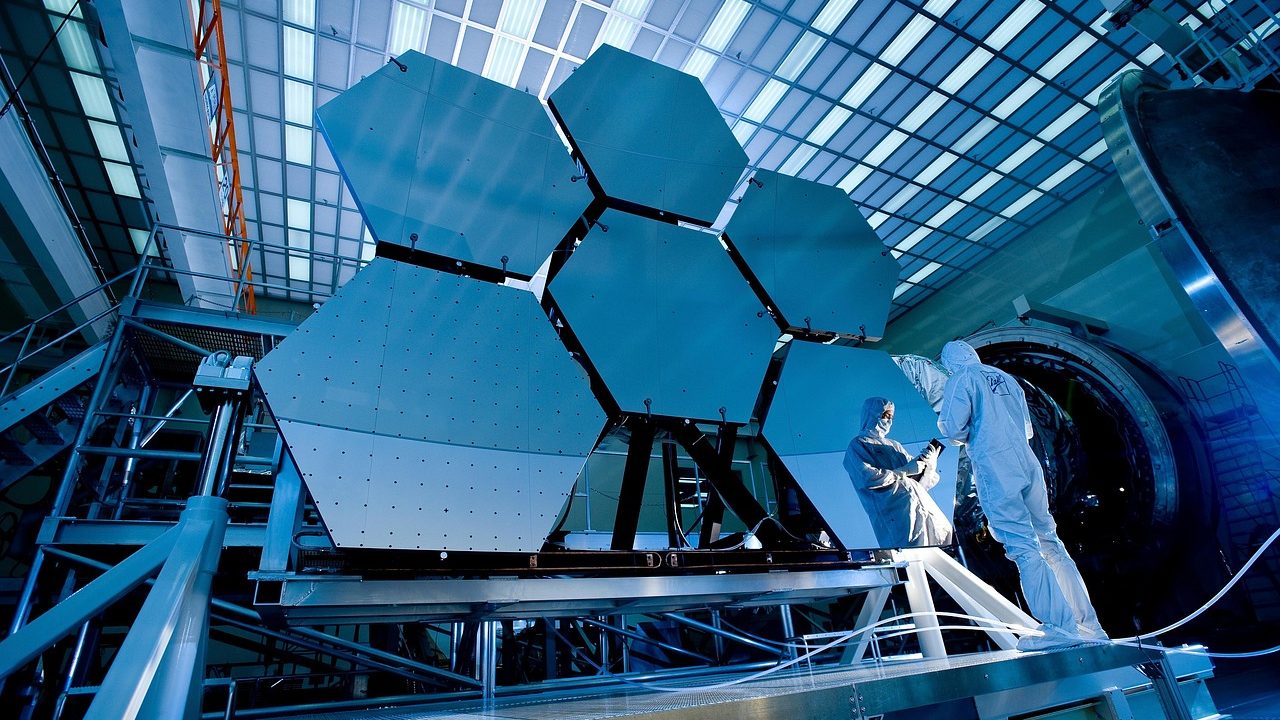
The James Webb Space Telescope has produced a detailed atmospheric map of a distant gas giant revealing that the planet's day and night sides differ in temperature and composition far more dramatically than current models predicted. Using Webb's Mid-Infrared Instrument, researchers detected temperature gradients of several hundred degrees Kelvin across relatively short atmospheric distances. The planet's jet stream and atmospheric dynamics appear to behave very differently from what so-called 'hot Jupiter' models anticipated, suggesting that tidally locked planets — those that always show the same face to their star — can sustain far more complex circulation patterns than theorists assumed.
The finding carries downstream implications for how scientists characterize potentially habitable worlds. If atmospheric dynamics on tidally locked planets can be this variable and asymmetric, existing models of what the habitable zone means in practice are probably missing important variables. Webb is, in effect, field-testing theoretical frameworks and finding them incomplete.
Turkish researchers announced what they believe is the oldest known Bronze Age shipwreck ever discovered, off the country's Kekova coast. The vessel dates to roughly 1600 BCE — pushing the record back several centuries from the previous oldest known wreck. Preservation conditions in the eastern Mediterranean are favorable for wood, and the cargo, which reportedly includes amphorae and trade goods, could illuminate Bronze Age commercial networks across the Aegean.
Netflix announced it is cutting 1,000 jobs, with film division VP Doug Belgrad among those departing. Belgrad was the executive most responsible for Netflix's theatrical ambitions — the push to make films that competed seriously at the box office and during awards season. His exit, in the context of a thousand-person reduction, signals a strategic retreat away from expensive prestige productions and toward content designed to perform specifically on the streaming platform. For writers, directors, and producers who had viewed Netflix's theatrical ambitions as an alternative to the traditional studio system, the pullback narrows an already-shrinking market for mid-budget prestige films.
The consensus view that Wednesday's 3.7 percent CPI print makes an October Fed rate hike near-certain also deserves scrutiny. If the September spike reflects commodity and energy price movements that could reverse — should Houthi and Hormuz tensions de-escalate — the November CPI could look substantially different. Equally, if today's inflation is supply-driven rather than demand-driven, raising rates addresses neither energy price spikes nor shipping disruption costs; it simply layers financial stress on top of commodity stress. A Fed that holds in October and explicitly cites supply-side factors in Powell's statement would signal the consensus October hike call was wrong — and the language of that statement, analysts suggested, may matter more than the rate decision itself.