Executive Power Unchecked: How One Week Rewrote the Rules on Crypto, Deportations, and American Foreign Policy
A single October week crystallized a sweeping question about institutional authority in the United States: as Bitcoin tumbled below $83,000, the Supreme Court cleared a path for third-country deportations, American sanctions quietly stripped the International Criminal Court of its health insurance, and the White House struck an energy deal with Moscow that Congress had no hand in shaping.
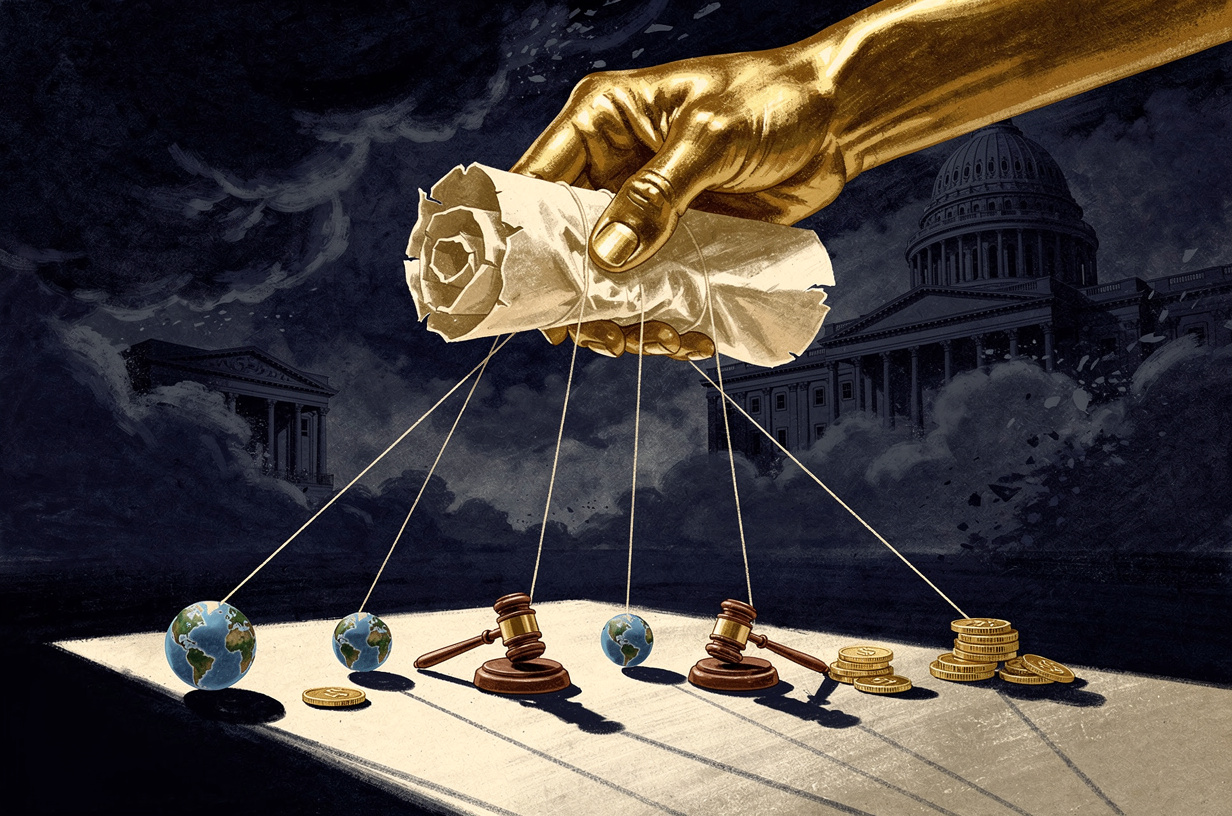
“Washington cannot order a French insurer to drop a client, but it can make the cost of retaining that client high enough that the firm reaches the same conclusion independently.”
How this was made Verified AI
Every Intellegix briefing is generated from that day's broadcast and run through automated checks before it publishes — with a human paged on any flag. Here is the trail for this edition.
Trump's Russia Diesel Deal Draws Zelensky's Fire — and Revives the War Powers Fight

President Trump struck a deal late Friday allowing Russia to supply diesel fuel to the United States and global markets, setting off an immediate diplomatic confrontation with Ukrainian President Volodymyr Zelensky. Within hours, Zelensky issued a pointed rebuke: 'gifts to Putin will not bring peace.' The line captured the central argument — whether permitting Russia to earn energy export revenue is a pragmatic economic decision or a substantive geopolitical concession to a country still prosecuting a war.
The economic case for the arrangement, as administration trade advisers would frame it, rests on tight global diesel markets that have persisted since European buyers largely exited Russian fuel imports in 2022. American consumers and logistics companies have faced elevated freight and fuel costs, and Russian diesel entering at competitive prices could ease both. But Zelensky's counter is equally concrete: the International Energy Agency has consistently reported that Russian energy export revenue still exceeded two hundred billion dollars annually in 2025, even under existing sanctions. Every barrel Russia sells generates hard currency that flows into its military budget.
The deal's timing — announced on a Friday, a classic news-cycle burial move — did little to contain the fallout. Zelensky's communications team pushed back immediately and forcefully, ensuring the story dominated the weekend diplomatic conversation. The administration conducted the arrangement without meaningful legislative input, a pattern that directly animates a parallel battle in Congress: Senator Van Hollen's bill, introduced in July, to require congressional authorization before the president deploys military force against Iran.
Van Hollen's measure targets Iran specifically, but the constitutional principle it asserts is broader. Similar efforts have failed before — a war powers resolution passed both chambers after the 2020 Soleimani strike but could not override a presidential veto. Legal scholars largely agree that the War Powers Resolution of 1973, passed to reassert Congress's role in committing US forces to conflict, has functioned as intended for perhaps fifteen of its fifty-three years, with presidents of both parties treating it as advisory. Without a veto-proof majority, Van Hollen's bill is likely to meet the same fate.
The Russia deal also raises a longer-term question for the sanctions architecture: what signal does it send to secondary market actors — Southeast Asian refineries, for instance, that have cautiously avoided Russian fuel — about the durability of US sanctions regimes when Washington itself is cutting energy deals with Moscow? That ambiguity, analysts note, may prove more corrosive to the sanctions system than any single policy reversal.
How US Sanctions Left the International Criminal Court Without Health Insurance
The International Criminal Court lost its health insurance plan this week — not because of inadequate coverage, but because of American financial sanctions. The court's insurer, Axa, a major French firm with significant US business exposure, concluded that maintaining a contract with a sanctioned entity created regulatory risk it was unwilling to absorb. The ICC contract, which generated a finite amount of premium revenue, did not clear the risk threshold when Axa's compliance team weighed potential exposure to US regulatory action. The sanction achieved its goal without ever being directly applied to a French company.
This is a textbook illustration of how secondary sanctions operate in practice. Washington cannot order a French insurer to drop a client, but it can make the cost of retaining that client high enough that the firm reaches the same conclusion independently. Reuters reported this week, citing sources, that the administration has drawn up further sanctions that could further degrade the court's operational capacity. President Trump has publicly called the ICC 'evil' and 'a rogue institution,' urging other countries to withdraw, with the administration's stated grievances centering on ICC investigations involving US military personnel and Israeli officials — including an arrest warrant issued for Prime Minister Netanyahu.
The US has never ratified the Rome Statute that created the ICC, and prior administrations have maintained that distance in varying degrees. George W. Bush's administration unsigned a document Bill Clinton had signed; the Obama administration adopted a cooperative-but-not-member posture. What distinguishes the current approach is active operational degradation rather than mere non-participation. If ICC staff cannot obtain health coverage, move funds through normal banking channels, or travel freely, the court's ability to conduct investigations and trials degrades regardless of its formal legal authority.
The ICC was already operating with significant legitimacy challenges, having faced years of criticism for disproportionately prosecuting African defendants while cases involving Western-aligned actors moved slowly or stalled. American sanctions add a new layer of practical fragility. More broadly, the episode fits into a pattern — alongside US hollowing of WTO Appellate Body appointments and pressure on human rights monitoring bodies — of a superpower systematically reducing the institutional constraints on its own conduct. Governments in the Global South are watching closely, recalibrating whether international institutions provide genuine protection or whether that protection was always conditional on American approval.
Supreme Court Clears Third-Country Deportations as Due Process Questions Remain Open
The Supreme Court this week allowed the Trump administration to resume third-country deportations — the removal of migrants to countries they have no connection to, not their countries of origin — while simultaneously asking both sides to brief whether lower courts had jurisdiction to issue the nationwide injunctions that had blocked the policy, and whether the policy itself violates the due process clause or international conventions against torture.
More than a dozen UN human rights experts wrote to the US government this week urging a halt to the removals, with particular concern for children, women, persons with disabilities, and other vulnerable groups who face compounded risks in unknown third countries. The jurisdictional question carries significant strategic weight: the administration has fought vigorously against nationwide injunctions — orders that block a policy across the entire country from a single district court ruling. If the Supreme Court ultimately determines those lower courts lacked jurisdiction, it could functionally insulate a wide range of executive actions from rapid legal challenge.
The due process stakes are foundational. The Fifth Amendment's protections extend to any 'person' deprived of liberty without due process, not to citizens alone — courts have consistently held that non-citizens facing deportation retain those rights. In third-country cases, the key question is whether procedural protections are adequate when someone is sent to a country they have never lived in. The Convention Against Torture, which the United States has ratified, separately creates a non-refoulement obligation: an individual cannot be transferred to a country where there are substantial grounds to believe they would face torture. If deportees are being removed without individualized assessments of such risks, the administration is on contested terrain under binding treaty law, not just domestic constitutional doctrine.
The Court's decision to allow resumptions while briefing continues signals that at least a majority was not persuaded by the emergency stay arguments from challengers. That does not resolve the underlying merits, which will play out across months of argument. But the practical effect means deportations can proceed in the interim — and the law often moves far slower than the facts on the ground. By the time the full legal process concludes, potentially in late 2027, the policy will have been in effect for a substantial period, with real consequences for the individuals caught in that window.
Bitcoin Drops Below $83,000: Government Transfer, Leveraged Liquidations, and Macro Headwinds

Bitcoin fell below $83,000 this week, hitting its lowest point for October, after the US government moved seized cryptocurrency to Coinbase. But analysts who examined the decline closely offered a more nuanced account than a simple cause-and-effect. Dominick John of Zeus Research told The Block that the drop was 'primarily driven by profit-taking and forced long liquidations,' not the government transfer itself. TradingKey pointed to rising Treasury yields and a stronger dollar as concurrent pressures. More than four hundred million dollars in leveraged positions were liquidated across crypto markets.
The US government is among the world's largest Bitcoin holders — not by design, but through criminal and civil forfeiture proceedings. The Silk Road seizure alone yielded over sixty-nine thousand Bitcoin, with additional amounts from drug trafficking and fraud cases. When the government moves these holdings to Coinbase, markets interpret it as a potential precursor to sale, because that is where seized assets are converted to dollars. Crypto markets, less liquid and more sentiment-driven than traditional asset markets and carrying significant retail participation, can treat a transfer that is not yet a sale as a soft sale signal.
Three forces converged simultaneously: government transfer creating anxiety about potential selling, leveraged long positions cascading in forced liquidations as prices moved against them, and macro conditions — rising yields increasing the opportunity cost of holding speculative assets, and dollar strength making Bitcoin more expensive in local currency terms for international buyers. Each factor was meaningful; none was sufficient alone.
Congress has floated proposals for a strategic Bitcoin reserve, which would imply holding rather than selling seized assets, but no statute codifies that approach. Every government transfer therefore creates ambiguity precisely because the policy framework is absent. Meanwhile, S&P futures were showing strength — up approximately 0.56 percent in Saturday morning data — suggesting risk-off sentiment was crypto-specific rather than a broader market rotation, a sign of the partial decoupling between crypto volatility and equity volatility that has developed since the peaks of 2020 and 2021.
The Week's Four Stories Share One Thread: Who Checks Executive Power?
Mapped together, the week's four major stories resolve into a single structural question. The ICC represents an international institution whose authority the United States is actively contesting through economic pressure. The deportation ruling reflects a domestic court deferring, at least provisionally, to executive authority over migration. The Russia diesel deal represents the White House conducting significant foreign policy without legislative authorization. And Van Hollen's war powers bill represents Congress attempting to reassert a formal role in decisions that presidents of both parties have progressively claimed as unilateral prerogatives.
Some of these shifts carry bipartisan genealogy. The erosion of congressional war powers authority predates the current administration by decades — presidents Obama, Bush, and Clinton each conducted significant military operations with contested or minimal congressional authorization. What distinguishes the current moment, analysts argue, is the scale and speed of executive action across multiple policy domains simultaneously, making the cumulative effect more visible than it might appear from any single decision.
Allied governments are making assessments not just about individual policies but about the reliability of American commitments and the durability of American-backed institutions. European defense spending has been rising sharply — Germany broke its constitutional debt brake, France is in its fifth consecutive year of defense budget expansion, and the United Kingdom is targeting three percent of GDP for defense. Part of that trend is Russia-driven; part reflects a hedge against American unpredictability becoming a structural feature rather than a temporary condition.
The business risk implications are also accumulating. Multinational corporations have been quietly building scenario planning around a world in which American-backed international institutions are less reliable anchors. If WTO dispute resolution weakens, ICC authority is contested, and sanctions can be deployed or relaxed unpredictably, the compliance and legal risk calculus for international business changes — affecting where companies choose to incorporate, where they place assets, and how they structure contracts. The Russia diesel deal exemplifies this dynamic: companies that had carefully navigated Russian energy sanctions now face a signal that the sanctions architecture itself is negotiable, and ambiguity in either direction imposes its own costs.
S&P Futures Rise as Macro Forces That Rattled Crypto Linger in the Background
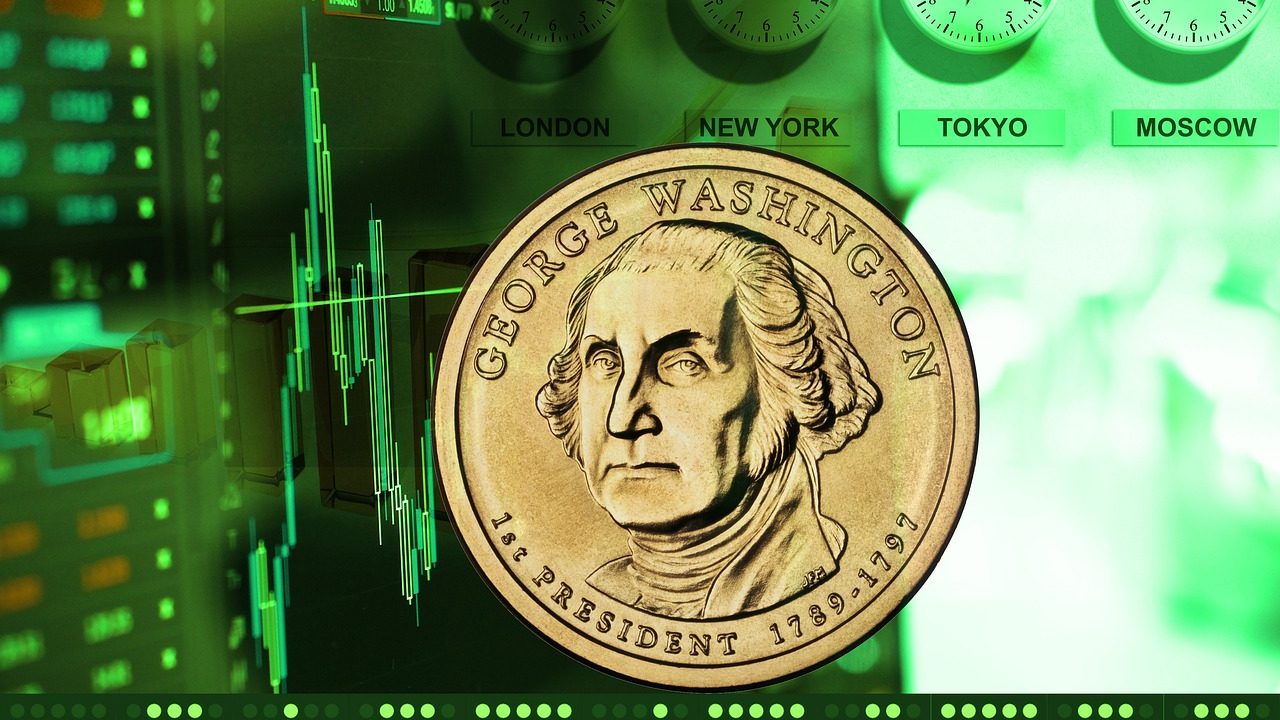
S&P futures stood at 7,859.75 on Saturday morning, up 43.5 points or approximately 0.56 percent, pointing to a constructive open for US equities. But the macro forces driving Bitcoin's decline were operating across financial markets even where their effect was less dramatic. Rising ten-year Treasury yields function as a discount rate for future corporate earnings — mechanically reducing the present value of profits expected years out — with the highest sensitivity in sectors where growth is priced far into the future, including technology and biotech. Positive futures despite that headwind suggest markets were pricing in either rate stability ahead or near-term earnings strong enough to offset the pressure.
Dollar strength adds a separate complexity. A stronger dollar is a headwind for the roughly forty percent of S&P 500 revenues that originate internationally, as repatriated foreign earnings shrink in dollar terms. But dollar strength can also reflect investor confidence in the US economy relative to alternatives, making it a two-sided signal. The simultaneous rise of both the dollar and equities points to economic outperformance as the driver rather than risk aversion.
The geopolitical stories of the week feed into the macro picture through longer transmission chains than markets typically model explicitly. If Russian diesel enters global markets at scale under a US-sanctioned arrangement and brings diesel prices down, that would be disinflationary for transportation and logistics costs. Lower inflation expectations could give the Federal Reserve cover to cut rates, which would provide a tailwind for equities — meaning a deal that reads as purely geopolitical could have a direct and non-trivial effect on domestic monetary policy.
The four-hundred-million-dollar crypto liquidation total is a small number in the context of overall financial markets but significant within crypto's thinner structure. Leveraged positions in crypto are typically funded through perpetual futures contracts, a product without a direct equivalent in traditional markets. When prices move against leveraged longs, automated margin calls trigger forced selling, which pushes prices lower, which triggers further margin calls — a mechanical cascade that amplifies modest initial moves. For traditional institutional investors holding Bitcoin exposure through spot ETFs, that volatility carries at least indirect portfolio implications even where direct exposure is small.
The Technology Underneath the Headlines: Blockchain Transparency, Sanctions Infrastructure, and the Glass-Box Problem

The technology enabling this week's stories is less visible than the headlines, but it shapes each one in concrete ways. The US government's transfer of seized Bitcoin to Coinbase required custody infrastructure — private keys, secure hardware, operational security protocols, blockchain transaction capability — that most federal agencies are still developing. The US Marshals Service, which handles seized asset sales for many federal cases, has built this capacity somewhat ad hoc, and the Coinbase transfer implies an established relationship with a regulated, publicly traded exchange for asset liquidation. That institutional designation carries real business implications for Coinbase's regulatory positioning.
The secondary sanctions applied to the ICC operate through a different but equally technical system: the global financial infrastructure of SWIFT messaging, correspondent banking relationships, and dollar clearing networks that route through New York. The US Treasury's OFAC maintains sanctions lists integrated into compliance software used by banks and financial institutions worldwide. When a firm like Axa checks whether a prospective client is connected to a sanctions list, it is running queries against that compliance infrastructure — a technical system that has become one of the most powerful tools of American foreign policy.
Blockchain's transparency creates an irony specific to government cryptocurrency management. Every Bitcoin transaction is publicly visible, meaning government transfers of seized assets are observable by market participants in essentially real time. There is no equivalent in traditional finance: when the Treasury moves money between accounts, markets do not see it immediately. The same transparency that makes Bitcoin resistant to counterfeiting makes government asset management legible to every market participant globally, generating inadvertent price signals that the technology's designers did not anticipate.
The broader implication is structural. Governments that previously could make quiet policy adjustments and allow markets to absorb them gradually now operate in what amounts to a glass box. Digital transparency changes the power dynamics of policy implementation across multiple domains — and institutional designers, from central banks to law enforcement agencies, are still working out how to manage in an environment where operational decisions are visible the moment they occur.
The Institutional Decline Thesis — and the Strongest Case Against It

The prevailing view in serious foreign policy commentary holds that the current trajectory — sanctioning the ICC, striking unilateral energy deals with Russia, resuming contested deportations against UN objection — weakens American credibility and soft power over the long term. Allied trust erodes, international institutions hollow out, and the United States ends up with less leverage in a more chaotic world.
The strongest counterargument, rooted in realist foreign policy thinking associated with scholars like John Mearsheimer and Barry Posen, runs as follows: the postwar international institutional order was always premised on American primacy and American willingness to fund it. As American relative power has declined — with China's economy approaching parity and middle powers proliferating — those institutions have become less effective regardless of US commitment. The ICC has not deterred war crimes in Myanmar, Ethiopia, or the Donbas. WTO dispute resolution was already dysfunctional before the current administration accelerated its deterioration. If institutions do not work, maintaining them may impose costs that exceed their value, and retreating from them is rationalization rather than decline.
The counterargument weakens, however, on the coordination problem. International institutions are costly and imperfect, but they provide a shared syntax for states to manage disputes without escalation. Removing that syntax — even a clunky version of it — forces states back onto bilateral power relationships, which systematically advantage larger, more powerful actors. The United States, as the largest and most powerful state, benefits specifically from rules-based frameworks because it helped write the rules; the alternative is a world where every dispute is resolved by coercive capacity, which is not obviously favorable even for the most powerful state.
Concrete indicators will test which analysis is aging better. Specific ones to watch: European defense spending trajectories over the next six months; whether other governments accelerate ICC withdrawal following Trump's public urging; US diesel prices at the pump three months from now relative to comparable markets; and whether Van Hollen's war powers bill advances in committee or stalls as previous versions have. Those are trackable signals rather than conclusions reached in advance — and the Russia diesel deal could itself become an early data point, supporting the realist case if it demonstrably reduces American fuel costs without significantly funding Russian military operations, and undermining it if the opposite proves true.