AI Accelerates the Reckoning With Decades of Technical Debt as Security Threats Mount
A single Hacker News post about AI and legacy code accumulated 1,203 points on Thursday, reflecting deep anxiety across the developer community about vulnerabilities that AI is now making dramatically cheaper to exploit. The day's feed also carried a troubling report of residential proxy traffic on the White House network, a cascade of open-weight model releases, and a contested hardware market growing ever more crowded.

“CFOs and CISOs who have been deferring legacy migration are now finding that the risk calculus has changed enough to constitute urgency.”
How this was made Verified AI
Every Intellegix briefing is generated from that day's broadcast and run through automated checks before it publishes — with a human paged on any flag. Here is the trail for this edition.
A Packed Thursday on the Feed

The highest-scoring story on Hacker News this Thursday was an IEEE Spectrum piece arguing that AI is forcing organizations to confront four decades of accumulated technical debt, with 1,203 points and a 701-comment thread that drew sharp practitioner testimony. It was a remarkable signal of where collective anxiety in the developer community is focused.
The day's coverage also included a security alarm over residential proxies detected on the White House network, a flurry of AI model releases from Chinese and domestic labs, notable updates from OpenAI and Anthropic, and significant developer-tools news including Meta's acquisition of workflow platform Conductor. Hardware competition, open-source maintenance concerns, and a handful of lighter projects rounded out an unusually dense news cycle.
Residential Proxies on the White House Network Raise National Security Alarms
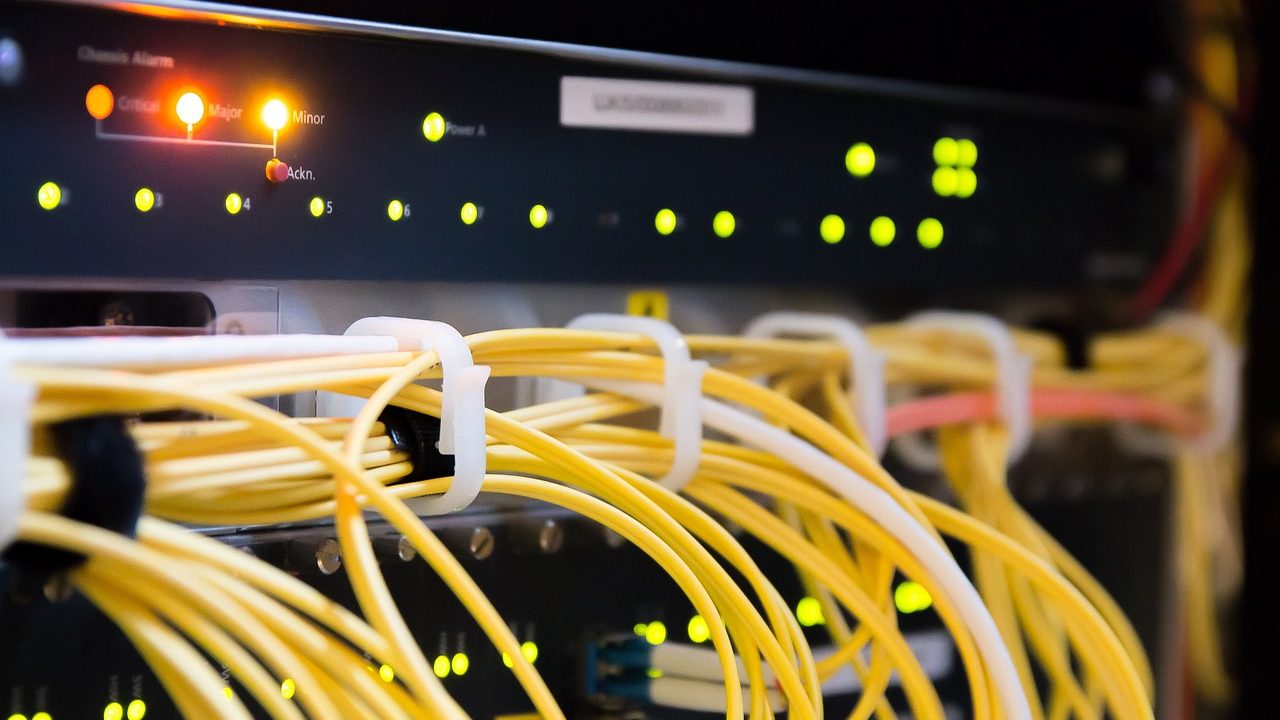
A Layer3 Intel report documenting residential proxy traffic on the White House network scored 1,093 points and drew 354 comments, making it one of the most urgent security findings of the week. Residential proxies — IP addresses belonging to real home internet connections, often enrolled without the homeowner's knowledge — are used specifically to make traffic appear as ordinary civilian activity rather than the output of a data center or known VPN provider, making them exceptionally difficult to block.
On a network of that sensitivity, any unexplained proxy behavior constitutes what security professionals described in the thread as a five-alarm finding, regardless of the mundane explanation. Three scenarios dominated the HN discussion: an insider using tools that route through residential proxy networks for obfuscation; external actors who have achieved some level of access and are proxying connections through the network; or commercial software bundled with residential proxy behavior buried in its terms of service, installed without the IT team's awareness.
The Layer3 Intel report stops short of naming specific threat actors — appropriate caution given how difficult attribution remains even with strong forensics — but the pattern described is consistent with what security researchers associate with nation-state reconnaissance operations. The comment thread drew multiple contributors with government IT backgrounds, and the consensus there was that the finding warrants serious investigation.
From a policy standpoint, the report lands at a moment of elevated scrutiny of federal cybersecurity posture, with Congressional pressure already building for more rigorous continuous monitoring of government networks. If the finding holds up, it is expected to accelerate that legislative push and sharpen unresolved questions about accountability for anomalies on executive branch infrastructure.
Separately, OpenSSH 10.6p2 was released with a workaround for a critical vulnerability — a quieter item at 33 points and 6 comments, but one security practitioners flagged as a mandatory update. Full vulnerability details had not yet been published at the time of the HN discussion, typical for a workaround release ahead of a formal CVE, but 'critical' in an OpenSSH context implies remote code execution potential. Patch windows in such cases tend to be short once details become public.
A Day of Model Releases: Kimi, Ripple, ERNIE, and OpenAI's Security Report
The sheer volume of AI model releases on Thursday was itself notable — any one of them, observers noted, would have commanded a full news cycle two years ago. Moonshot AI's Kimi K3.1 Pro drew the most engagement among the open-weight releases, with 546 points and 151 comments after the Beijing-based lab published weights directly to Hugging Face. Early community evaluations focused on coding and math benchmarks, with the standard caveat that real-world performance takes longer to assess than benchmark scores. The release puts high-capability weights into the commons immediately available for self-hosted deployment.
Ricursive's Ripple-65B, a domestic U.S. open-weight model, drew 302 points and 108 comments on the strength of a specific claim: U.S. open-weight state-of-the-art on agentic coding benchmarks, meaning multi-step autonomous software engineering tasks rather than autocomplete. The 'U.S. open-weight' framing is a deliberate positioning move in a moment when model provenance has become a procurement consideration for government and enterprise customers who face compliance restrictions on Chinese-origin models — a differentiator that operates somewhat independently of raw benchmark performance.
Baidu's ERNIE 5.5 Flash Base, at 41 points and 29 comments, was the quietest of the major releases. The 'Flash' designation across AI model families typically signals optimization for speed and cost at some quality tradeoff, and the release appeared to be a deliberate play for the inference efficiency tier rather than the frontier capability tier.
OpenAI published two distinct items. Images 2.6 — 315 points, 182 comments — delivered iterative improvements to image generation, including better coherence on complex prompts and improved text rendering, with community testing describing the gains as real but incremental. 'A Thousand Fewer Paths to Root' — 367 points, 266 comments — was a more unusual publication: an internal security hardening report documenting how OpenAI has reduced privilege escalation attack surface in its systems. Security professionals in the thread appreciated the transparency while skeptics noted that publishing attack surface reduction without disclosing what the underlying vulnerabilities were makes independent verification difficult.
Anthropic's provable inference paper received 226 points and 113 comments, relatively modest given the day's volume, though some in the community argued it deserved more attention. The research aims at mathematical guarantees on specific aspects of large language model inference behavior — formal proofs that certain behaviors are bounded, rather than empirical safety testing. It is early research, but it represents a genuinely different direction from the dominant approach to AI reliability in high-stakes applications.
Go Gets a New JSON API, Zig Tightens Operator Rules, and Meta Absorbs Conductor

Go's proposed new JSON encoding and decoding API generated 327 points and 162 comments — substantial engagement for a standard library change. The existing `encoding/json` package has been a source of frustration since the language's early days, with design decisions made in 2009 that have caused real problems as Go became a dominant language for backend services: inconsistent handling of unknown fields, performance issues on large payloads, and the inability to distinguish between a JSON null and a missing key. The proposed `encoding/jsonv2` path must coexist with the old package rather than replacing it, owing to Go's strong backwards compatibility guarantee, and the HN thread debated whether the new streaming API represents genuine improvement or merely a different set of tradeoffs.
Zig's devlog update on partial operator precedence drew 58 points and 29 comments. The change — requiring explicit parentheses for mixed arithmetic and bitwise operations rather than relying on precedence rules — is consistent with the language's design philosophy of prioritizing explicitness over convenience. The argument is that expressions mixing addition and bitwise OR are a source of subtle bugs not because the language rules are wrong, but because human readers hold different mental models of what should happen.
The acquisition of Conductor by Meta generated 184 points and 199 comments and clear community ambivalence. Conductor built a developer workflow and task orchestration tool with a genuine following among teams running complex deployment and automation pipelines. The acquisition announcement was sparse on details — characteristically so — and the HN thread filled quickly with users announcing they were evaluating alternatives, a rational response given the uncertainty about whether the product has a future as a standalone offering or will be dissolved into internal Meta infrastructure. From Meta's perspective, the acquisition looks like a talent and technology play in the agentic AI space, where mature workflow orchestration capability has obvious strategic value.
Forty Years of Technical Debt: AI Changes the Risk Calculus

The highest-scoring story of the day — the IEEE Spectrum piece titled 'AI is forcing us to pay off 40 years of technical debt' — uses PHP-to-shell vulnerabilities as its primary case study. PHP-to-shell attacks exploit applications built on PHP to execute arbitrary shell commands on the underlying server. These vulnerabilities have been documented and understood for decades; patching was often incomplete, vulnerable code persisted in legacy systems, and those systems remained in production because migration was genuinely expensive and complex.
What AI changes in this picture, the article argues, is the economics of exploitation. AI-assisted code analysis and exploitation tools can now scan and test for these vulnerabilities across thousands of targets simultaneously, at a speed previously impossible without significant human effort. Vulnerabilities that were theoretically known but practically low-risk because exploitation was expensive have, the argument goes, become high-risk because exploitation is now cheap.
The HN community pushed back on parts of this framing. Multiple security practitioners argued that the technical debt was never truly acceptable — it was tolerated because the cost of exploitation was high enough that most organizations survived their accumulated vulnerabilities. AI lowered that cost, but the debt was always real. The more accurate version of the thesis, several commenters suggested, is about the compressed timeline: CFOs and CISOs who have been deferring legacy migration are now finding that the risk calculus has changed enough to constitute urgency. The 701-comment thread included multiple practitioners describing organizations where known vulnerabilities have existed for five to ten years, with remediation continuously deferred, now operating in emergency mode.
The claim that AI has fundamentally changed the risk calculus for legacy vulnerabilities is treated as nearly settled in the HN discussion, but it rests on assumptions worth examining. The scaling advantage of AI-assisted exploitation may apply primarily to the discovery and initial access phase, while the post-exploitation phase — coordinating exfiltrated data, monetizing breaches — still requires substantial human judgment and infrastructure that AI does not obviously provide. Additionally, the defense benefits of AI may be at least as large as the offense benefits: organizations with functioning security programs can run continuous automated scanning of their own systems, potentially neutralizing the attacker's speed advantage.
The signal to watch, by this analysis, is breach disclosure data and insurance loss ratios over the first half of 2027. If AI-assisted exploitation is as potent as the article argues, a measurable spike in incidents involving legacy PHP-era infrastructure should be visible in that data. If the spike is concentrated in organizations with no active security program rather than broadly distributed across the ecosystem, the claim is narrower than its current framing suggests.
A companion Ask HN thread — 'What's your current AI agentic setup?' — drew 354 points and 398 comments, offering a practical inventory of how the community is actually using AI agents in production. The range was wide: sophisticated multi-agent pipelines with tool use and persistent memory at one end, AI as enhanced autocomplete at the other, with a meaningful fraction of respondents explicitly skeptical of agentic approaches for reliability reasons. The failure modes of agentic systems — where multiple wrong decisions in sequence can require significant cleanup before any human review — were cited repeatedly as a constraint that benchmark comparisons do not capture.
Hardware Competition Heats Up as Open-Source Security Infrastructure Shows Strain

Qualcomm's Cloud AI 100 Ultra — a 150-watt AI accelerator with 128 gigabytes of HBM memory and 548 gigabytes per second of bandwidth — drew 157 points and 59 comments as the company's bid to participate in a data center AI accelerator market that NVIDIA has dominated. The 128GB memory capacity is significant for inference: it allows models in the 70-billion parameter range to run in full precision, or larger models with quantization. The HN community's honest assessment was that Qualcomm is competitive on memory specifications but faces the classic non-NVIDIA problem: the CUDA software ecosystem, representing roughly fifteen years of investment by NVIDIA in developer tooling, libraries, and familiarity, creates substantial switching costs even when alternative hardware is technically comparable.
Altera's Agilex 2X FPGA and SoC portfolio announcement — 35 points, 13 comments — reflects the company's attempt, following its spin-out from Intel, to serve a broader range of use cases than pure programmable logic. FPGAs in AI contexts are of particular interest for edge inference, where power envelope and form factor constraints rule out GPU-class hardware.
OpenAI's acquisition of hardware startup Pierre Computer Company drew 245 points and 75 comments, fitting a pattern that Google established with TPUs and Amazon reinforced with Trainium: frontier AI labs concluding that reliance on third-party chip supply chains is a strategic liability and beginning to build internal hardware capability. The scale and timeline implications for NVIDIA's customer concentration are expected to develop significantly over the coming quarters.
On the open-source maintenance front, the Trusted Firmware project's announcement raising questions about the future maintenance of Mbed TLS — a widely used embedded TLS library, particularly in IoT and constrained device contexts — drew 51 points and 14 comments. The announcement illustrates a structural problem the community has encountered repeatedly: critical security infrastructure is maintained by small teams with precarious funding until a crisis forces the question into the open. OpenSSL's Heartbleed moment in 2014 and the Log4Shell vulnerability in 2021 are the most cited precedents. Mbed TLS is now receiving that scrutiny before a crisis, which is better, but the underlying problem remains unresolved.
Wing Commander Co-Op, CSS Lemmings, and LED Lights That Don't Attract Insects

A decade-long project to add co-op multiplayer to the original DOS Wing Commander earned 200 points and 29 comments. The technical writeup described deep reverse engineering of the DOS binary to add co-op functionality to a 1990 game without access to the source code — a systems programming achievement the HN community rightly recognized as an act of dedication purely for the love of the project.
A Lemmings game rendered entirely in CSS animation — no JavaScript — drew the community's affection for its technical elegance and charm. The 43-comment thread was, by most accounts, full of genuine delight.
The science item that may have the longest shelf life from Thursday's feed was a finding about LED lights and insects: contrary to widespread assumption, insects do not swarm toward LED lights the way they do toward incandescent or UV-rich sources. The post drew 270 points and 131 comments, drawing entomologists and lighting engineers into what was described as a surprisingly productive conversation about the implications for urban lighting design, insect population dynamics, and the ecological case for LED adoption beyond energy efficiency alone.
Also on the lighter side, a discussion of TextEdit versus Pages — four comments, modest score — articulated something many users reportedly feel but rarely state explicitly: that TextEdit's simplicity is a feature, not a limitation, and that Pages represents a category of software that optimizes for impressiveness over usability. A Three.js fluid simulation and CSS feature clips replacing video demos were cited as examples of a quieter trend in web development toward using declarative technologies for visual effects that previously required heavyweight video assets or JavaScript libraries.
Looking ahead, the hardware competition story — Qualcomm, Altera, and the OpenAI-Pierre acquisition — is expected to develop substantially over the next quarter. Open-weight models from Kimi and Ripple-65B will face real-world evaluation over coming weeks that will either validate or challenge their benchmark claims. The White House residential proxy finding is widely expected to generate Congressional inquiry. And the technical debt thread's 701 comments, full of practitioners describing situations already unfolding in their organizations, may prove to be leading indicator data for consequences that will be covered for months to come.