Ubuntu's Three-Week Security Lapse, AI Weight-Space Programming, and the Web's Amnesia Problem
A critical remote code execution vulnerability left millions of Ubuntu machines unpatched for nearly three weeks, AI researchers claimed a system can directly rewrite another model's neural weights, and a cluster of stories underscored just how fragile the digital web's memory really is.

“A system that can surgically modify the weights of a less capable model could, in principle, bypass some of those bottlenecks.”
How this was made Verified AI
Every Intellegix briefing is generated from that day's broadcast and run through automated checks before it publishes — with a human paged on any flag. Here is the trail for this edition.
The Week the Security Community Lost Its Patience

Late October 2026 delivered a convergence of stories that kept the Hacker News community arguing deep into the night: a critical Linux vulnerability aging unpatch on enterprise servers, an AI system reportedly rewriting the internals of a rival model, and experimental physics confirming a form of magnetism that theory had only recently dared to predict. The front page reflected a community in an unusually combative mood.
For the Intellegix HN Daily recap of Tuesday, November 3rd, 2026, the through-line connecting nearly every major story was the same: the distance between what important systems promise and what they actually deliver when pressure is applied.
Canonical's Credibility Crisis: Three Weeks and Counting on a Critical RCE

CVE-2026-98432, a critical remote code execution vulnerability in the Linux kernel affecting Ubuntu LTS releases, had been publicly catalogued for nearly three weeks with no official patch from Canonical as of the recording date. A post titled 'WTF Ubuntu?' drew 1,542 upvotes and 641 comments on Hacker News — one of the highest-scoring posts of the day — reflecting what the thread made clear were two distinct varieties of anger: the practical fury of sysadmins managing unprotected production fleets, and a deeper institutional grievance about the meaning of 'Long-Term Support.'
The situation was made more pointed by the existence of an upstream Linux kernel patch. The fix, in other words, already existed — the bottleneck was Canonical's separate process for packaging and testing kernel updates for its distribution. A companion post, 'Ubuntu still has not released patch for Linux 0day RCE in almost 3 weeks,' documented the gap in detail, and the HN thread filled with engineers noting that even accounting for standard freeze periods, three weeks on a critical-severity CVE falls outside any reasonable interpretation of normal process.
The business stakes are significant. Ubuntu LTS deployments are widespread in enterprise and cloud environments precisely because of their security guarantees, and Canonical's revenue model depends on Ubuntu Pro subscriptions and commercial support contracts. A sustained credibility gap on security response gives competitors like Red Hat and SUSE a direct opening. The thread also surfaced a structural critique of the Linux distribution model itself: the practice of distribution maintainers separately backporting and testing kernel patches introduces latency that is acceptable for low-stakes servers but genuinely dangerous for internet-facing production systems.
The disclosure dynamics added another layer of complexity. The independent researcher who first publicly documented the three-week gap — publishing through a freenode.net article — walked an ethical tightrope the HN community debated at length: public pressure can accelerate vendor response, but amplifying awareness of an unpatched vulnerability also increases the attack surface. For anyone running Ubuntu LTS in production, the practical advice circulating in the thread was to apply available kernel command-line mitigations immediately and not wait for the official patch. A separately noted NIST cybersecurity guide for solopreneurs — which drew 238 points — reinforced the wider lesson: assuming an OS vendor has a CVE covered is not a patch policy.
An AI That Rewrites Other AIs — And Why Skepticism Is Warranted

The highest-scoring post of the day — 2,717 points and 820 comments — was a blog post by a researcher going by the handle rikiyat, titled 'Astra can read and write weights to improve Qwen.' The engagement volume signals that the Hacker News community recognized the claim as potentially significant: rather than improving a model through conventional training, gradient descent, or reinforcement learning from human feedback, the described system called Astra reportedly treats the weight matrices of another AI model — Alibaba's Qwen — as a structured medium to be read, interpreted, and rewritten in order to improve its performance.
If the technique holds under scrutiny, the implications are considerable. The dominant paradigms for improving AI models — more training data, more compute, more sophisticated feedback mechanisms — are all expensive and slow. A system that can surgically modify the weights of a less capable model could, in principle, bypass some of those bottlenecks. The HN thread was appropriately cautious, with extensive debate about evaluation validity, benchmark overfitting, and reproducibility. Several commenters raised a deeper interpretability problem: if an AI system is modifying another AI's weights in ways that are not human-readable or human-designed, the already-difficult challenge of understanding why models behave as they do becomes substantially harder.
The choice of Qwen specifically drew some discussion. Qwen's relatively open architecture may make it more amenable to external weight modification than more closed model families, though the thread did not reach a consensus on this point.
Healthy skepticism is warranted. Neural network weight spaces are extremely high-dimensional, and the tools for understanding what specific weights are functionally doing remain primitive. The claim that a learned system can make targeted modifications that improve specific capabilities without degrading others assumes a level of weight-space interpretability that is not yet established. The AI research record includes numerous results that appeared dramatic in initial reports and proved difficult to replicate or generalize. The benchmark to watch over the next six months is independent reproducibility: whether researchers at unconnected institutions can replicate the core result with different model pairs. If that happens, the optimism is probably warranted; if the technique remains confined to its original demonstration, that answer is equally informative.
Silent Speech, Subvocal Computing, and the Hard Problem of Personalization

The Subvocal project — 712 upvotes and 344 comments — attracted strong interest with a straightforward proposition: speak to your computer in complete silence. The system reads electromyographic signals from the muscles of the throat and jaw as a user silently forms words, converting those signals to text or commands without any audible output. Open offices, public transit, and meetings where audible speech is socially inappropriate are the obvious use cases; accessibility applications for people with voice disorders represent a potentially more compelling long-term market.
The underlying technology — electromyographic silent speech interfaces — is not new. MIT Media Lab's AlterEgo prototype drew significant attention around 2018. What has changed since is the miniaturization of the hardware and the machine learning infrastructure for training personalized signal models. Engineers who had worked in the space noted in the thread that per-user calibration remains the hard problem: EMG signal patterns for the same spoken word differ substantially across individuals, making a universal model perform poorly and requiring meaningful onboarding training time for each new user.
Both the Subvocal story and the Astra weight-space research illustrate what increasingly characterizes the 2026 AI landscape: the field has moved past the 'can it work at all' phase for many capabilities and deep into the harder, slower engineering problem of making things work reliably enough to deploy at scale.
Engineering at Scale: Git, Microcontrollers, and Sovereign Chips
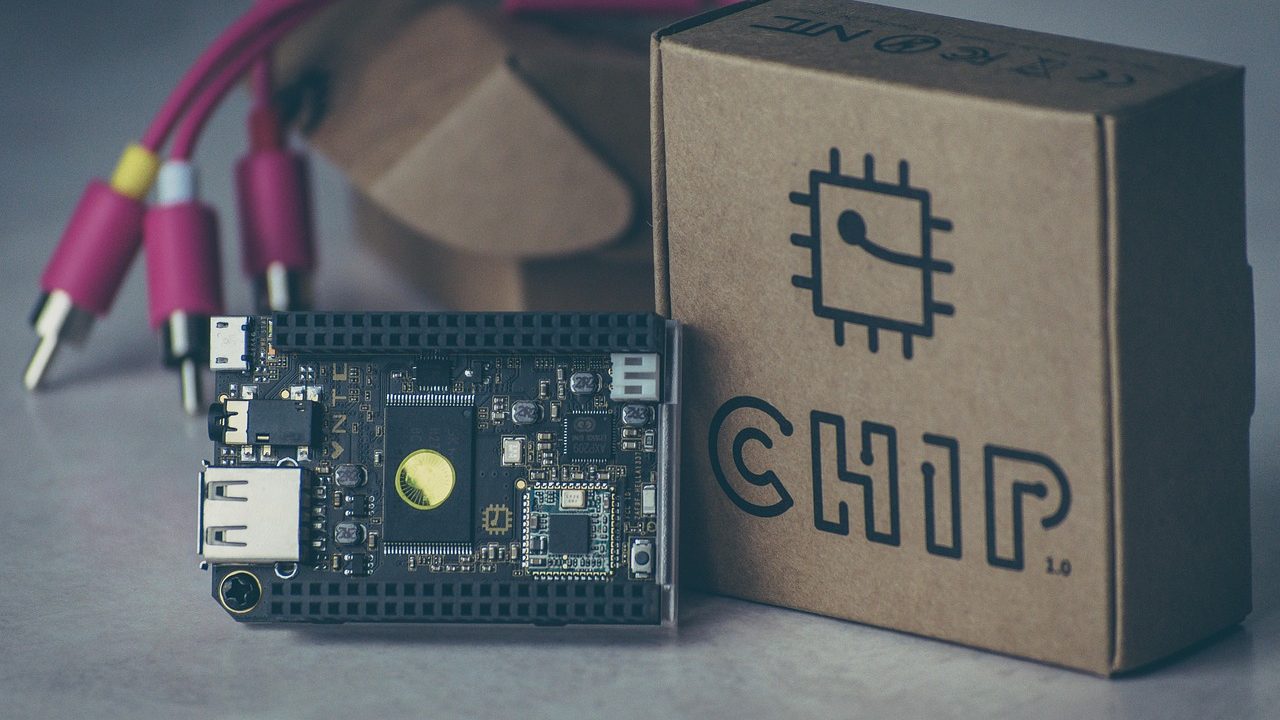
OpenAI's post on scaling Git across thousands of developers drew 236 points and 154 comments — a strong response for a pure operations writeup. The post describes the performance degradation Git experiences at monorepo scale — checkout, fetch, and diff operations slowing enough to interrupt developer flow — and the specific interventions OpenAI deployed in response: virtual file system approaches that avoid materializing all files locally, partial clone strategies, and custom tooling around commit graph optimization. The thread surfaced the perennial engineering debate about whether monorepos are the right architecture at all, with both sides finding supporting conditions. The OpenAI post's value is its specificity: which approaches worked at their particular scale, and which introduced new failure modes.
Toit v2.0.0 — a programming language and platform designed for microcontrollers — reached a significant milestone with breaking changes from the 1.x series, including a new bytecode format and improved memory management. With 101 points, its audience skews toward embedded systems engineers who have been tracking the release. Embedded programming has historically been dominated by C and adjacent languages that offer direct hardware control at the cost of memory safety; Toit competes with MicroPython and Rust's growing embedded presence for developer mindshare in an increasingly contested space.
The European RISC-V Industrial Computing Initiative — ERICI — drew 128 points and 67 comments, resonating particularly with the community's European engineering contingent. The consortium is building RISC-V–based computing infrastructure for European industrial applications in manufacturing, automation, and embedded control, with explicitly stated goals of reducing dependency on x86 instruction set licensing from Intel and AMD, and on ARM licensing from a company owned by SoftBank and increasingly subject to U.S. export control considerations. The industrial focus is strategically sound: consumer computing markets are brutally competitive, but industrial embedded computing has longer product cycles and more tolerance for performance-per-dollar tradeoffs that favor an emerging instruction set architecture.
A related paper on open-source 5G Radio Access Network platforms — covering software that coordinates the radio link between cell towers and devices — noted that the performance gap between open-source implementations and commercial systems is real but narrowing, with significant implications for smaller carriers, developing-market deployments, and private 5G networks seeking to avoid large-vendor licensing costs.
The Web Forgets: On Preservation, Ephemerality, and Cognitive Surrender

An essay titled 'If you love a website, back it up' drew 569 points and 128 comments — a striking response to what is, on its surface, practical advice. Written by a blogger named Misty in response to the disappearance of a site she valued, the piece expands into a meditation on digital ephemerality and the cultural cost of the web's structural amnesia. The tools discussed are concrete — wget for mirroring, Wayback Machine snapshot submission, HTTrack for structured offline archiving — but the HN thread extended into a broader technical problem: a static HTML site from 2003 is actually easier to archive than a 2026 React application with server-side rendering and authentication walls.
The 'Hacker Times' project — 303 points and 90 comments — reimagined the Hacker News front page with New York Times–style newspaper layout conventions. The project functions as a love letter to the community but also implicitly poses the preservation question from another angle: what happens to this accumulated conversation if the platform changes? Long-time community members in the thread responded with the kind of nostalgia the preservation essay had already primed.
Two essays directly in tension with each other generated their own sustained thread activity. 'Resisting Cognitive Surrender,' at 193 points and 91 comments, argued that large language model assistants create subtle pressure toward intellectual passivity — not through malicious design but through the sheer ease of receiving fluent, confident answers to questions one might otherwise have worked through independently. Mathematician Terry Tao's essay 'Egoless Mathematics in the AI Era,' at 165 points and 123 comments, took a more optimistic position: that researchers need to develop a calibrated, non-defensive relationship with AI tools, accepting that AI can contribute to discovery without threatening the value of human insight.
The tension between the two pieces resolves partly on the question of expertise. Tao, a Fields Medal winner, has the mathematical foundation to critically evaluate AI contributions and recognize shallowness or error. The Cognitive Surrender essay is worried about learners who do not yet have that foundation — who may outsource the difficult early work of building understanding before the understanding is formed. Whether a generation of workers habituated to AI-assisted reasoning is a problem or an adaptation remains, as both essays acknowledge in different registers, an open question.
Revolut Pulls AI Inference In-House as Enterprise Logic Catches Up with the Hype

Revolut's decision to migrate its AI infrastructure from cloud-hosted language model APIs to a self-hosted General Language Model stack — surfaced through a tweet from Guillermo Flores that sparked HN discussion — is the kind of enterprise AI story that generates little fanfare but reveals more about where the market is heading than most product announcements. Revolut, one of Europe's largest fintech companies, operates under GDPR and banking regulations across multiple European jurisdictions. Whether customer financial queries routed through a cloud LLM API constitute third-party data sharing remains an unsettled legal question in most jurisdictions, but it is precisely the kind of question compliance teams at large financial institutions cannot afford to leave open.
Cost economics reinforce the compliance logic. At Revolut's scale — tens of millions of monthly active users — API costs for cloud-hosted inference are not trivial. HN engineers in the thread estimated rough break-even points using publicly available pricing, with a consensus that organizations above roughly several hundred million API calls per month have strong economic incentives to own their inference infrastructure outright.
The choice of GLM — a model from Chinese AI lab Zhipu AI — drew some comment-thread scrutiny. GLM's multilingual performance is genuinely strong, which matters for Revolut operating across dozens of languages in Europe and internationally. Whether any geopolitical considerations factor into choosing a Chinese-developed model for a European fintech's sensitive financial inference workloads was raised but not resolved in the thread.