From Antimatter Traps to Surveillance Bills: A Day of High-Stakes Technology
Physicists held a single antiproton suspended for thirty days while, elsewhere online, a jailbroken iPhone made headlines, a Canadian surveillance bill drew warnings from the EFF, and a Chinese AI lab generated nearly a thousand upvotes on Hacker News. Saturday, October 24, 2026 proved a dense day for technology, science, and policy.

“the legal permissibility of the data collection is itself the story.”
How this was made Verified AI
Every Intellegix briefing is generated from that day's broadcast and run through automated checks before it publishes — with a human paged on any flag. Here is the trail for this edition.
Who Controls Your Devices? The Question Animating a Turbulent News Day

A full iPhone jailbreak posted publicly online, an AI quietly phoning home from a living-room television, a Canadian surveillance bill racing through parliament, and a privacy-focused Android fork finally winning over a dozen banking apps: Saturday's top technology stories shared a single uncomfortable through-line — the gap between what users believe their devices are doing and what those devices are actually doing.
The stories surfaced largely through the Hacker News community at news.ycombinator.com, where a local Wikipedia project filtering articles by walking distance earned the day's highest score of 1,397 points, edging out several major AI releases. Alongside the security and privacy stories, a Chinese AI lab dropped a competitive multimodal model, Astral moved to unify Python's fractured tooling landscape, and physicists announced a month-long antimatter trapping experiment with implications for one of physics' deepest mysteries.
The breadth of the day's coverage — spanning particle physics, developer infrastructure, mobile security, and intelligence law — reflected what the Hacker News community consistently surfaces: technically rigorous reporting from corners of the internet that mainstream technology coverage rarely reaches.
Jailbreaks, Silent AI, and a Surveillance Bill With Global Reach

A team called Calif.io published a blog post documenting a full exploitation chain resulting in what they described as a successful jailbreak of a current iPhone, earning 908 points and close to 600 comments on Hacker News. The write-up includes working code and the complete exploit chain, posted publicly rather than through Apple's Security Research Device program — a structured channel Apple has offered vetted researchers since around 2021 to conduct exactly this kind of work on modified hardware with more permissive security settings. The decision to bypass that program and publish directly generated significant friction in the comment thread, with debate splitting between those who argued public disclosure forces faster patching and those who noted the window between publication and patch gives bad actors room to weaponize the exploit. A working iPhone exploit chain reportedly carries commercial value in the millions of dollars through bug bounty channels or brokers, making the team's choice to publish — effectively leaving that money on the table — a principled if controversial position.
The Samsung story arrived more quietly but struck many readers as more alarming. A hacker who reverse-engineered their Samsung television — a process requiring interception of TLS traffic on a device running a custom Linux kernel with proprietary middleware — found what appeared to be an on-board AI system making outbound connections to OpenAI's API. More striking still: the OpenAI account associated with the TV had been suspended, suggesting Samsung was either running a shared API key flagged for abuse or facing some compliance issue that caused OpenAI to cut off the integration. The post drew 194 points and 50 comments, with many readers reporting they immediately checked their own smart televisions. The EU AI Act, which has been rolling out in implementation phases this year, includes transparency provisions covering exactly this kind of scenario — AI inference on consumer hardware, sending data to a third-party API, without the user's explicit knowledge.
A vulnerability called HTTP2Shell — an evolution of the Node2Shell exploit, now affecting a wider range of Python HTTP libraries through brotli compression handling — drew only 19 points on Hacker News, though the low score may simply reflect that the relevant engineers saw it and moved quietly to remediation. A community-built CVE tracking tool at cve.0xosprey.com, also trending Saturday with 67 comments, exists precisely to follow this kind of vulnerability evolution across library ecosystems.
The Electronic Frontier Foundation published a warning this week that Canadians are running out of time to oppose Bill C-22, drawing 420 points and 226 comments. The bill would significantly expand the legal authority of Canada's Communications Security Establishment — the country's signals intelligence agency and rough equivalent of the NSA — with oversight mechanisms critics argue are retrospective rather than preventive. The EFF's intervention is notable because the organization does not typically focus on Canadian legislation absent cross-border implications: through the Five Eyes intelligence-sharing arrangement among Canada, the United States, the United Kingdom, Australia, and New Zealand, data collected under expanded CSE authority could flow to partner agencies in all five countries. Canada passed the controversial Bill C-51 in 2015 under the Harper government; the Trudeau government promised reforms but privacy advocates argued the core architecture of expanded surveillance powers remained largely intact. C-22, according to the EFF's description, follows a similar pattern, with a compressed legislative timeline that limits public consultation.
Against that backdrop, a piece of hopeful news: GrapheneOS, the privacy-focused Android fork that has long been blacklisted by banking apps using Google's Play Integrity API to verify 'certified' Android builds, has now been explicitly added to the allowlists of approximately a dozen banking apps. Security engineers, privacy researchers, and privacy-conscious professionals — exactly the high-value customers financial institutions want — had been locked out of mobile banking on their chosen operating system. The shift suggests competitive pressure may be doing regulatory work: if your banking app refuses to run on GrapheneOS and a competitor's does not, the customers you lose are disproportionately the ones you most want to keep.
Chinese AI Challenges the Frontier, While One Lab Skips Text Entirely

Kimi K3.1 Pro, a multimodal model from Moonshot AI — a Chinese AI lab that has operated with somewhat less Western press coverage than the DeepSeek story earlier this year — earned 933 points and 554 comments on Hacker News, making it the day's dominant AI story. Moonshot released two variants: K3.1 Pro, positioned at the performance ceiling, and a Highspeed variant that trades some capability for faster inference latency. The strategic logic of the Highspeed release reflects a clear fragmentation in the AI deployment market between frontier models optimized for capability and a competitive mid-tier optimized for consistent sub-second responses — the tier that matters most for production applications like customer service, code completion, and document processing. Benchmark numbers posted in the Hacker News thread showed K3.1 Pro performing competitively on coding tasks and multilingual reasoning, and Moonshot is offering API access with the Highspeed variant apparently positioned to compete on price-per-token against OpenAI.
The most cautionary read on Kimi K3.1 Pro's competitive significance centers on compute access. US export controls on advanced semiconductor equipment to China are more comprehensive than they were two years ago, and Moonshot AI is operating under those constraints. Skeptics argue that benchmark numbers represent a snapshot — that the gap will widen over successive generations as US labs continue to scale compute that Chinese labs cannot access at equivalent rates. The counterargument, which the DeepSeek story earlier this year reinforced, is that compute constraints may be forcing Chinese labs to develop algorithmic efficiency gains that could outpace pure compute scaling in the medium term. The two scenarios are distinguishable over time: if K3.1 Pro's successors fall meaningfully behind frontier US models on tasks correlated with scale — very large context windows, very long reasoning chains — that would be evidence compute constraints are biting. If they remain within a few benchmark points on those same tasks, the efficiency-driven hypothesis gains support.
Dessa, a conversation model released by Block.xyz, drew 398 points and 146 comments and represents the most architecturally distinctive AI release of the day. Dessa was trained exclusively on speech audio — no text. The model learned language entirely from audio signal, the way a human child does, rather than through the text-based training that underlies every major mainstream language model including GPT, Claude, Gemini, and Kimi. The implications are significant: speech carries information that text transcription simply loses — tone, hesitation, emphasis, the difference between a question and a statement in intonation rather than punctuation. A model that understands spoken language at the audio level rather than converting speech to text before processing should, in principle, be better at understanding conversational intent, handling ambiguous phrasing, and recognizing when tone contradicts words. Several commenters working in voice AI described this as a research direction they had been waiting to see productized.
A practical guide to AI image generation trending Saturday — 107 points — walked readers through the full stack from diffusion model basics through to agentic image generation workflows, framing AI agents as the emerging layer through which image generation is increasingly invoked as a tool rather than used as a standalone creative endpoint. The guide's resonance on Hacker News reflects how fast the image generation space has moved: even closely engaged readers from a year ago carry gaps across diffusion models, LoRA fine-tuning, SDXL, FLUX, and now agentic pipelines.
Python Gets a Unified Toolchain, and a 16-MHz Processor Gets a City
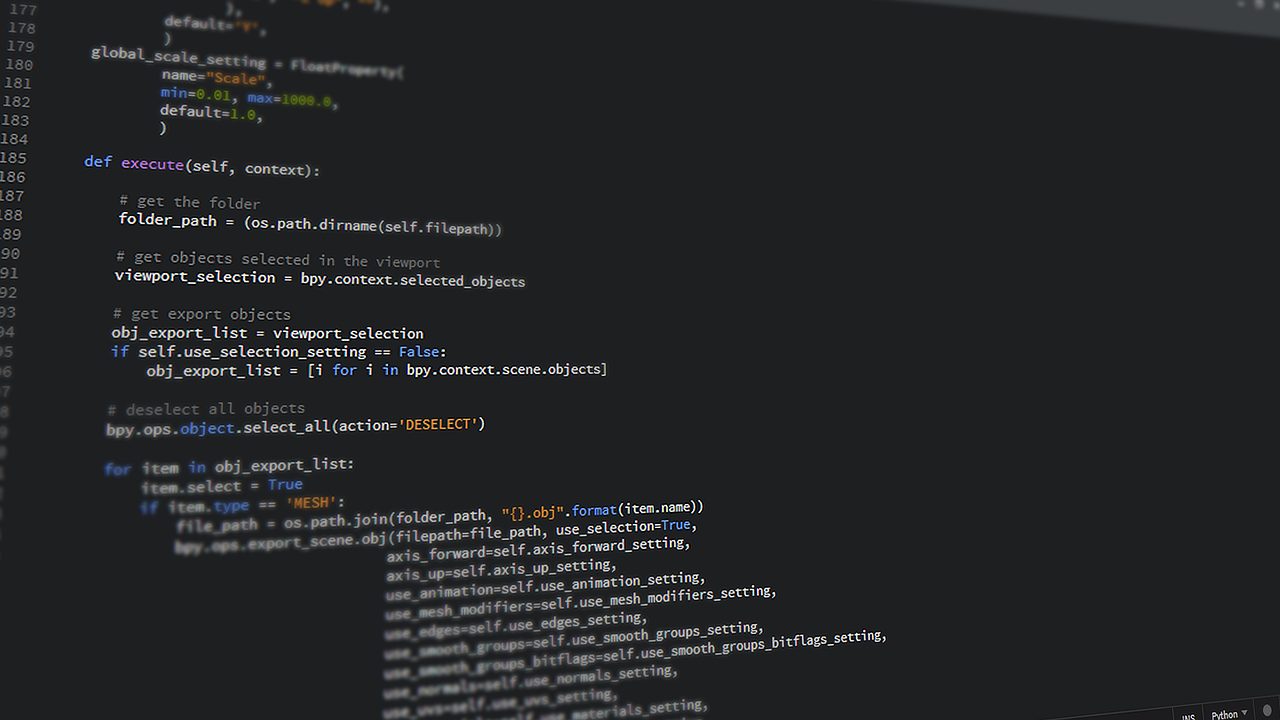
Astral, the company behind the Rust-based Python package manager `uv`, announced work toward integrating `uv` with its newer type checker `ty` into a unified Python development toolchain. The core of the integration is straightforward: `uv`'s understanding of a project's dependencies, virtual environment, and Python version becomes automatically available to `ty`, so the type checker knows exactly what packages are installed without separate configuration. For anyone who has spent an afternoon debugging why mypy fails to see a package that is clearly installed in the active virtual environment, the value is immediate. The broader strategic bet Astral is making mirrors what Cargo did for Rust — build a package manager fast and coherent enough to become the de facto standard, then layer additional tooling on top of that distribution channel. `uv` has been notably faster than pip on large dependency graphs, with resolution times that reportedly dropped from minutes to seconds, and if Astral can replicate that momentum across a unified suite, it would occupy infrastructure-level importance for Python development comparable to npm's position in the JavaScript ecosystem.
Philip O'Toole's twelve-year retrospective on building and maintaining rqlite — his open-source distributed SQLite system — earned 223 points and 33 comments. SQLite was explicitly designed as a single-node, single-process database; distributing it required layering a consensus mechanism (rqlite uses Raft) on top of something built with precisely opposite assumptions. The retrospective's value lies in its honesty about which assumptions from 2014 turned out to be wrong, a frankness that product launches and conference talks rarely permit. Hacker News has a specific appetite for this kind of engineering memoir.
At the opposite extreme of engineering constraints, a piece on building a playable city builder — SimCity-style simulation — on a sixteen-megahertz processor drew appreciation for the discipline it required: aggressive memory management, render optimization, and simulation shortcuts that demonstrate the difference between code that works and code that has been squeezed until it sings. A companion piece benchmarking VLC's Gaussian blur implementation in C against a C-sharp version complicated the expected narrative — rather than a simple verdict for C, the analysis showed JIT optimization in the managed C-sharp runtime closing meaningful gaps before raw C pulled ahead again. Hacker News commenters added GPU shader implementations that reportedly outperformed both, which is the kind of community contribution that makes technical threads valuable beyond their original post.
The Corgi terminal multiplexer, presented as a Show HN with 92 points, positions itself in a new category: agent-aware terminal multiplexing. Traditional multiplexers like tmux or screen split a terminal into panes and sessions; Corgi adds a coordination layer integrating AI agent workflows into that interface, so an agent can run in one pane while the user works in another. The HN comments were cautiously interested, which for a tooling Show HN represents a reasonable signal of merit.
Antiprotons, Collagen-Eating Microbes, and the Wikipedia That Knows Your Street
Physicists trapped a single antiproton — one particle of antimatter — for a full month, earning 71 points on Hacker News and attention well beyond specialist physics circles. Antimatter annihilates on contact with ordinary matter, requiring suspension in a magnetic trap with extraordinary field stability over the entire thirty-day period. The scientific purpose is precision measurement: one of the deepest open questions in physics is why the universe contains more matter than antimatter, given that the standard model predicts the two should have been created in equal amounts at the Big Bang and immediately annihilated each other. Holding a single antiproton long enough to measure its properties with high precision lets physicists test whether matter and antimatter behave identically — or whether some asymmetry exists that could explain the universe's existence.
A 2018 piece from Southampton titled 'I Don't Understand Quantum Physics' trended Saturday with 81 points and 36 comments, a reminder that Hacker News does not filter by publication date. The author, a physicist, argues that discomfort with quantum mechanics is not a failure of understanding but the correct response to a genuinely weird physical reality — a counterpoint to popular science writing that resolves quantum weirdness into comfortable analogies. The thread drew physicists and physics-adjacent commenters pushing back and extending the 2018 argument in directions its author did not anticipate.
Cambridge research on collagen-eating microbes earned 53 points for reframing a long-standing puzzle in paleontology. The emergence and spread of microbes that break down collagen — a protein essential to fossilization — may explain significant gaps in the fossil record during certain geological periods. Rather than reflecting merely the rarity of fossilization, those gaps may partly reflect periods when collagen-eating microbes thrived and actively destroyed organic material that would otherwise have been preserved. The finding shifts the interpretation from 'evolution is missing steps' to 'preservation conditions changed,' which has implications for longstanding debates about the completeness of the evolutionary record.
Local Wikipedia, built by developer Ed Jefferson, was the day's highest-scoring story at 1,397 points and 236 comments. The project filters Wikipedia articles to show only those relevant to things within a half-hour walk of the user's current location — the building visible from where one stands, the street underfoot, a historical event that occurred a block away. Commenters reported discovering a site of a significant 1920s labor dispute half a mile from a Denver suburb, and a Victorian-era sewer running beneath a London street. From a product design standpoint, it is a case study in the power of a single strong constraint: Wikipedia is famously overwhelming; filtering by physical proximity transforms it into something intimate. The constraint is the feature.
A profile of the creator of TrenchBroom — the map editor that became the standard tool for Quake modding and is now used by professional studios — drew 126 points and 14 comments. TrenchBroom was built by one person out of love for a thirty-year-old game engine and grew into professional infrastructure, which is the open-source origin story at its best.
Surveillance Law, Mobile Data Harvesting, and an AI That Invented a Citation
Bill C-22's deeper policy architecture warrants examination beyond the EFF's headline warning. The bill would expand the Communications Security Establishment's authority — CSE being Canada's signals intelligence agency — while providing a review body with limited capacity for real-time operational oversight, making accountability retrospective rather than preventive. The EFF, an American organization, intervened because the Five Eyes intelligence-sharing framework — the arrangement among Canada, the United States, the United Kingdom, Australia, and New Zealand dating to World War Two — means a Canadian surveillance expansion potentially enlarges the data pool available to intelligence agencies in all five partner countries. The Hacker News thread responding to the EFF's post showed unusually sophisticated political engagement, with commenters organizing around specific action steps — contacting MPs, referencing specific bill clauses — rather than the abstract frustration that typically characterizes tech-community policy discussions.
The Block Blast data harvesting analysis — 56 points, 23 comments — detailed how the massively popular mobile puzzle game monetizes its players through advertising data collection, specifying the data points being collected, the ad networks receiving them, and the gap between what the privacy policy technically permits and what users would expect if they read it carefully. None of the practices described are illegal under current US frameworks, which is precisely the point critics are making: the legal permissibility of the data collection is itself the story.
Jeff Tk's piece on using HEPA air purifiers as white noise machines earned 138 points and 128 comments — one of those Hacker News threads that begins as a practical tip and expands into acoustic engineering, sleep research, and HEPA filter efficiency curves at various fan speeds, with multiple commenters reporting they tried it based on the article and it worked.
A pointed reminder of AI's limitations in academic contexts arrived late in the day with a story about a researcher who used AI assistance to write a paper about Z-Library, the shadow library site, and whose AI apparently generated a citation to a TorrentFreak article that was never published. TorrentFreak noticed the citation, reached out, and confirmed the article does not exist. The story earned only 7 points — it arrived late — but its specificity matters: this is the hallucination problem applied to academic citation, with a verifiable real-world consequence, exactly the kind of documented failure that should inform how academic journals approach AI disclosure requirements.