Nobel Prize Politics, AI Math Scandals, and the Coffee Machine Uploading a Terabyte Every Ten Days
A charged Nobel Peace Prize announcement, OpenAI's withdrawal of mathematical results under scrutiny from the world's foremost mathematician, and a household coffee machine silently transmitting a terabyte of data every ten days dominated a dense Friday on Hacker News — a day that repeatedly returned to a single question: how much of our world runs on assumptions nobody bothered to check.

How this was made Verified AI
Every Intellegix briefing is generated from that day's broadcast and run through automated checks before it publishes — with a human paged on any flag. Here is the trail for this edition.
Nobel Prize, OpenAI's Math Retreat, and the DeepSeek Silence

The Nobel Committee awarded its 2026 Peace Prize to Navanethem Pillay — widely known as Navi Pillay — a South African human rights lawyer whose career includes serving as UN High Commissioner for Human Rights from 2008 to 2014 and, most recently, leading investigations into alleged war crimes in Gaza. The announcement landed in a charged international environment, and the Hacker News reaction was notably analytical rather than simply celebratory or critical. Pillay's record stands on its own terms: she was the first non-white woman to open a law practice in Natal province during apartheid South Africa and later served as a judge at the International Criminal Court. Her work establishing rape as a war crime under international law during the Rwanda tribunal proceedings was, commenters noted, foundational for subsequent international criminal law — context the mainstream coverage largely glossed over.
The timing, however, inevitably politicizes the award. The Nobel Committee's decision to honor work directly tied to the ongoing Gaza conflict follows a pattern of recent prizes wading into active geopolitical disputes rather than honoring work that has had time to settle into historical consensus. The Israeli government is expected to respond formally. The broader question the announcement raises — whether international institutions like the Nobel Committee retain enough legitimacy to move diplomacy — remains, in the words of HN discussion, genuinely unresolved. Pillay herself has long argued that treating human rights work as neutral or apolitical is itself a political choice.
OpenAI provided a sharply different kind of news: the company formally withdrew three mathematical results it had published or promoted as evidence of its models' reasoning capabilities. The withdrawals carry particular weight because these results were being cited in academic contexts as evidence that large language models had crossed some threshold in formal reasoning — not merely product demonstrations. Fields Medal winner Terence Tao responded with a blog post titled 'What should we tell our students?', addressing the broader question of how mathematics education and practice should adapt when AI systems produce outputs that look like valid proofs but require expert-level scrutiny to detect errors. A separate post analyzing OpenAI's specific 'Partition Principle' claim drew actual mathematical analysis from HN's community of researchers, with an emerging consensus that the models produce text syntactically consistent with mathematical reasoning that sometimes fails at the semantic level in ways non-experts cannot easily detect.
The failure modes are not academic. In domains like cryptography or formal verification, mathematical correctness is a security property, not a philosophical question. Tao's pedagogical concern cuts deeper still: the skills required to verify AI-generated proofs are precisely the skills that may atrophy if students lean on these tools before building genuine mathematical intuition.
The day's highest-scoring post — 817 points and 723 comments — asked a pointed question: 'Why isn't the industry freaking out about DeepSeek 4.1 Flash?' DeepSeek's optimized, faster model offers a price-to-performance ratio that, the post argued, would have dominated the news cycle had a Western lab released it. The muted mainstream response, commenters suggested, reflects a combination of factors: financial incentives among competitors not to amplify the story, uncertainty about benchmarks potentially optimized for specific evaluation sets, and a tendency to discount achievements from Chinese institutions regardless of technical merit. HN's developer community pushed back on the 'industry ignoring it' framing — adoption on platforms like OpenRouter is strong — but conceded that mainstream tech media coverage has been conspicuously quiet. Institutional policies prohibiting DeepSeek use on national-security grounds, independent of capability, further distort the adoption picture. A concurrent appearance of StepFun's Step 5 Preview — a one-million-context mixture-of-experts model from another Chinese lab — underscored that serious technical competition from Chinese AI research represents an ecosystem, not an isolated event.
Safety Researcher Firings, a 16.9 MB Speech Model, and the AI That Draws Arrows on Your Screen
OpenAI terminated three safety researchers for what the company described as 'mishandling research information.' The researchers, according to TechCrunch's reporting, dispute the misconduct framing and are explicitly warning of a chilling effect on safety research within the organization. The HN thread was small — only eleven comments — but the concern expressed was disproportionate to its size. The organizational dynamic being named is familiar: when a company terminates employees in a nominally accountability-focused role and labels it misconduct rather than restructuring or priority disagreement, the message to remaining staff about their latitude is unambiguous regardless of the technical accuracy of the characterization. Coming immediately after the math retractions, the two events occupy the same narrative space. Trust is built through consistent behavior over time, and the week proved expensive for OpenAI on that front.
A counterargument circulated in the thread: 'safety researcher' is not a protected category, and companies have legitimate reasons to enforce information-handling policies regardless of an employee's function. Even granting that, the downstream effect on who chooses to do AI safety work at OpenAI — and under what conditions — is a real labor market question with no obvious answer.
On the technical side, a project called Whistle generated 793 points and genuine amazement: a speech-to-text model fitting in 16.9 megabytes. For comparison, OpenAI's Whisper in its 'small' variant runs around 244 megabytes; the 'tiny' version is roughly 75 megabytes. Whistle claims competitive accuracy at approximately one-fifth the size of Whisper Tiny, achieved through aggressive quantization, a modified attention mechanism, and vocabulary pruning that makes it English-optimized but extremely lean. The practical significance is the deployment surface it opens — running speech-to-text on microcontrollers, wearables, or embedded hardware with no network connectivity and limited flash storage, use cases currently served either by much larger local models with compromised accuracy or by cloud calls with latency and privacy costs. Whether the accuracy claims hold across diverse accents, noisy environments, and edge cases is what the comment thread was actively investigating, drawing comparisons to the trajectory quantization and distillation research followed for image classification.
A smaller but conceptually interesting project arrived from GitHub: Franz Enzenhofer's tool allowing AI agents to paint arrows, boxes, and text directly on a screen in real time. The problem it solves is genuine — when AI agents operate computer interfaces autonomously, understanding what an agent is 'pointing to' is a significant debugging and oversight challenge. The tool gives agents an explicit annotation layer, so the agent literally draws an arrow to indicate where it is about to click. With only 24 points and four comments, it is a minor project by score, but its design philosophy — building legibility and human oversight into agentic AI rather than letting agents operate as opaque background processes — is worth naming. The instinct behind the comically literal big arrow is, from a trust and verification standpoint, meaningfully sound.
The Five-Dollar Server, Microsoft's Sandbox, and the Case for Building Observability In
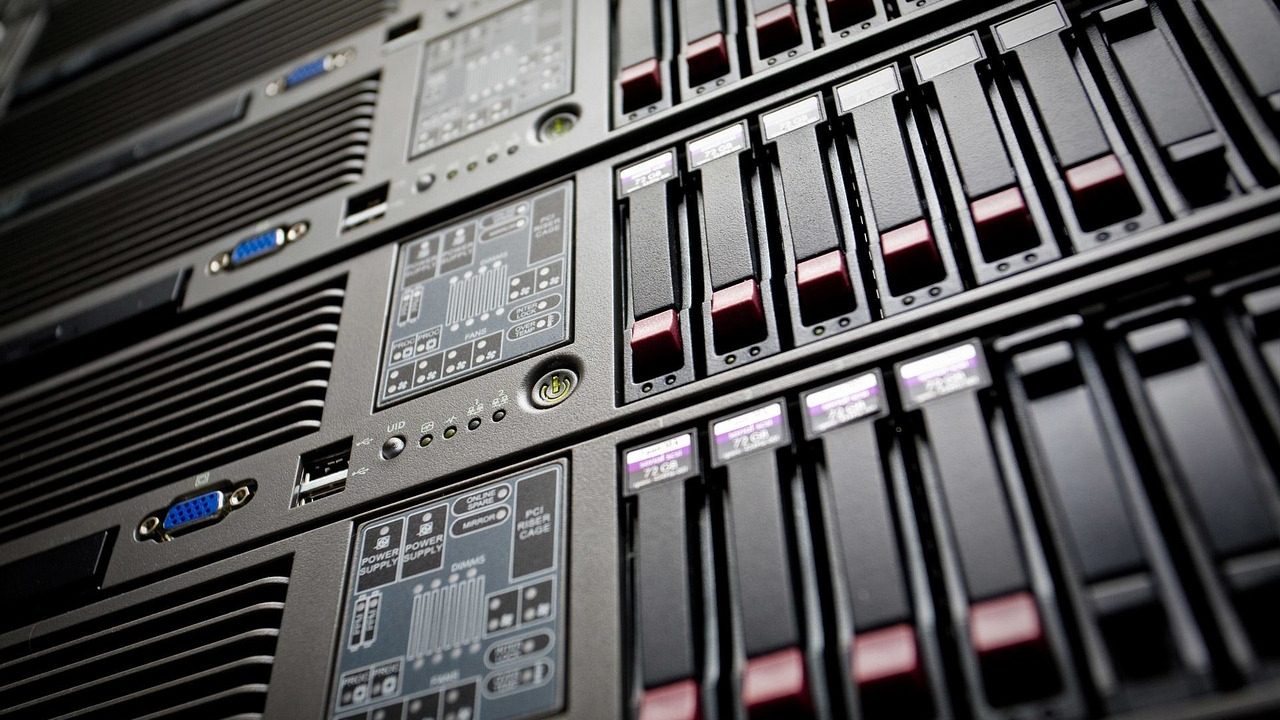
An Ask HN thread posing a simple question — 'What do you run on a $5 VPS that's worth keeping online 24/7?' — accumulated 256 points and over 400 comments and functioned as an oral history of hacker self-reliance predating cloud-native thinking. The answers span self-hosted email, personal VPNs, IRC bouncers, private Git repositories, DNS sinkholes, Minecraft servers, personal wikis, Gemini capsules, web scrapers, health monitors, and personal finance dashboards. Several respondents mentioned running Plausible Analytics — a GDPR-compliant alternative to Google Analytics — comfortably on one gigabyte of RAM. Others cited Miniflux, a minimal RSS reader, representing a category of lightweight self-hosted replacements for subscription services. A surprising number mentioned Gitea, suggesting that the desire to own code infrastructure is practical at these price points, not purely ideological. The thread is a reminder that the indie infrastructure layer is alive and generating real utility in a market segment — sub-ten dollars per month — that major cloud providers have largely abandoned.
A related arrival: the Once project, a CLI command-caching tool that prevents a shell command from re-executing unless explicitly instructed or a defined condition triggers it. Aimed at idempotent, expensive operations — downloading large datasets, generating build artifacts, running database migrations — the concept is immediately useful in scripted environments even at its early stage.
Microsoft's MXC, open-sourced this week, is substantially more ambitious: a sandboxed code-execution system built on a capability-based security model, meaning processes can only access resources explicitly granted to them rather than relying on deny lists or permission walls subject to bypass. The timing is pointed — sandboxed code execution is precisely what AI coding assistants that actually run code require, and every major AI product is moving in that direction. Open-sourcing rather than keeping MXC internal suggests Microsoft is either attempting to establish it as an ecosystem standard that benefits its Azure platform, or is confident the security model can withstand public scrutiny in a trust-building way. The HN thread compared MXC to WebAssembly-based isolation, Docker with heavily restricted permissions, gVisor, and Firecracker microVMs. The consensus: capability-based security is theoretically cleaner but practically harder to adopt because it requires applications to be written with capability discipline from the start rather than retrofitted onto existing architectures.
An OpenTelemetry blog post arguing for 'OTel-Native by Design' drew modest but engaged traffic. Its core argument — that observability should be designed in from day one, with products exporting data in OpenTelemetry format by default — is a direct response to the severe vendor lock-in that has historically characterized observability tooling. Building against a proprietary Datadog or Splunk ingestion format makes migration genuinely painful; OpenTelemetry as a vendor-neutral standard is gaining adoption, and the post urges product teams to make the decision at architecture time. A separate proposal, OSC 7501, addresses a narrower but real terminal pain point: a standard escape sequence allowing programs to communicate structured status information to terminals, enabling meaningful progress indicators and better process management in terminal-heavy workflows rather than leaving terminals unable to distinguish an idle process from a stuck one.
Quake in Safe Rust, Lakehouse DuckDB, and the Art of Documenting What You Built
A port of id Software's Quake to safe Rust — no unsafe blocks, fully memory-safe, playable in the browser via WebAssembly — generated the kind of disproportionate HN enthusiasm that reflects genuine technical significance beneath the nostalgia surface. Quake's original C code is legendary for careful construction but still contains pointer arithmetic and manual memory management patterns that a modern compiler cannot prove safe. Rewriting that in safe Rust while maintaining playable performance demonstrates that the language has expressive power sufficient for real systems workloads without unsafe escape hatches. The WebAssembly compilation target Rust supports natively makes the browser-playable aspect possible, and the comment thread discussed frame rates, compared the port to the Quakejs WebAssembly port, and identified it as a potentially valuable reference implementation for teaching Rust systems programming.
DuckDB's Ducklake project landed 190 points and serious attention from the data engineering corners of HN. Ducklake appears to be a lakehouse format bringing database-like transaction semantics and query optimization to data lake storage — extending DuckDB's role from analytical query engine to catalog layer. The dominant lakehouse formats — Delta Lake, Apache Iceberg, Apache Hudi — carry significant infrastructure dependencies. A lightweight, local-first lakehouse format that does not require a Spark cluster or cloud metadata service to operate would extend the 'just use DuckDB' philosophy from analytics queries to full data pipeline architecture, a meaningful shift if the quality holds.
Scott Bezek's neon LED t-shirt project — flexible circuit garment using LED filaments to produce wearable displays resembling real neon signage, with flexible PCBs, individually addressable LED filaments sewn into fabric, and battery power management — received warm reception for reasons the HN community understands well. The writeup covered failed approaches before the successful one, materials sourcing, and brightness-versus-power-consumption tradeoffs. That documentation is the point: it becomes reference material for everyone who attempts something similar later, and its value substantially exceeds what its score suggests.
A Home Assistant dashboard built on a commissioned illustrator's drawing of the creator's house — floor plan view with illustrated furniture, plants, and exterior details wired to actual smart home state, lights glowing when real lights are on, illustrated windows showing weather overlays — drew a comment thread split between appreciation for the craft and immediate questions about tooling: how are illustrated elements mapped to HA entities, what is the markup structure, can this be templated? Both reactions are legitimate, and together they surface something true about the community: genuine appreciation for craft coexists with a dominant instinct to understand and replicate. A deep-dive piece on keyboard differences between Windows and Mac machines, which reached 172 points and 153 comments, exemplified the same impulse — documenting modifier key semantics, OS-level behavioral divergences, the historical reasons physical layouts differ, and bridging tools like Karabiner-Elements is unglamorous work that requires someone to sit down and do it systematically.
The Coffee Machine Uploading a Terabyte, ADHD as a Circadian Disorder, and a Hard Question About Edge AI

A retired couple's coffee machine was silently uploading one terabyte of data every ten days. The story reached 737 points and 453 comments, and the thread moved rapidly past initial shock into forensic speculation about what could account for that volume from a coffee appliance. Leading theories included continuous uncompressed telemetry streamed to manufacturer servers with no local aggregation — a legitimate but grotesquely inefficient design — a pathological update mechanism repeatedly re-downloading firmware, and the more alarming possibility that the device had been compromised and was functioning as a relay or exfiltration node. The man reportedly discovered the usage through his router's traffic monitoring, already a more sophisticated setup than most home networks. Without packet capture and deep inspection, the data flow is visible but its nature and purpose are not.
The thread named the structural problem directly: consumer IoT devices operate in a regulatory vacuum with no mandatory data minimization requirements, no required disclosure of what data is collected, and no standardized way for consumers to audit device behavior. A laptop or smartphone uploading a terabyte in ten days would trigger operating system telemetry, antivirus flags, or vendor monitoring. A coffee machine faces none of those checks. The security dimension compounds the concern — a network-connected appliance on a home network is a potential lateral movement vector for any attacker who compromises it, a risk the security community has raised about consumer IoT for over a decade. The coffee machine offers the kind of concrete, relatable illustration that makes abstract risk tangible to people who do not read security research papers.
A 2025 paper from Frontiers in Psychiatry, surfacing on HN with 317 points and 207 comments, argues that ADHD should be understood at least partially as a disorder of circadian timing rather than purely a dopamine dysregulation condition. Evidence assembled includes research showing people with ADHD have systematically delayed circadian phases, that their cognitive performance patterns misalign with standard daily schedules, and that light therapy and chronotherapy interventions can meaningfully reduce ADHD symptom severity. The clinical implication is significant: current first-line treatment centers on stimulant medication working through the dopamine system, while chronotherapy — timed light exposure, carefully scheduled sleep, melatonin timing protocols — is non-pharmacological and could function as a standalone or combination intervention. The HN thread included commenters with personal ADHD experience who recognized the circadian description as mapping accurately to their lived experience, alongside appropriate scientific skepticism about whether the evidence supports causal versus correlational claims.
The episode's closing technical provocation asked whether the prevailing HN enthusiasm for edge AI rests on an assumption that could be wrong. The case for running capable models locally — on bandwidth, latency, privacy, and cost grounds — is compelling, and Whistle's 16.9-megabyte speech model and DeepSeek's efficiency numbers both point in that direction. The counterargument is that the tasks creating meaningful value may require capabilities that cannot be compressed into small models without unacceptable quality degradation: accented English, noisy environments, domain-specific vocabulary, and multilingual switching might push quality thresholds well above what a small parameter count can deliver. An infrastructure assumption is also embedded in the edge narrative — three and a half billion smartphone users on low-end Android devices with a gigabyte of RAM may find 'local AI' far less accessible than HN discussions, which skew toward recent hardware, suggest. On the business model side, cloud AI's continuous fine-tuning on centralized query data could widen the quality gap over time even as edge models improve in absolute terms. The empirical question of whether edge models will be good enough for the tasks people actually use them for remains open — and the honest answer is that enterprise adoption patterns and consumer app store outcomes will be more informative signals than benchmark papers.
Trust as the Week's Connective Tissue
The throughline connecting the week's most discussed stories is not technology — it is trust infrastructure, and how conspicuously it is failing across multiple domains simultaneously. OpenAI's withdrawal of mathematical results, the termination of safety researchers, the muted industry response to a potentially superior competitor: each story, in a different register, asks whether the institutions producing AI have built the accountability mechanisms to match their technical ambitions. Terence Tao's question — what do we tell our students — is ultimately a question about intellectual honesty in an era when distinguishing genuine mathematical insight from fluent pattern completion is becoming genuinely difficult, with consequences that extend far beyond mathematics education into any domain where AI-generated work is evaluated by people who may lack the expertise to detect surface correctness masking deep error.
The coffee machine's terabyte lands in identical territory from a completely different angle. The user has no tools to understand what their device is transmitting, no regulatory framework protecting them, and no recourse. Technical solutions — encrypted, auditable telemetry logs, mandatory data minimization — exist. The incentives to implement them do not.
The counterweight to these institutional failures is the work of individual makers and small teams: the Whistle model, the Quake Rust port, the illustrator-drawn Home Assistant dashboard, the neon LED t-shirt with its documented failed attempts and sourcing notes. These projects generate value that accumulates in the commons, and their significance exceeds what comment counts capture.
The ADHD circadian rhythm research is worth tracking into clinical trials. If chronotherapy proves efficacious in randomized studies, the adoption curve will be interesting to observe — the interventions are non-pharmacological and cheaper than stimulant regimens, and they represent a genuinely different causal model that could reshape thinking about neurodevelopmental differences more broadly. Whether the circadian findings reflect a cause of ADHD, a consequence, or a parallel manifestation of some underlying difference remains, the HN thread carefully noted, an open empirical question.