Two Brains, a Stolen Cipher, and a Crumbling Open-Source Promise: This Week in Technology and Science
Stanford Medicine's claim that the human brain may function as two distinct organs, Google's quiet retreat from open-source Android commitments, and a security scandal inside developer tools defined a turbulent week on Hacker News.

“the Scene developed preceded legitimate distribution systems: content delivery networks, versioned software releases, and structured release metadata were being implemented in illegal contexts years before they became standard commercial practice.”
How this was made Verified AI
Every Intellegix briefing is generated from that day's broadcast and run through automated checks before it publishes — with a human paged on any flag. Here is the trail for this edition.
From Two Brains to a New Cat Species: Science Has a Big Week

Stanford Medicine published research this week arguing that the human brain functions as two genuinely separate organs — not merely loosely divided hemispheres in the manner of decades-old pop psychology, but structurally and operationally distinct in ways that may make calling it 'one organ' scientifically imprecise. The research draws on detailed anatomical and functional mapping data to make the case that the coordination between the two halves involves such distinct processing pipelines that conventional framing may no longer hold.
The finding landed on Hacker News to more than a hundred comments and a sharply divided response. Neuroscientists pushed back on the framing, arguing that corpus callosum integration is too robust to support a 'two organ' label, while others contended that the researchers were making a narrower, more defensible claim than the headline suggests — a gap between finding and headline that is, as commenters noted, almost always present in brain science reporting.
The implications, if the research holds up, reach into stroke rehabilitation design and the long-studied phenomenon of split-brain patients, whose condition has been documented since Nobel laureate Roger Sperry severed the corpus callosum of epilepsy patients in the 1960s and demonstrated that each hemisphere could hold knowledge the other could not access. The Stanford work appears to argue that even in neurotypical brains, that separateness is more fundamental than the field has treated it.
Separate from human neuroscience, the week's biology coverage included the announcement of the first new wild cat species discovered in a hundred years — found in a region of Central Asia and distinct enough genetically and morphologically to qualify as a full species rather than a subspecies, the first such discovery since the 1920s. A nearby Hacker News thread also highlighted research from Quanta Magazine on ctenophores, gelatinous sea creatures that appear to have evolved neurons independently from every other animal with a nervous system — a finding that would challenge the assumption that nervous systems evolved once and radiated outward, suggesting the path from chemistry to cognition may be more accessible than previously thought.
GPT-6 Cracks a WWI Cipher, While OpenAI Builds Chips with Its Own Models
A blogger named Prinz documented GPT-6 Astra — OpenAI's current flagship model — successfully decoding a World War One German radio cipher this week, the kind of operational military code that Allied signals intelligence teams spent days or weeks cracking in the field between 1914 and 1918. The author describes the model's approach as methodical rather than lucky, working through pattern recognition and substitution logic in a single session.
The Hacker News thread was appropriately cautious about a central unresolved question: whether this represents genuine deductive reasoning on a novel problem or whether similar cipher patterns existed somewhere in the model's training corpus. Cracking an unknown cipher variant is not something that can be memorized — it requires reasoning through structure — but the distinction between recall and reasoning in large language models remains difficult to verify from the outside.
The AI capability story with larger long-term implications may be the IEEE Spectrum report on OpenAI's custom silicon project. The chip, called Jalapeño, is a custom AI accelerator designed to reduce the company's dependency on Nvidia hardware, and the IEEE piece focuses on the design process: OpenAI reportedly used its own language models to help write and optimize the register-transfer level code — the hardware description layer that specifies how data flows between chip registers on each clock cycle — a domain historically requiring deep specialist expertise.
Hacker News commenters flagged the competitive dynamic this creates: companies with the most advanced models can use those models to design better hardware, which enables training of still-better models, producing a compounding loop that is difficult for anyone without frontier model access to enter. A counterpoint emerged in the form of Cactus Needle 3, a Show HN entry claiming that automation models in the eight-to-twenty-nine megabyte range can match DeepSeek V4 Flash on certain benchmarks — a comparison that, if it survives scrutiny, would suggest the efficiency frontier for narrow-task automation is compressing dramatically, with models small enough to run on embedded systems and microcontrollers where cloud API calls are impossible.
The week's most-discussed AI story by comment count was a piece from sockpuppet.org on how to write with a language model, which earned more than five hundred points and three hundred thirty-nine comments. The author's core argument is that writers extracting the most value from these tools maintain authorial control of structure and argument while using the model for fluency and iteration — rather than prompting for finished prose and accepting the output. Hundreds of comments treated the piece as a referendum on craft and identity, with programmers drawing parallels to how IDEs and code completion changed software development without eliminating the need for skill.
Android 17 Breaks a Fifteen-Year Open-Source Promise

The most consequential platform story of the week arrived with 865 points and 443 comments: a report from GrapheneOS, the privacy-focused Android fork, alleging that Android 17 is the first version since Android 3.x — released in 2011 — to add new APIs without publishing those additions to AOSP, the Android Open Source Project. The new APIs are proprietary, meaning developers and fork maintainers who want to use them are now dependent on Google's closed implementation.
The significance is structural. Google has historically released Android through AOSP as the base that device manufacturers, custom ROM developers, and researchers can build on and modify. Moving a portion of the API surface into proprietary territory degrades the ability of any Android fork — including GrapheneOS, one of the most technically sophisticated in existence — to maintain feature parity with mainline Android. For GrapheneOS users, who choose the fork specifically for security and privacy, the result is a degraded experience through no fault of the project.
Antitrust observers in the Hacker News thread noted that Google has faced regulatory scrutiny in Europe and elsewhere about its control of the Android ecosystem, and that Android's open-source nature has been a consistent argument in Google's defense. The European Commission has previously sanctioned Google for Android bundling practices; a shift in the openness of the API surface would represent a different theory of harm in a familiar legal neighborhood. The relevant legal question under the Sherman Antitrust Act — which requires both monopoly power and willful exclusionary conduct beyond competing on the merits — is whether moving APIs out of AOSP constitutes a legitimate product decision or conduct designed to make forks less viable. That determination, commenters noted, typically takes years to resolve in court.
Separately, Cloudflare's engineering blog generated 373 points with a post describing how the team saved a hundred terabytes of RAM by replacing certain data structures with more compact mathematical representations — using approximate data structures and mathematical properties of specific lookup problems to reduce memory footprint without sacrificing meaningful accuracy. At Cloudflare's scale, where infrastructure decisions affect a substantial fraction of all internet traffic, the result demonstrates that significant engineering leverage remains available in well-understood problem domains when approached with the right mathematical tools.
A Coding Tool Was Quietly Uploading Your Git History
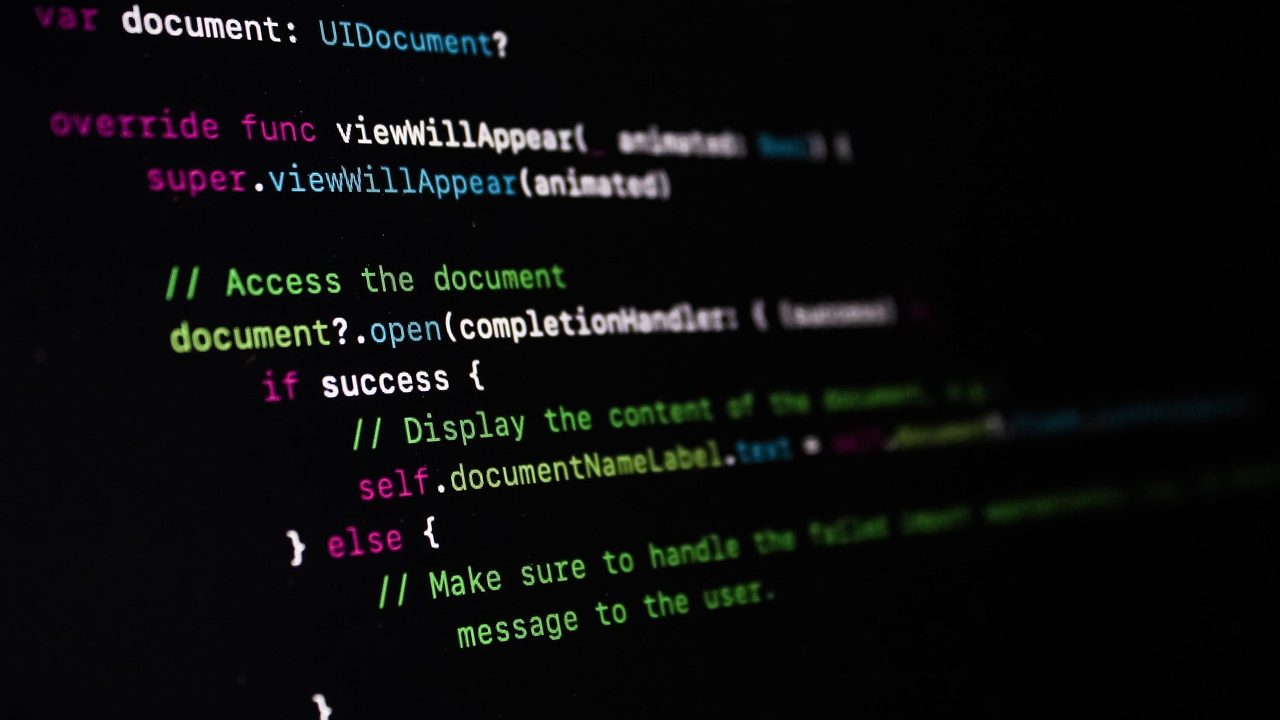
A post at ferstar.org detailed a finding about ZCode, a coding tool, that was silently uploading users' Git workspace snapshots to the cloud without explicit disclosure — earning 305 points and a hundred comments on Hacker News. The author captured network traffic and traced it to undocumented behavior, making this a technical finding rather than speculation. Git history is among the most sensitive data a developer handles: it contains code, commit messages, branch names, potentially credentials left in early commits, and proprietary algorithm implementations.
The Hacker News thread connected the finding to a pattern of AI-enhanced developer tools built primarily to showcase AI features rather than to meet enterprise security requirements, with practical advice emerging from the discussion: run any new coding tool in a sandboxed environment before connecting it to a real repository, monitor outbound network traffic during evaluation, and verify data handling documentation explicitly. Developer trust, once broken this way, travels quickly — through blog posts, through engineering Slack channels, through the Hacker News community itself — and is nearly impossible to rebuild.
At the opposite end of the sophistication spectrum, Ledger's hardware security lab published research on a photon-emission-guided laser fault injection attack against the RP2350, Raspberry Pi's newer microcontroller. The attack uses a laser to inject faults into the chip's secure debug path, guided by photon emission that reveals where computation is happening inside the silicon, ultimately bypassing secure boot and extracting protected firmware. The RP2350 was marketed with enhanced security features over its predecessor; Ledger's donjon team, whose core business involves finding implementation gaps in chips designed to be secure, found that 'secure' on a microcontroller means something considerably narrower than most hobbyist users assume.
The Rust language server protocol also drew attention this week, with a post from the rust-glancer project explaining why building a language server for Rust is substantially harder than for other languages. The core issue is architectural: Rust's borrow checker operates on a mid-level intermediate representation constructed after macro expansion, meaning the language server must understand a layer of semantic transformation that happens during compilation — breaking the assumption, standard in most LSP architectures, that parsing and analysis can proceed independently.
Onion Futures, Apple Silicon Records, and the Piracy Infrastructure That Invented Distribution

The San Francisco Onion Futures Company drew 209 points and 76 comments on Hacker News this week, surfacing a piece of financial history with durable relevance. The Onion Futures Act of 1958 is the only commodity-specific futures ban in United States history, passed after onion prices collapsed dramatically in 1955 and 1956 partly as a result of speculative futures trading. The counterintuitive result — onion prices have reportedly been more volatile since the ban than before it — gave the Hacker News thread material for a debate about what commodity futures markets actually do, whether regulatory interventions in complex markets produce their intended effects, and how the political economy of commodity trading shapes legislation.
Apple's M6 Pro appeared in Geekbench 7 this week with what the listing described as the highest single-core CPU score recorded on the benchmark, a result the Hacker News community received with characteristic skepticism about Geekbench as a measure of real-world performance while acknowledging that Apple's custom silicon trajectory since M1 has been consistent enough to make the directional claim credible. Single-core performance matters for workloads that do not parallelize well, which covers a significant share of common computing tasks.
The week's most historically textured story may have been the resurfacing of 'Warez: The Infrastructure and Aesthetics of Piracy,' a 2021 book that earned 171 points and 74 comments. The book covers the Scene — the underground network of software crackers and distributors that operated from the 1970s through the early internet era with organizational sophistication that included NFO files, release groups, topsite hierarchies, and structured metadata for coordinated digital distribution, all built entirely outside legal frameworks. What makes this historically interesting rather than merely nostalgic is how much of the architecture the Scene developed preceded legitimate distribution systems: content delivery networks, versioned software releases, and structured release metadata were being implemented in illegal contexts years before they became standard commercial practice.
A piece from researcher J.E. Pedersen, titled 'Science Is Open Software,' argued that scientific research and open-source software development share deep structural similarities as cumulative knowledge projects where transparency enables verification and reuse, and that the incentive structures of academic publishing — which reward novelty over replication — are actively hostile to the kind of incremental verified progress that open-source development enables through code review and version control. The NASA-IBM Lunar Foundation Model, a geospatial AI model trained on planetary science data and released as open source through a collaboration between a government agency and a corporate research lab, appeared nearby as a quieter illustration of the same principle applied to scientific AI.
The Efficiency Curve Has Been Right Before — But Here Is How It Could Break
Multiple stories this week — the Jalapeño chip piece, the Cactus Needle benchmarks, a resurfaced research paper proposing Cache-to-Cache communication between language models using the KV cache as a communication substrate — shared an underlying assumption: that AI will continue getting more capable and more efficient simultaneously, with better hardware designed by AI enabling better models enabling better hardware in a compounding loop.
The strongest counterargument to this trajectory begins with benchmark selection. When Cactus Needle claims an eight-megabyte model matches DeepSeek V4 Flash, that claim applies to a specific set of automation benchmarks — tasks selected because they are measurable. The capabilities hardest to measure — genuine reasoning under novel constraints, handling ambiguous or underspecified tasks, avoiding confident errors — may not compress in the same way. If the capabilities that matter most for real deployment scale with model size rather than with efficiency improvements, the efficiency story holds only for a narrow slice of use cases.
On the hardware side, the AI-designed chip thesis assumes language models can explore the register-transfer level design space effectively. But chip design involves physical constraints, manufacturing yield considerations, power delivery engineering, and thermal dynamics that interact in ways that are genuinely difficult to represent in training data. If AI-assisted chip design stalls against those physical constraints, the assumption that model builders can accelerate their own hardware development through AI breaks down.
The watch signals are specific: benchmark inflation, where small-model automation benchmarks diverge from real-world deployment performance; chip tape-outs that underperform their simulated projections; and systematic rather than random failure modes in AI writing and coding tools, which would indicate a capability ceiling not visible in aggregate scores. The efficiency curve has beaten pessimistic projections repeatedly over the past four years — but past performance, as the onion futures story also illustrates, is not a theory of why the trend continues.